

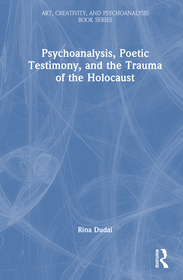
Psychoanalysis, Poetic Testimony and the Trauma of the Holocaust
Sorozatcím: Art, Creativity, and Psychoanalysis Book Series;
-
20% KEDVEZMÉNY?
- A kedvezmény csak az 'Értesítés a kedvenc témákról' hírlevelünk címzettjeinek rendeléseire érvényes.
- Kiadói listaár GBP 150.00
-
67 725 Ft (64 500 Ft + 5% áfa)
Az ár azért becsült, mert a rendelés pillanatában nem lehet pontosan tudni, hogy a beérkezéskor milyen lesz a forint árfolyama az adott termék eredeti devizájához képest. Ha a forint romlana, kissé többet, ha javulna, kissé kevesebbet kell majd fizetnie.
- Kedvezmény(ek) 20% (cc. 13 545 Ft off)
- Kedvezményes ár 54 180 Ft (51 600 Ft + 5% áfa)
- A kedvezmény érvényes eddig: 2026. június 30.
Iratkozzon fel most és részesüljön kedvezőbb árainkból!
Feliratkozom
60 953 Ft

Beszerezhetőség
Becsült beszerzési idő: A Prosperónál jelenleg nincsen raktáron, de a kiadónál igen. Beszerzés kb. 3-5 hét..
A Prosperónál jelenleg nincsen raktáron.
Why don't you give exact delivery time?
A beszerzés időigényét az eddigi tapasztalatokra alapozva adjuk meg. Azért becsült, mert a terméket külföldről hozzuk be, így a kiadó kiszolgálásának pillanatnyi gyorsaságától is függ. A megadottnál gyorsabb és lassabb szállítás is elképzelhető, de mindent megteszünk, hogy Ön a lehető leghamarabb jusson hozzá a termékhez.
A termék adatai:
- Kiadás sorszáma 1
- Kiadó Routledge
- Megjelenés dátuma 2026. március 31.
- ISBN 9781032517469
- Kötéstípus Keménykötés
- Terjedelem208 oldal
- Méret 234x156 mm
- Súly 540 g
- Nyelv angol 700
Kategóriák
Rövid leírás:
In this fascinating and innovative book, Rina Dudai looks at Holocaust trauma through the lens of poetic testimony: the act of writing poetry and prose to both relay and process traumatic events.
TöbbHosszú leírás:
In this fascinating and innovative book, Rina Dudai looks at Holocaust trauma through the lens of poetic testimony: the act of writing poetry and prose to both relay and process traumatic events.
Dudai begins with a study of both factual testimony and the act of bearing witness in the aftermath of trauma. She uses these as the foundations for her exploration of poetic testimony and the benefits the creator will find over and above other forms of testimony. Showing how this method avoids the additional trauma often brought about by making survivors directly address their experience, Dudai offers a new toolkit to psychoanalysts and psychotherapists working with patients experiencing trauma. Through an analysis of the works of three writers who survived the Holocaust – Primo Levi, Ka-Tzetnik, and Aharon Appelfeld – Dudai establishes a conceptual framework for discussing this mode of testimony and the poetic language through which it speaks. By comparing the work of these writers, Dudai identifies the distinct qualities of this form of poetic language while establishing a foundation for discourse of other literary works that deal with trauma.
Through close textual analysis and the incorporation of therapeutic concepts like "acting out" and "working through," Psychoanalysis, Poetic Testimony, and the Trauma of the Holocaust is an invaluable resource to psychoanalysts and other mental health professionals working with trauma patients, as well as students and scholars of literature and 20th-century history.
TöbbTartalomjegyzék:
Part one: The primal scream and the silence 1. Absence as the language of trauma 2. Poetic testimony of Holocaust trauma Part Two: Three modes of poetic Holocaust testimony 3. On bodily memory in Aharon Appelfeld’s Searing Light and The Man Who Never Stopped Sleeping 4. On emotional memory in Ka-Tzetnik’s The House of Dolls 5. On rational memory in Primo Levi’s If This Is a Man and other works Part Three: In search of a form for the Primal Scream 6. Discussion and Conclusion
Több

