

-
20% KEDVEZMÉNY?
- A kedvezmény csak az 'Értesítés a kedvenc témákról' hírlevelünk címzettjeinek rendeléseire érvényes.
- Kiadói listaár GBP 33.99
-
15 346 Ft (14 615 Ft + 5% áfa)
Az ár azért becsült, mert a rendelés pillanatában nem lehet pontosan tudni, hogy a beérkezéskor milyen lesz a forint árfolyama az adott termék eredeti devizájához képest. Ha a forint romlana, kissé többet, ha javulna, kissé kevesebbet kell majd fizetnie.
- Kedvezmény(ek) 20% (cc. 3 069 Ft off)
- Kedvezményes ár 12 277 Ft (11 692 Ft + 5% áfa)
- A kedvezmény érvényes eddig: 2026. június 30.
Iratkozzon fel most és részesüljön kedvezőbb árainkból!
Feliratkozom
13 811 Ft

Beszerezhetőség
Becsült beszerzési idő: A Prosperónál jelenleg nincsen raktáron, de a kiadónál igen. Beszerzés kb. 3-5 hét..
A Prosperónál jelenleg nincsen raktáron.
Why don't you give exact delivery time?
A beszerzés időigényét az eddigi tapasztalatokra alapozva adjuk meg. Azért becsült, mert a terméket külföldről hozzuk be, így a kiadó kiszolgálásának pillanatnyi gyorsaságától is függ. A megadottnál gyorsabb és lassabb szállítás is elképzelhető, de mindent megteszünk, hogy Ön a lehető leghamarabb jusson hozzá a termékhez.
A termék adatai:
- Kiadás sorszáma 1
- Kiadó Routledge
- Megjelenés dátuma 2002. május 31.
- Kötetek száma Paperback
- ISBN 9780202306728
- Kötéstípus Puhakötés
- Terjedelem296 oldal
- Méret 229x152 mm
- Súly 420 g
- Nyelv angol 0
Kategóriák
Rövid leírás:
Arguably, the most important single work in classical sociology is Max Weber's thesis on how Protestantism makes its impact on capitalism
TöbbHosszú leírás:
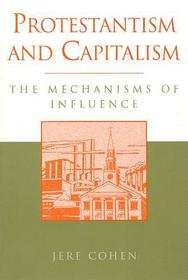
Arguably, the most important single work in classical sociology is Max Weber's thesis on how Protestantism makes its impact on capitalism. Cohen's argument is that Protestantism affects capitalism in several different ways. Each is linked as a separate mechanism of influence, and may therefore be assessed separately. Weber himself stated or suggested several possible mechanisms of influence. Protestantism gave the spirit of capitalism its duty to profit and thus helped to legitimate capitalism. Its religious asceticism also produced personalities well-suited for work discipline. Finally, the new turn in Christian doctrine contributed to the quest to prove one's salvation, because God's favor could be shown through business success.Cohen's argument is that some of these processes worked as Weber indicated and others did not. This makes a blanket assessment of his famous thesis inappropriate. The Weber thesis has been difficult to prove or disprove because the refutation of some suggested mechanisms still leaves others viable. Only a comprehensive testing of all of Weber's sub-hypotheses can provide a proper assessment of his work. By simultaneously examining these sub-texts, the author pulls together Weber's arguments and points of criticism. The book juxtaposes historical evidence pro and con.Cohen revisits, reexamines, and tests the classic Weberian thesis that the beliefs and presuppositions of the English Puritans, rather than the forces of economic determinism, ushered in the era of modern capitalism. He divides Weber's single argument into two main mechanisms of influence: one behavioral, confined to which Puritan tenets in particular affected a believer's economic activity; the other, a more prevalent and far-reaching cultural mechanism, which became part of the mainstream. By taking advantage of present day information, including recently discovered diaries of two seventeenth-century Puritan merchants, Cohen's text sums up many years of argument in the journal literature. The book will find a place in a wide range of courses, from sociology of religion, sociological theory, social economics, political science, to European history.Jere Cohen, a sociologist at the University of Maryland in Baltimore County, is the author of numerous journal articles, many of them also dealing with Max Weber and his Protestant Ethic thesis.
TöbbTartalomjegyzék:
1 Introduction 2 The Puritan Work Ethic 3 The Spirit of Capitalism 4 Wealth and Its Acquisition 5 Religious Anxiety 6 The Signs of Salvation 7 Premiums and Ethics 8 Summary and Conclusions
Több
