

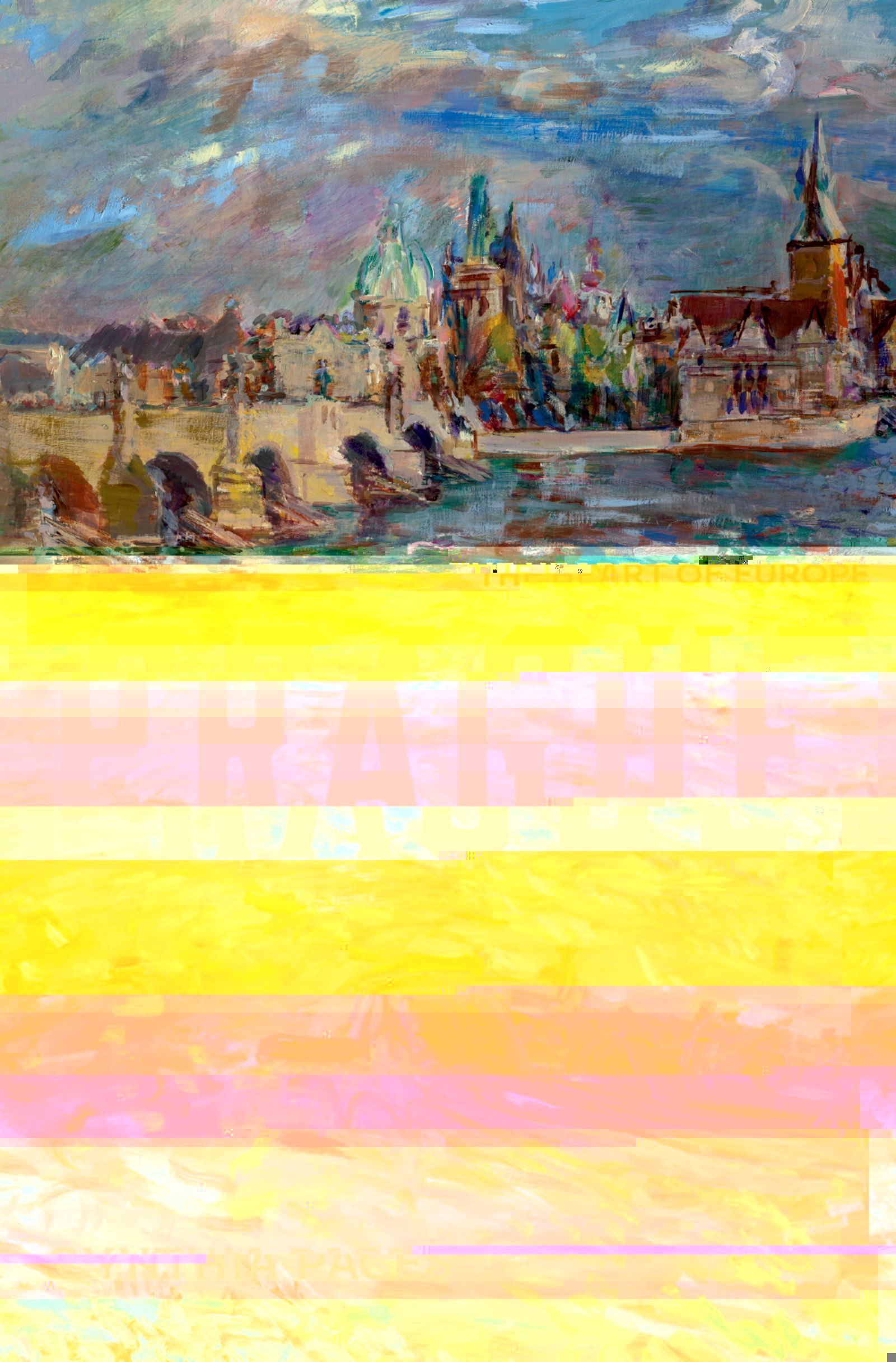
Prague
The Heart of Europe
-
10% KEDVEZMÉNY?
- A kedvezmény csak az 'Értesítés a kedvenc témákról' hírlevelünk címzettjeinek rendeléseire érvényes.
- Kiadói listaár GBP 26.99
-
12 185 Ft (11 605 Ft + 5% áfa)
Az ár azért becsült, mert a rendelés pillanatában nem lehet pontosan tudni, hogy a beérkezéskor milyen lesz a forint árfolyama az adott termék eredeti devizájához képest. Ha a forint romlana, kissé többet, ha javulna, kissé kevesebbet kell majd fizetnie.
- Kedvezmény(ek) 10% (cc. 1 219 Ft off)
- Kedvezményes ár 10 967 Ft (10 445 Ft + 5% áfa)
Iratkozzon fel most és részesüljön kedvezőbb árainkból!
Feliratkozom
12 185 Ft

Beszerezhetőség
Becsült beszerzési idő: A Prosperónál jelenleg nincsen raktáron, de a kiadónál igen. Beszerzés kb. 3-5 hét..
A Prosperónál jelenleg nincsen raktáron.
Why don't you give exact delivery time?
A beszerzés időigényét az eddigi tapasztalatokra alapozva adjuk meg. Azért becsült, mert a terméket külföldről hozzuk be, így a kiadó kiszolgálásának pillanatnyi gyorsaságától is függ. A megadottnál gyorsabb és lassabb szállítás is elképzelhető, de mindent megteszünk, hogy Ön a lehető leghamarabb jusson hozzá a termékhez.
A termék adatai:
- Kiadó OUP USA
- Megjelenés dátuma 2026. január 8.
- ISBN 9780197554838
- Kötéstípus Keménykötés
- Terjedelem400 oldal
- Méret 229x160x45 mm
- Súly 726 g
- Nyelv angol
- Illusztrációk 86 black and white illustrations, 18 color images 669
Kategóriák
Rövid leírás:
This comprehensive political, social, and cultural history traces Prague's origins in the ninth century through the end of the Cold War. Highlights include the golden ages of Charles IV and Rudolph II; the religious conflicts of the Hussite and Thirty Years Wars; the rich culture of Europe's largest Jewish community; the rivalry between the city's German and Czech speakers; the World Wars and Nazi occupation; and the Communist era. Prague: The Heart of Europe highlights the complex culture of the city where Mozart premiered his magnificent Don Giovanni and where Franz Kafka wrote his foreboding tales.
TöbbHosszú leírás:
A sweeping and comprehensive history of Prague--from its origins in the ninth century to the present day--that traces its past as a political center and a city on the periphery of empires.
Poets have called Prague the City of One Hundred Spires, Golden Prague, Magic Prague, and the Mother of Cities. Millions of tourists visit the Czech capital each year, awed by the blend of architectural styles and the dramatic landscape. St. Vitus's Gothic cathedral towers above the Charles Bridge and the Vltava River. Winding Gothic alleys lead to elegant squares lined with Renaissance palaces, Baroque statues, and modern glass structures. Yet, the city's beauty often obscures centuries of ethnic and religious conflict. In Prague's Jewish Quarter, the names of nearly 80,000 Holocaust victims are inscribed on the walls of Pinkas Synagogue, which stands as a reminder of a complex and violent past.
Cynthia Paces traces the history of Prague since the late ninth century, when Slavic dukes built the first church and fortifications on the castle hill. Over the course of eleven centuries, Prague vacillated between a political center and a city on the periphery of empires. The Holy Roman Emperors Charles IV and Rudolph II transformed Prague into a European center of arts, politics, and pilgrimage, but centuries of religious conflict, the defenestrations of Prague, and the Thirty Years War threatened to destroy the city. In the twentieth century, Prague was hailed as a beacon of democracy, led by philosopher presidents T. G. Masaryk and Václav Havel, but its citizens also endured violent antisemitism, a Nazi occupation, and a repressive communist regime.
While illuminating a millennium of political, cultural, and social developments, Prague: The Heart of Europe captures the lives of the men and women who have called the city home. Prague has housed Europe's largest Jewish community, a diverse population of German and Czech speakers, and artisans from all over Europe. This sweeping book highlights the manifold contributions of Prague's artists, architects, musicians, and writers. In doing so, it reveals why the city captivated so many creative men and women, including Wolfgang Amadeus Mozart, Antonín Dvorák, Oskar Kokoschka, the poet Elizabeth Weston, and the alchemist John Dee. As Prague native Franz Kafka once wrote, "Prague does not let go; this little mother has claws."
In this gem of a book, Cynthia Paces has accomplished a remarkable feat: while recognizing Prague's reputation as a 'magic' 'mysterious' 'golden' city, she presents its long history as a place that also saw conflict, exploitation, and suffering, whose present-day appearance is shaped by all these historical experiences, and by the various peoples who have called it home. The scope of Paces's work is unique in the field. If visiting Prague should be on every traveler's bucket list, this book should be required pre-departure reading.
Tartalomjegyzék:
Acknowledgments
A Note on Language
Timeline of Prague History
Introduction: All this is Prague
Chapter 1: Prague's Foundations
Chapter 2: The Imperial Capital of Charles IV
Chapter 3: Faith and Violence in Wenceslas IV's Prague
Chapter 4: Hussite Wars and New Dynasties
Chapter 5: Rudolphine Prague
Chapter 6: Revolt and Defeat in Habsburg Prague
Chapter 7: Enlightened Prague
Chapter 8: Creating a Czech City
Chapter 9: Prague in a New Century
Chapter 10: The Great War and the Birth of Czechoslovakia
Chapter 11: Capital of the Republic
Chapter 12: Prague under Nazi Rule
Chapter 13: Prague Winter, Prague Spring
Chapter 14: Communism's Gray Zone
Chapter 15: Post-Communist Prague
Notes
Bibliography
index

