

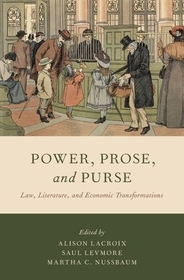
Power, Prose, and Purse
Law, Literature, and Economic Transformations
-
20% KEDVEZMÉNY?
- A kedvezmény csak az 'Értesítés a kedvenc témákról' hírlevelünk címzettjeinek rendeléseire érvényes.
- Kiadói listaár GBP 90.00
-
40 635 Ft (38 700 Ft + 5% áfa)
Az ár azért becsült, mert a rendelés pillanatában nem lehet pontosan tudni, hogy a beérkezéskor milyen lesz a forint árfolyama az adott termék eredeti devizájához képest. Ha a forint romlana, kissé többet, ha javulna, kissé kevesebbet kell majd fizetnie.
- Kedvezmény(ek) 20% (cc. 8 127 Ft off)
- Kedvezményes ár 32 508 Ft (30 960 Ft + 5% áfa)
- A kedvezmény érvényes eddig: 2026. június 30.
Iratkozzon fel most és részesüljön kedvezőbb árainkból!
Feliratkozom
40 635 Ft

Beszerezhetőség
Becsült beszerzési idő: A Prosperónál jelenleg nincsen raktáron, de a kiadónál igen. Beszerzés kb. 3-5 hét..
A Prosperónál jelenleg nincsen raktáron.
Why don't you give exact delivery time?
A beszerzés időigényét az eddigi tapasztalatokra alapozva adjuk meg. Azért becsült, mert a terméket külföldről hozzuk be, így a kiadó kiszolgálásának pillanatnyi gyorsaságától is függ. A megadottnál gyorsabb és lassabb szállítás is elképzelhető, de mindent megteszünk, hogy Ön a lehető leghamarabb jusson hozzá a termékhez.
A termék adatai:
- Kiadó OUP USA
- Megjelenés dátuma 2019. július 18.
- ISBN 9780190873455
- Kötéstípus Keménykötés
- Terjedelem384 oldal
- Méret 155x239x33 mm
- Súly 658 g
- Nyelv angol 0
Kategóriák
Rövid leírás:
Power, Prose, and Purse is an edited collection of essays that draw connections between literature, economics and law. The essays discuss novels that explore the time period between the Industrial Revolution and the Great Depression and analyze the insights that novelists may offer to law and economics, while noting the tensions among these paradigms.
TöbbHosszú leírás:
From Anthony Trollop to Sinclair Lewis, and from Jane Austen to James Joyce and John Steinbeck, many important novels touch on fundamental questions about the role of money in human affairs. These questions are explored in this volume through the lens of law and literature. The sixteen essays collected here, by important theorists from a range of disciplines, shed new light on the impact of economic change, from the Industrial Revolution to the Great Depression. Students of economics and business will gain a new appreciation of literature's insights on singular events and human emotions. Similarly, scholars and students of literature will gain an appreciation for the power of law and economics to inform literary and social analysis. The volume's focus on novels about money and economic upheaval showcases the power of the disciplinary marriage of law and literature.
TöbbTartalomjegyzék:
Introduction
Part One. Swindlers or Entrepreneurs?
Susanna Blumenthal, Counterfeiting Confidence: The Problem of Trust in the Age of Contract
Nicola Lacey, Gamblers and Gentlefolk: Money, Law and Status in Trollope's England
Saul Levmore, Regulating Greed: Biographical Markers in Dos Passos' The Big Money
Martha C. Nussbaum, The Morning and the Evening Star: Religion, Money, and Love in Sinclair Lewis's Babbitt and Elmer Gantry
Justin Driver, Jay Gatsby, Justice Douglas, and the Significance of Class in American Society
Part Two. Preferences and Capitalists
Jonathan S. Masur & Seebany Data-Barua, Wealth and Warfare in the Novels of Jane Austen
Alison LaCroix, Commerce, Law, and Revolution in the Novels of Elizabeth Gaskell and Charlotte Bront
Robin West, Bartleby's Consensual Dysphoria
Martha C. Nussbaum, Love from the Point of View of the Universe: Walt Whitman and the Utilitarian Imagination
Douglas G. Baird, Money and Art in Edward Bellamy's Looking Backward
Laura Weinrib, The Second New Deal and the Fourth Courtroom Wall: Law, Labor, and Liberty in The Cradle Will Rock
Carol M. Rose, Raisin, Race, and the Real Estate Revolution of the Early 20th Century
Part Three. Optimism and Pessimism
Richard H. McAdams, The Grapes of Wrath, Economics, and Luck
Deirdre Nansen McCloskey, Irish (and English and American) Poets, Learn Your Trade: Law and Economics in Poetry

