

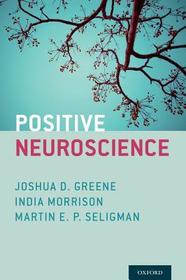
Positive Neuroscience
-
20% KEDVEZMÉNY?
- A kedvezmény csak az 'Értesítés a kedvenc témákról' hírlevelünk címzettjeinek rendeléseire érvényes.
- Kiadói listaár GBP 97.00
-
43 795 Ft (41 710 Ft + 5% áfa)
Az ár azért becsült, mert a rendelés pillanatában nem lehet pontosan tudni, hogy a beérkezéskor milyen lesz a forint árfolyama az adott termék eredeti devizájához képest. Ha a forint romlana, kissé többet, ha javulna, kissé kevesebbet kell majd fizetnie.
- Kedvezmény(ek) 20% (cc. 8 759 Ft off)
- Kedvezményes ár 35 036 Ft (33 368 Ft + 5% áfa)
- A kedvezmény érvényes eddig: 2026. június 30.
Iratkozzon fel most és részesüljön kedvezőbb árainkból!
Feliratkozom
43 795 Ft

Beszerezhetőség
Becsült beszerzési idő: A Prosperónál jelenleg nincsen raktáron, de a kiadónál igen. Beszerzés kb. 3-5 hét..
A Prosperónál jelenleg nincsen raktáron.
Why don't you give exact delivery time?
A beszerzés időigényét az eddigi tapasztalatokra alapozva adjuk meg. Azért becsült, mert a terméket külföldről hozzuk be, így a kiadó kiszolgálásának pillanatnyi gyorsaságától is függ. A megadottnál gyorsabb és lassabb szállítás is elképzelhető, de mindent megteszünk, hogy Ön a lehető leghamarabb jusson hozzá a termékhez.
A termék adatai:
- Kiadó OUP USA
- Megjelenés dátuma 2016. július 7.
- ISBN 9780199977925
- Kötéstípus Keménykötés
- Terjedelem256 oldal
- Méret 155x236x17 mm
- Súly 522 g
- Nyelv angol 0
Kategóriák
Rövid leírás:
This volume describes research supported by the John Templeton Foundation's Positive Neuroscience Project, aimed at illuminating the neural mechanisms that promote human flourishing. Topics include social bonds, altruism, creativity, and resilience.
TöbbHosszú leírás:
How do we thrive in our behaviors and experiences? Positive neuroscience research illuminates the brain mechanisms that enable human flourishing. Supported by the John Templeton Foundation's Positive Neuroscience Project, which Martin E. P. Seligman established in 2008, Positive Neuroscience provides an intersection between neuroscience and positive psychology.
In this edited volume, leading researchers describe the neuroscience of social bonding, altruism, and the capacities for resilience and creativity. Part I (Social Bonds) describes the mechanisms that enable humans to connect with one another. Part II (Altruism) focuses on the neural mechanisms underlying the human ability and willingness to confer costly benefits on others. Part III (Resilience and Creativity) examines the mechanisms by which human brains overcome adversity, create, and discover. Specific topics include: a newly discovered nerve type that appears to be specialized for emotional communication; the effects of parenting on the male brain; how human altruism differs from that of other primates; the neural features of extraordinary altruists who have donated kidneys to strangers; and distinctive patterns of brain wiring that endow some people with exceptional musical abilities. Accessible to a broad academic audience, from advanced undergraduates to senior scholars, these subjects have generated a fascinating and highly convergent set of ideas and results, shaping our understanding of human nature.
Tartalomjegyzék:
Contributors
Introducing Positive Neuroscience
Joshua D. Greene and India Morrison
Part I: Social Bonds
1. Affective and Social Touch
India Morrison
2. The Neural Correlates of Individual Variation in Paternal Nurturance
James K. Rilling and Jennifer Mascaro
3. Toward a Neuroscience of Social Resonance
Thalia Wheatley and Beau Sievers
Part II: Altruism
4. Prosociality as a form of reward-seeking
Jamil Zaki and Jason Mitchell
5. Is Human Prosocial Behavior Unique?: Insights and New Questions from Non-Human Primates
Lindsey Drayton and Laurie Santos
6. When Feeling and Doing Diverge: Neural and physiological correlates of the empathy-altruism divide
Tony W. Buchanan and Stephanie D. Preston
7. Amygdala Tuning Toward Self and Other
Vincent Man, Daniel L. Ames, Alexander Todorov, and William A. Cunningham
8. Towards a Neuroscience of Compassion: A brain systems-based model and research agenda
Yoni K. Ashar, Jessica Andrews-Hanna, Tor D. Wager, and Sona Dimidjian
9. Extraordinary Altruism: A Cognitive Neuroscience Perspective
Abigail Marsh
Part III: Resilience and Creativity
10. Increasing Positive Emotion in Negative Contexts: Emotional Consequences, Neural Correlates, and Implications for Resilience
Kateri McRae and Iris Mauss
11. Could Meditation Modulate the Neurobiology of Learning Not to Fear?
Britta Hölzel, Sara W. Lazar, and Mohammed Milad
12. The Role of Brain Connectivity in Musical Experience
Psyche Loui
13. The Function of Positive Emotions in Exploration
Hans Melo and Adam Anderson
Index

