

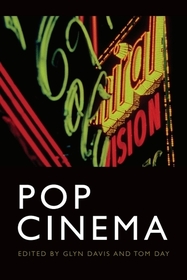
Pop Cinema
-
20% KEDVEZMÉNY?
- A kedvezmény csak az 'Értesítés a kedvenc témákról' hírlevelünk címzettjeinek rendeléseire érvényes.
- Kiadói listaár GBP 24.99
-
11 282 Ft (10 745 Ft + 5% áfa)
Az ár azért becsült, mert a rendelés pillanatában nem lehet pontosan tudni, hogy a beérkezéskor milyen lesz a forint árfolyama az adott termék eredeti devizájához képest. Ha a forint romlana, kissé többet, ha javulna, kissé kevesebbet kell majd fizetnie.
- Kedvezmény(ek) 20% (cc. 2 256 Ft off)
- Kedvezményes ár 9 026 Ft (8 596 Ft + 5% áfa)
- A kedvezmény érvényes eddig: 2026. június 30.
Iratkozzon fel most és részesüljön kedvezőbb árainkból!
Feliratkozom
11 282 Ft

Beszerezhetőség
Még nem jelent meg, de rendelhető. A megjelenéstől számított néhány héten belül megérkezik.
Why don't you give exact delivery time?
A beszerzés időigényét az eddigi tapasztalatokra alapozva adjuk meg. Azért becsült, mert a terméket külföldről hozzuk be, így a kiadó kiszolgálásának pillanatnyi gyorsaságától is függ. A megadottnál gyorsabb és lassabb szállítás is elképzelhető, de mindent megteszünk, hogy Ön a lehető leghamarabb jusson hozzá a termékhez.
A termék adatai:
- Kiadó Edinburgh University Press
- Megjelenés dátuma 2026. április 30.
- ISBN 9781474497916
- Kötéstípus Puhakötés
- Terjedelem280 oldal
- Méret 234x156 mm
- Nyelv angol
- Illusztrációk 48 black and white illustrations 700
Kategóriák
Rövid leírás:
Examines how the tropes of Pop Art are expressed in film.
TöbbHosszú leírás:
Pop Cinema is the first book devoted to moving image works which engage with the central thematics and aesthetics of Pop Art.
The essays in the collection focus in on the core concerns of Pop as a widespread and ideologically complex art movement, and examine the ways in which artists in various global locations have used forms of film practice outside of the mainstream to explore those preoccupations. The book’s contributors also identify the ways in which dominant Pop aesthetics – flat planes of bold colour, mechanical forms of repetition, appropriation of materials from popular culture sources – were adopted, reworked, or abandoned by such filmmakers.
At root, the book asks three basic questions: what shapes might a Pop form of cinema take, what materials would it engage with, and what might it have to say?
Tartalomjegyzék:
List of Figures/illustrations
Notes on the Contributors
Introduction: Towards a Pop Cinema
Glyn Davis and Tom Day
Part 1: Framing Pop Cinema
1. Notes on Pop Cinema, Revisited
William Kaizen
2. Pop and Cinema: Three Tendencies
Ed Halter
Part 2: Pop Cinema’s Parameters
3. Times Square as Pop Readymade: William Klein’s Broadway by Light (1958)
Tom Day
4. Arocha’s Black and White Pop: History, Desire and Politics in 1960s Colombia in Las ventanas de Salcedo (1966)
Juan Carlos Guerrero-Hernandez
5. Psychedelic Agit-Pop: The Animated Films of Tadanori Yokoo
Clint Enns
Chapter 6. Some Like It Pop: Replication and Repetition in Bruce Connor’s MARILYN TIMES FIVE (1968-73)
Justin Remes
7. A Lost White Girl of Pop: Writing the Drive to Fantasize in Daddy (1973)
Kimberly Lamm
Part 3: Pop Cinema, Mass Production and the Politics of Consumption
8. Always Crashing in the Same Car
Glyn Davis
9. Wynn Chamberlain’s Brand X (1970) and the Politics of the Generic
Kara Carmack
10. The Other Children of Marx and Coca-Cola: Pop Cinema in Eastern Europe
David Crowley
11. 'Mouthpiece of the Dictatorship': Television and the Domestic Sphere in Brazilian Women’s Pop Cinema, 1972-77
Gillian Sneed
12. 'Manhandle the Merchandise': Michael Snow’s Breakfast (Table-Top Dolly) (1976)
Jon Davies
Appendix: A Pop Cinema Filmography
Index

