

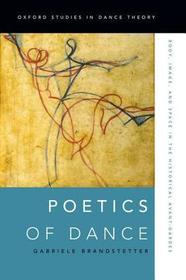
Poetics of Dance
Body, Image, and Space in the Historical Avant-Gardes
Sorozatcím: Oxford Studies in Dance Theory;
-
10% KEDVEZMÉNY?
- A kedvezmény csak az 'Értesítés a kedvenc témákról' hírlevelünk címzettjeinek rendeléseire érvényes.
- Kiadói listaár GBP 145.00
-
69 273 Ft (65 975 Ft + 5% áfa)
Az ár azért becsült, mert a rendelés pillanatában nem lehet pontosan tudni, hogy a beérkezéskor milyen lesz a forint árfolyama az adott termék eredeti devizájához képest. Ha a forint romlana, kissé többet, ha javulna, kissé kevesebbet kell majd fizetnie.
- Kedvezmény(ek) 10% (cc. 6 927 Ft off)
- Kedvezményes ár 62 346 Ft (59 378 Ft + 5% áfa)
Iratkozzon fel most és részesüljön kedvezőbb árainkból!
Feliratkozom
69 273 Ft

Beszerezhetőség
Megrendelésre a kiadó utánnyomja a könyvet. Rendelhető, de a szokásosnál kicsit lassabban érkezik meg.
Why don't you give exact delivery time?
A beszerzés időigényét az eddigi tapasztalatokra alapozva adjuk meg. Azért becsült, mert a terméket külföldről hozzuk be, így a kiadó kiszolgálásának pillanatnyi gyorsaságától is függ. A megadottnál gyorsabb és lassabb szállítás is elképzelhető, de mindent megteszünk, hogy Ön a lehető leghamarabb jusson hozzá a termékhez.
A termék adatai:
- Kiadó OUP USA
- Megjelenés dátuma 2015. május 14.
- ISBN 9780199916559
- Kötéstípus Keménykötés
- Terjedelem456 oldal
- Méret 160x239x25 mm
- Súly 794 g
- Nyelv angol
- Illusztrációk 54 illustrations 0
Kategóriák
Rövid leírás:
The book looks at dance at the beginnings of the 20th century, the time during which modern dance first began to make its radical departure from the aesthetics of classical ballet. Author Gabriele Brandstetter traces modern dance's connection to new innovations and trends in visual and literary arts to argue that modern dance is in fact the preeminent symbol of modernity.
TöbbHosszú leírás:
When it was first published in Germany in 1995, Poetics of Dance was already seen as a path-breaking publication, the first to explore the relationships between the birth of modern dance, new developments in the visual arts, and the renewal of literature and drama in the form of avant-garde theatrical and movement productions of the early twentieth-century. Author Gabriele Brandstetter established in this book not only a relation between dance and critical theory, but in fact a full interdisciplinary methodology that quickly found foothold with other areas of research within dance studies.
The book looks at dance at the beginnings of the 20th century, the time during which modern dance first began to make its radical departure from the aesthetics of classical ballet. Brandstetter traces modern dance's connection to new innovations and trends in visual and literary arts to argue that modern dance is in fact the preeminent symbol of modernity. As Brandstetter demonstrates, the aesthetic renewal of dance vocabulary which was pursued by modern dancers on both sides of the Atlantic - Isadora Duncan and Loie Fuller, Valeska Gert and Oskar Schlemmer, Vaslav Nijinsky and Michel Fokine - unfurled itself in new ideas about gender and subjectivity in the arts more generally, thus reflecting the modern experience of life and the self-understanding of the individual as an individual.
As a whole, the book makes an important contribution to the theory of modernity.
Poetics of Dance presents a foundational and original way of thinking about dance while also offering a radical re-evaluation of early twentieth century modernism across dance, literature, theater, and the visual arts. Brandstetter's brilliantly conceived approach to dance analysis foregrounds the intertextual connections among allied cultural practices in new ways through a theory of meaning-making based in spatial and psychic patterning. An invaluable contribution to the field of dance studies, this work will significantly expand our understanding of dance as part of culture and history.
Tartalomjegyzék:
Introduction
Part I: Pathos Formulas. Body-Image and Danced Figuration
1. Dance in the Museum: Body and Memory
2. Patterns of Femininity and the Body-Image of Dance
3. Delirium of Movement and Trance Dance
4. The Dancer as Muse
Part II: Topos Formulas. Dance Movement and Figuration of Space
1. Dance Costume and Movement Space: Spatial Formulas and their Metamorphoses into Fabric
2. Dance-Text. Transformations of Choreography
3. Aerodance. Futurist Dance and Aviation
4. Writing Dance and Spatial Writing. Between Alphabet and Topos Formula
5. Interruption Intermediality and Disjunction in the Movement Concepts of Avant-garde Dance and Theater
Conclusion
Bibliography
Index

