

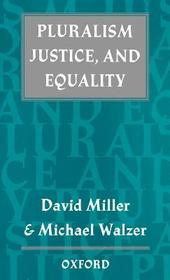
Pluralism, Justice, and Equality
-
10% KEDVEZMÉNY?
- A kedvezmény csak az 'Értesítés a kedvenc témákról' hírlevelünk címzettjeinek rendeléseire érvényes.
- Kiadói listaár GBP 67.00
-
30 250 Ft (28 810 Ft + 5% áfa)
Az ár azért becsült, mert a rendelés pillanatában nem lehet pontosan tudni, hogy a beérkezéskor milyen lesz a forint árfolyama az adott termék eredeti devizájához képest. Ha a forint romlana, kissé többet, ha javulna, kissé kevesebbet kell majd fizetnie.
- Kedvezmény(ek) 10% (cc. 3 025 Ft off)
- Kedvezményes ár 27 225 Ft (25 929 Ft + 5% áfa)
Iratkozzon fel most és részesüljön kedvezőbb árainkból!
Feliratkozom
30 250 Ft

Beszerezhetőség
Megrendelésre a kiadó utánnyomja a könyvet. Rendelhető, de a szokásosnál kicsit lassabban érkezik meg.
Why don't you give exact delivery time?
A beszerzés időigényét az eddigi tapasztalatokra alapozva adjuk meg. Azért becsült, mert a terméket külföldről hozzuk be, így a kiadó kiszolgálásának pillanatnyi gyorsaságától is függ. A megadottnál gyorsabb és lassabb szállítás is elképzelhető, de mindent megteszünk, hogy Ön a lehető leghamarabb jusson hozzá a termékhez.
A termék adatai:
- Kiadó OUP Oxford
- Megjelenés dátuma 1995. április 6.
- ISBN 9780198279372
- Kötéstípus Keménykötés
- Terjedelem316 oldal
- Méret 225x147x24 mm
- Súly 561 g
- Nyelv angol
- Illusztrációk line figures, tables 0
Kategóriák
Rövid leírás:
This is the first-ever book on Michael Walzer's ground-breaking and widely studied book Spheres of Justice. It contains contributions from many of the world's leading political philosophers.
TöbbHosszú leírás:
The essays in this book by a group of leading political theorists assess and develop the central ideas of Michael Walzer's path-breaking Spheres of Justice. Is social justice a radically plural notion, with its principles determined by the different social goods that men and women allocate to one another? Is it possible to prevent the unequal distribution of money and power from distorting the allocation of other goods? If different goods are distributed by different mechanisms, what (if any) kind of social equality is possible? Are there universal principles of justice which apply regardless of context? These and other related questions are pursued in depth by the contributors.
The book concludes with an important new essay by Walzer in which he reflects on the positions taken in his original book in the light of the critical appraisals presented here.
Excellent collection ... for anyone acquainted with Spheres of Justice, and who wants to take that acquaintanceship further, this collection is highly recommended.

