

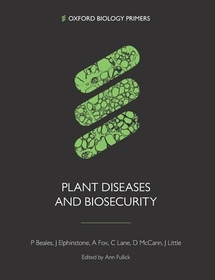
Plant Diseases and Biosecurity
Sorozatcím: Oxford Biology Primers;
-
10% KEDVEZMÉNY?
- A kedvezmény csak az 'Értesítés a kedvenc témákról' hírlevelünk címzettjeinek rendeléseire érvényes.
- Kiadói listaár GBP 24.99
-
11 282 Ft (10 745 Ft + 5% áfa)
Az ár azért becsült, mert a rendelés pillanatában nem lehet pontosan tudni, hogy a beérkezéskor milyen lesz a forint árfolyama az adott termék eredeti devizájához képest. Ha a forint romlana, kissé többet, ha javulna, kissé kevesebbet kell majd fizetnie.
- Kedvezmény(ek) 10% (cc. 1 128 Ft off)
- Kedvezményes ár 10 154 Ft (9 671 Ft + 5% áfa)
Iratkozzon fel most és részesüljön kedvezőbb árainkból!
Feliratkozom
11 282 Ft

Beszerezhetőség
Becsült beszerzési idő: A Prosperónál jelenleg nincsen raktáron, de a kiadónál igen. Beszerzés kb. 3-5 hét..
A Prosperónál jelenleg nincsen raktáron.
Why don't you give exact delivery time?
A beszerzés időigényét az eddigi tapasztalatokra alapozva adjuk meg. Azért becsült, mert a terméket külföldről hozzuk be, így a kiadó kiszolgálásának pillanatnyi gyorsaságától is függ. A megadottnál gyorsabb és lassabb szállítás is elképzelhető, de mindent megteszünk, hogy Ön a lehető leghamarabb jusson hozzá a termékhez.
A termék adatai:
- Kiadó OUP Oxford
- Megjelenés dátuma 2019. március 5.
- ISBN 9780198827726
- Kötéstípus Puhakötés
- Terjedelem208 oldal
- Méret 246x189x8 mm
- Súly 418 g
- Nyelv angol 0
Kategóriák
Rövid leírás:
Written primarily for 16-19 year old students, this primer aims to extend students' knowledge and inspire them to take their school-level learning further. It explores topics that are familiar from the curriculum and also introduces new ideas, giving students a first taste of the study of biology beyond school-level and demonstrating how concepts frequently encountered at school are relevant to and applied in current research. This is the ideal text to support students who are considering making the transition from studying biology at school to university.
This book is a concise, stimulating introduction to plant disease, its impact on human health and economic systems, and the increasing roles of technology in surveillance, diagnosis and disease management to combat the threats of the future.
Hosszú leírás:
Written primarily for 16-19 year old students, this primer aims to extend students' knowledge and inspire them to take their school-level learning further. It explores topics that are familiar from the curriculum and also introduces new ideas, giving students a first taste of the study of biology beyond school-level and demonstrating how concepts frequently encountered at school are relevant to and applied in current research. This is the ideal text to support students who are considering making the transition from studying biology at school to university.
For many years, much of the human population has lived in ignorance of plant disease - yet the presence or absence of disease in a crop, or a forest, can mean the difference between economic success or disaster, and - even in the 21st century - the difference between life and death for millions of people. This primer raises the profile of plant infectious diseases, highlighting the scale of the problem, the risks to biosecurity, and the advances in science which are impacting on surveillance, diagnosis and prevention of disease.
This text opens with an overview of the importance of plant disease in human history, before reviewing the structure and function of the main types of pathogens involved in plant infectious diseases (bacteria, viruses, fungi and fungi-like pathogens), focusing on unusual and interesting examples. It then explores how plant diseases can be accurately diagnosed, explaining a variety of ways in which specific pathogens can be identified including the most recent developments in molecular analysis as well as cultural and serological techniques.
The primer then moves on to consider disease surveillance, which still relies heavily on traditional techniques based on human observation. It also considers emerging techniques involving epidemiological models, remote monitoring, the monitoring of air and water, satellite tracking and genetic modification of crops.
Disease management - ways in which plant diseases can be controlled and their spread halted - is then discussed. This area encompasses techniques spanning chemical control of insect, fungal and bacterial pests to genetic modification of crops to introduce disease resistance.
The final section of the primer explores plant biosecurity and how it can be maintained - an ever-more important issue given the continued globalisation of trade - and the impact of global warming on where both plants and plant pathogens can grow and thrive.
The world needs young people to care about plants and to consider studying them after leaving school and these authors have produced an attractive book, written in an accessible style which will hopefully inspire future students to take up this area of academic study.
Tartalomjegyzék:
Basic principles of plant disease
Fungi and fungal-like organisms
Plant pathogens - bacteria
Viruses and virus-like pathogens of plants
Plant biosecurity
Surveillance: traditional and emerging techniques used by plant health regulators
Disease management in crops
Biological controls and integrated crop management

