

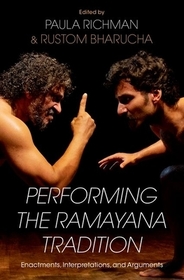
Performing the Ramayana Tradition
Enactments, Interpretations, and Arguments
-
20% KEDVEZMÉNY?
- A kedvezmény csak az 'Értesítés a kedvenc témákról' hírlevelünk címzettjeinek rendeléseire érvényes.
- Kiadói listaár GBP 98.00
-
44 247 Ft (42 140 Ft + 5% áfa)
Az ár azért becsült, mert a rendelés pillanatában nem lehet pontosan tudni, hogy a beérkezéskor milyen lesz a forint árfolyama az adott termék eredeti devizájához képest. Ha a forint romlana, kissé többet, ha javulna, kissé kevesebbet kell majd fizetnie.
- Kedvezmény(ek) 20% (cc. 8 849 Ft off)
- Kedvezményes ár 35 398 Ft (33 712 Ft + 5% áfa)
- A kedvezmény érvényes eddig: 2026. június 30.
Iratkozzon fel most és részesüljön kedvezőbb árainkból!
Feliratkozom
44 247 Ft

Beszerezhetőség
Becsült beszerzési idő: A Prosperónál jelenleg nincsen raktáron, de a kiadónál igen. Beszerzés kb. 3-5 hét..
A Prosperónál jelenleg nincsen raktáron.
Why don't you give exact delivery time?
A beszerzés időigényét az eddigi tapasztalatokra alapozva adjuk meg. Azért becsült, mert a terméket külföldről hozzuk be, így a kiadó kiszolgálásának pillanatnyi gyorsaságától is függ. A megadottnál gyorsabb és lassabb szállítás is elképzelhető, de mindent megteszünk, hogy Ön a lehető leghamarabb jusson hozzá a termékhez.
A termék adatai:
- Kiadó OUP USA
- Megjelenés dátuma 2021. július 6.
- ISBN 9780197552506
- Kötéstípus Keménykötés
- Terjedelem378 oldal
- Méret 160x243x27 mm
- Súly 685 g
- Nyelv angol
- Illusztrációk 25 118
Kategóriák
Rövid leírás:
The Ramayana, one of the two pre-eminent ancient Hindu epics, has played a foundational role in many aspects of India's arts and social norms. For centuries, people learned this narrative by watching, listening, and participating in enactments of it. The story has continued to be retold and rethought through the centuries in many of India's regional languages, such as Hindi, Tamil, and Bengali, and has provided the basis for enactments in recitation, musical renditions, dance, and avant-garde performances. This volume introduces non-specialists to the Ramayana's major themes and complexities, as well as to the highly nuanced terms in Indian languages used to represent theater and performance.
TöbbHosszú leírás:
The Ramayana, one of the two pre-eminent Hindu epics, has played a foundational role in many aspects of India's arts and social norms. For centuries, people learned this narrative by watching, listening, and participating in enactments of it. Although the Ramayana's first extant telling in Sanskrit dates back to ancient times, the story has continued to be retold and rethought through the centuries in many of India's regional languages, such as Hindi, Tamil, and Bengali. The narrative has provided the basis for enactments of its episodes in recitation, musical renditions, dance, and avant-garde performances. This volume introduces non-specialists to the Ramayana's major themes and complexities, as well as to the highly nuanced terms in Indian languages used to represent theater and performance.
Two introductions orient readers to the history of Ramayana texts by Tulsidas, Valmiki, Kamban, Sankaradeva, and others, as well as to the dramaturgy and aesthetics of their enactments. The contributed essays provide context-specific analyses of diverse Ramayana performance traditions and the narratives from which they draw. The essays are clustered around the shared themes of the politics of caste and gender; the representation of the anti-hero; contemporary re-interpretations of traditional narratives; and the presence of Ramayana discourse in daily life.
Richman and Bharucha's collaboration on this volume of edited essays represents simultaneously a culmination of these research directions, and a corrective, steering towards a more balanced representation beyond the more extensively studied Sanskrit and Hindi Ramayanas...Apart from the masterful introductions and conclusion, there are several further features that render this reader friendly volume perfect for teaching. The inclusion of translations of several dramas makes scripts available for students to perform or draw inspiration from for creative writing. The parts on caste and gender are important for integrating diversity into the curriculum.
Tartalomjegyzék:
Preface and Acknowledgements: The Journey of the Book
List of Illustrations
Note on Transliteration
I. Orientations and Beginnings
1. The Ramayana Narrative Tradition as a Resource for Performance
Paula Richman
2. Thinking the Ramayana Tradition through Performance
Rustom Bharucha
3. Where Narrative and Performance Meet: Nepathya's R--m--ya---a Sa---k-----pam
Rizio Yohannan
II The Politics of Caste
4. Shambuk's Severed Head by Omprakash Valmiki
Translation by Aaron Sherraden
5. Recasting Shambuk in Three Hindi Anti-Caste Dramas
Aaron Sherraden
6. The Killing of Shambuk: A Retelling from a Director's Perspective
Sudhanva Deshpande
III Interrogating the Anti-Hero
7. Ravana Center Stage: Origins of Ravana and King of Lanka
Paula Richman
8. Ravana as Dissident Artist: The Tenth Head and Ravanama
Rustom Bharucha
8a. Script of The Tenth Head
Vinay Kumar
8b. Script of Ravanama
Maya Krishna Rao
IV Performing Gender
9. The Making of RamaRavana: Reflections on Gender, Music, and Staging
Hanne M. de Bruin
10. Writing Her "Self": The Politics of Gender in Nangyarkuttu
Mundoli Narayanan
V Conversations and Arguments
11. Reflections on Ramayana in Kutiyattam
David Shulman, Margi Madhu Chakyar, Dr. Indu G. with Rustom Bharucha
12. Questions around Ram Vijay: Sattriya in a Monastic Tradition
Sri Narayan Chandra Goswami with Parasmoni Dutta, Paula Richman,
and Rustom Bharucha
13. Performing the Argument: Ramayana in Talamaddale
Akshara K.V.
VI Beyond Enactment
14. Revisiting "Being Rama": Playing a God in Changing Times
Urmimala Sarkar Munsi
15. The Night Before Bhor Arti: Play and Banarasipan in the Ramnagar Ramlila
Bhargav Rani
16. The Challenges Ahead: Researching the Ramayana Performance Tradition
Rustom Bharucha
Glossary
List of Contributors
Index

