

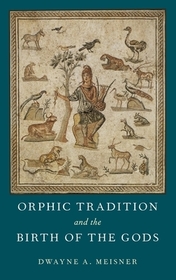
Orphic Tradition and the Birth of the Gods
-
10% KEDVEZMÉNY?
- A kedvezmény csak az 'Értesítés a kedvenc témákról' hírlevelünk címzettjeinek rendeléseire érvényes.
- Kiadói listaár GBP 100.00
-
45 150 Ft (43 000 Ft + 5% áfa)
Az ár azért becsült, mert a rendelés pillanatában nem lehet pontosan tudni, hogy a beérkezéskor milyen lesz a forint árfolyama az adott termék eredeti devizájához képest. Ha a forint romlana, kissé többet, ha javulna, kissé kevesebbet kell majd fizetnie.
- Kedvezmény(ek) 10% (cc. 4 515 Ft off)
- Kedvezményes ár 40 635 Ft (38 700 Ft + 5% áfa)
Iratkozzon fel most és részesüljön kedvezőbb árainkból!
Feliratkozom
45 150 Ft

Beszerezhetőség
Csak rendelésre kapható a kiadónál, kissé időigényes.
Why don't you give exact delivery time?
A beszerzés időigényét az eddigi tapasztalatokra alapozva adjuk meg. Azért becsült, mert a terméket külföldről hozzuk be, így a kiadó kiszolgálásának pillanatnyi gyorsaságától is függ. A megadottnál gyorsabb és lassabb szállítás is elképzelhető, de mindent megteszünk, hogy Ön a lehető leghamarabb jusson hozzá a termékhez.
A termék adatai:
- Kiadó OUP USA
- Megjelenés dátuma 2018. szeptember 6.
- ISBN 9780190663520
- Kötéstípus Keménykötés
- Terjedelem336 oldal
- Méret 239x155x30 mm
- Súly 558 g
- Nyelv angol 0
Kategóriák
Rövid leírás:
Meisner offers a new interpretation of four Orphic theogonies: Derveni, Eudemian, Hieronyman, and Rhapsodic. The fragments of these poems, thought to be written by Orpheus, contained narratives of the creation of the cosmos and the births of the gods, but differed from the mainstream account of Hesiod's Theogony.
TöbbHosszú leírás:
The hatching of the Cosmic Egg, the swallowing of Phanes by Zeus, and the murder of Dionysus by the Titans were just a few of the many stories that appeared in ancient Greek epic poems that were thought to have been written by the legendary singer Orpheus. Most of this poetry is now lost, surviving only in the form of brief quotations by Greek philosophers.
Orphic Tradition and the Birth of the Gods brings together the scattered fragments of four Orphic theogonies: the Derveni, Eudemian, Hieronyman, and Rhapsodic theogonies. Typically, theogonies are thought to be poetic accounts of the creation of the universe and the births of the gods, leading to the creation of humans and the establishment of the present state of the cosmos. The most famous example is Hesiod's Theogony, which unlike the Orphic theogonies has survived. But did Orphic theogonies look anything like Hesiod's Theogony? Meisner applies a new theoretical model for studying Orphic theogonies and suggests certain features that characterize them as different from Hesiod: the blending of Near Eastern narrative elements that are missing in Hesiod; the probability that these were short hymns, more like the Homeric Hymns than Hesiod; and the continuous discourse between myth and philosophy that can be seen in Orphic poems and the philosophers who quote them. Most importantly, this book argues that the Orphic myths of Phanes emerging from the Cosmic Egg and Zeus swallowing Phanes are at least as important as the well-known myth of Dionysus being dismembered by the Titans, long thought to have been the central myth of Orphism. As this book amply demonstrates, Orphic literature was a diverse and ever-changing tradition by which authors were able to think about the most current philosophical ideas through the medium of the most traditional poetic forms.
Meisner provides students and advanced scholars of Orphic theogonies with a splendidly equipped tool to navigate through the evidence and bibliography, with complete and balanced status quaestionis of each relevant issue, cautious hypotheses, and clear and convincing methods. Future research will walk along several of the paths opened by this book.
Tartalomjegyzék:
Preface
List of Abbreviations
Chapter 1: Introducing Orphic Theogonies
a) The Orphic Question
b) Ancient Theogonic Traditions
c) Theogonic Hymns
d) Mythical Poetry and Philosophical Prose
Chapter 2: The Derveni Papyrus
a) Orphic Ritual and the Derveni Author
b) The Reconstruction of the Derveni Poem
c) Zeus and the Act of Swallowing
Chapter 3: The Eudemian Theogony and other Early Orphic Poems
a) The Cosmic Egg in Aristophanes' Birds
b) The Primordial Deities of the Eudemian Theogony
c) The Orphic Hymn(s) to Zeus
d) Demeter and Dionysus in Early Orphic Poetry
Chapter 4: The Hieronyman Theogony
a) The Evidence: Apologist vs. Neoplatonist
b) Reconstruction: Athenagoras, Damascius, and Bernabé
c) The Narrative Pattern of Chronos and Phanes
d) The Succession Myth and the Incest of Zeus
Chapter 5: The Rhapsodies
a) Introduction
b) Rhapsodic Theogony or Rhapsodic Collection?
c) Chronos, the Cosmic Egg, and Phanes
d) Three Nights or One?
e) The Rhapsodic Succession Myth
f) Zeus the Demiurge swallows Phanes the Paradigm
Chapter 6: Dionysus in the Rhapsodies
a) Modern Interpretations of the Zagreus Myth
b) Ancient Interpretations of Dionysus and the Titans
c) The Story of Dionysus in the Rhapsodies
Chapter 7: Conclusion
Bibliography

