

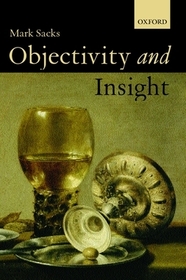
Objectivity and Insight
-
10% KEDVEZMÉNY?
- A kedvezmény csak az 'Értesítés a kedvenc témákról' hírlevelünk címzettjeinek rendeléseire érvényes.
- Kiadói listaár GBP 48.49
-
21 893 Ft (20 850 Ft + 5% áfa)
Az ár azért becsült, mert a rendelés pillanatában nem lehet pontosan tudni, hogy a beérkezéskor milyen lesz a forint árfolyama az adott termék eredeti devizájához képest. Ha a forint romlana, kissé többet, ha javulna, kissé kevesebbet kell majd fizetnie.
- Kedvezmény(ek) 10% (cc. 2 189 Ft off)
- Kedvezményes ár 19 703 Ft (18 765 Ft + 5% áfa)
Iratkozzon fel most és részesüljön kedvezőbb árainkból!
Feliratkozom
21 893 Ft

Beszerezhetőség
Megrendelésre a kiadó utánnyomja a könyvet. Rendelhető, de a szokásosnál kicsit lassabban érkezik meg.
Why don't you give exact delivery time?
A beszerzés időigényét az eddigi tapasztalatokra alapozva adjuk meg. Azért becsült, mert a terméket külföldről hozzuk be, így a kiadó kiszolgálásának pillanatnyi gyorsaságától is függ. A megadottnál gyorsabb és lassabb szállítás is elképzelhető, de mindent megteszünk, hogy Ön a lehető leghamarabb jusson hozzá a termékhez.
A termék adatai:
- Kiadó OUP Oxford
- Megjelenés dátuma 2003. január 9.
- ISBN 9780199256655
- Kötéstípus Puhakötés
- Terjedelem352 oldal
- Méret 235x156x18 mm
- Súly 530 g
- Nyelv angol 0
Kategóriák
Rövid leírás:
Mark Sacks presents an innovative study of one of the deepest philosophical problems: the nature and scope of objectivity. He critically examines the prospects for securing objectivity on the standard conception, drawing on a range of both Anglo-American and Continental European thinkers. He then argues for a different conception of objectivity which draws on the central insights of transcendental idealism, without succumbing to idealism or metaphysical excess.
TöbbHosszú leírás:
Mark Sacks presents an innovative study of the nature and scope of objectivity. He argues for a conception of objectivity that draws on a central insight of transcendental idealism, while preserving non-metaphysical orientation.
The first two parts of Objectivity and Insight explore the prospects for objectivity on the standard ontological conception, and find that they are not good. In Part I, under the heading of subject-driven scepticism, Sacks addresses the problem of securing epistemic reach that extends byond subjective content. In so doing, he considers models of mind proposed by Locke, Hume, Kant, James, and Bergson. Part II, under the heading of world-driven scepticism, discusses the scope for universality of normative structure - a problem which survives even after the assumption of an epistemologically significant breach between subject and object has been rejected.
In the third part of the book Sacks introduces an alternative conception of objectivity, and shows that there is good reason to accept it. This conception turns on an insight which is taken to be implicit in transcendental idealism, and responsible for its abiding appeal; but Sacks's articulation of that insight is neither idealist nor metaphysical.
Tartalomjegyzék:
Empiricist Theories of the Mind: Locke and Hume
Kant
James and Bergson: The Neglected Alternative
From the Ecological Subject to the Domestication of Reason
The Scope of Objectivity
Transcendental Constraints and Transcendental Features
A Compulsion to Objectivity in Experience
A Defence of Transcendental Arguments
Conclusion: Objectivity, Insight, and the Place of Fictional Force
References
Index

