

-
10% KEDVEZMÉNY?
- A kedvezmény csak az 'Értesítés a kedvenc témákról' hírlevelünk címzettjeinek rendeléseire érvényes.
- Kiadói listaár GBP 30.00
-
13 545 Ft (12 900 Ft + 5% áfa)
Az ár azért becsült, mert a rendelés pillanatában nem lehet pontosan tudni, hogy a beérkezéskor milyen lesz a forint árfolyama az adott termék eredeti devizájához képest. Ha a forint romlana, kissé többet, ha javulna, kissé kevesebbet kell majd fizetnie.
- Kedvezmény(ek) 10% (cc. 1 355 Ft off)
- Kedvezményes ár 12 191 Ft (11 610 Ft + 5% áfa)
Iratkozzon fel most és részesüljön kedvezőbb árainkból!
Feliratkozom
13 545 Ft

Beszerezhetőség
Csak rendelésre kapható a kiadónál, kissé időigényes.
Why don't you give exact delivery time?
A beszerzés időigényét az eddigi tapasztalatokra alapozva adjuk meg. Azért becsült, mert a terméket külföldről hozzuk be, így a kiadó kiszolgálásának pillanatnyi gyorsaságától is függ. A megadottnál gyorsabb és lassabb szállítás is elképzelhető, de mindent megteszünk, hogy Ön a lehető leghamarabb jusson hozzá a termékhez.
A termék adatai:
- Kiadó OUP India
- Megjelenés dátuma 2013. augusztus 8.
- ISBN 9780198083986
- Kötéstípus Keménykötés
- Terjedelem448 oldal
- Méret 220x145x33 mm
- Súly 626 g
- Nyelv angol
- Illusztrációk 18 illustrations 0
Kategóriák
Rövid leírás:
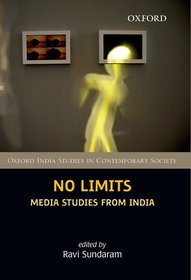
Media studies in India is a young and emergent field. Through interdisciplinary studies in the fields of film, television, music, print, and radio, No Limits addresses the issue of the contemporary in Indian media environment since its globalization in the 1980s.
TöbbHosszú leírás:
India after globalization is an increasingly mediatized society. Today, media experiences, desires, dream worlds, and fears have enveloped our time with force that was unimagined before. The blurring of the private and the public is now dramatically visible. The 'power of media' is a core explanatory category in public and academic common sense. No Limits maps the emergence of this mediatized world, and reflects on its wideranging consequences.
The volume approaches this transformation of India from the prism of media studies. With essays authored by well-known scholars in the fields of cinema, television, radio, music, print, and the Internet, it presents a wide ranging and fresh perspective on our mediamodernity. From media in the colonial era to contemporary experiences after globalization, it provides a long-term, comparative perspective to the present transformations. No Limits maps new connections between old and new media, and sets up questions for addressing past and present.
Presenting the media in India as a prism through which millions access the world, this volume will be indispensable to common citizens, students and scholars of sociology, social anthropology, media and cultural studies, mass communication, political science, and history.
Tartalomjegyzék:
List of Tables and Figures
Preface
List of Abbreviations
Introduction: The Horizon of Media Studies, Ravi Sundaram
PART ONE: MAPPING THE TERRAIN
1. The 'Bollywoodization' of the Indian Cinema: Cultural Nationalism in a Global Arena The 'Bollywoodization' of the Indian Cinema: Cultural Nationalism in a Global Arena
Afterword: The Bollywoodization Argument-Ten Years On, Ashish Rajadhyaksha
2. Sensuous Encounters: Law, Affect, and the Media Event, Lawrence Liang
3. The Inner and Outer Worlds of Emergent Television Cultures, Shohini Ghosh
PART TWO: CIRCULATION
4. Mission, Money, and Machinery: Indian Newspapers in the Twentieth Century, Robin Jeffrey
5. Revisiting the Pirate Kingdom, Ravi Sundaram
6. Figures of Transit: Tracing a Century of Hollywood in India, Nitin Govil
PART THREE: PUBLICS
7. Creating Cinema's Reading Publics: The Emergence of Film Journalism in Bombay, Debashree Mukherjee
8. Notes on Contemporary Film Experience: 'Bollywood', Genre Diversity, and Video Circuits, Ravi S. Vasudevan
9. Whistling Fans: Reflections on the Sociology, Politics, and Performativity of an Excessively Active Audience, S.V. Srinivas
10. Unimaginable Communities: Television, Globalization, and National Identities in Postcolonial India, Shanti Kumar
11. The Imagined Reign of the Iron Lecturer: Village Broadcast in Colonial India, Joselyn Zivin
12. The 'Terrorist' and the Screen: Afterimages of the Batla House 'Encounter', Shuddhabrata Sengupta
PART FOUR: PRODUCTION
13. The Gramophone Company in India, 1898-1912: The Evolution of an Early Media Enterprise, Vibodh Parthasarthy
14. Democratizing Indian Popular Music: From Cassette Culture to the Digital Era, Peter Manuel
15. Film Stardom after Liveness, Ranjani Mazumdar
Notes on Contributors
Index

