

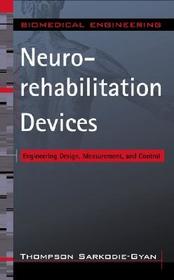
Neurorehabilitation Devices
Engineering Design, Measurement and Control
Sorozatcím: MECHANICAL ENGINEERING;
-
10% KEDVEZMÉNY?
- A kedvezmény csak az 'Értesítés a kedvenc témákról' hírlevelünk címzettjeinek rendeléseire érvényes.
- Kiadói listaár GBP 142.99
-
64 559 Ft (61 485 Ft + 5% áfa)
Az ár azért becsült, mert a rendelés pillanatában nem lehet pontosan tudni, hogy a beérkezéskor milyen lesz a forint árfolyama az adott termék eredeti devizájához képest. Ha a forint romlana, kissé többet, ha javulna, kissé kevesebbet kell majd fizetnie.
- Kedvezmény(ek) 10% (cc. 6 456 Ft off)
- Kedvezményes ár 58 103 Ft (55 337 Ft + 5% áfa)
Iratkozzon fel most és részesüljön kedvezőbb árainkból!
Feliratkozom
64 559 Ft

Beszerezhetőség
Megjelenése törölve vagy kivonva a forgalomból. Sajnos nem rendelhető.
Why don't you give exact delivery time?
A beszerzés időigényét az eddigi tapasztalatokra alapozva adjuk meg. Azért becsült, mert a terméket külföldről hozzuk be, így a kiadó kiszolgálásának pillanatnyi gyorsaságától is függ. A megadottnál gyorsabb és lassabb szállítás is elképzelhető, de mindent megteszünk, hogy Ön a lehető leghamarabb jusson hozzá a termékhez.
A termék adatai:
- Kiadó McGraw Hill
- Megjelenés dátuma 2006. január 16.
- ISBN 9780071448307
- Kötéstípus Keménykötés
- Terjedelem312 oldal
- Méret 231x154x28 mm
- Súly 619 g
- Nyelv angol 0
Kategóriák
Rövid leírás:
THE DEFINITIVE GUIDE TO DEVELOPING NEUROREHABILITATION DEVICES
Written from an engineering perspective, this solutions-oriented reference enables readers to fully understand the fundamental principles and terminology of rehabilitation medicine and successfully apply them to the development of human neurorehabilitation devices.
With this detailed reference, readers will be able to develop state-of-the-art design, measurement, and control systems and solve the highly specialized problems inherent in biomedical devices used in the treatment and recovery of individuals suffering from neuro-muscular impairments and traumatic brain, spinal cord, and peripheral injuries.
The Engineering Data Necessary to Develop Next Generation Neurorehabilitation Devices
- Introduction to Rehabilitation Medicine
- Objectives of Rehabilitation
- State-of-the-Art in Neurorehabilitation
- Neuro-Diagnosis
- Neuro-Controls
- Intelligent Knowledge-Based Neurorehabilitation
- Future Enhancements and Considerations in Neurorehabilitation
- The Smart Gait Emulator for Effective Neurorehabilitation
Hosszú leírás:
Publisher's Note: Products purchased from Third Party sellers are not guaranteed by the publisher for quality, authenticity, or access to any online entitlements included with the product.
Debilitating neuromuscular disorders and traumatic brain, spinal cord or peripheral injuries have a devastating effect on those who suffer from them. Written from an engineering perspective, and based on a course taught by the American Society of Mechanical Engineers, Neurorehabilitation Devices first helps the designer to better understand and formulate design, measurement and control systems for biomedical devices used in the treatment and recovery of people suffering from these disorders. Just some of the topics covered in this book are: methods to allow an amputee to control a powered artificial arm by means of electrical signals generated by contractions of muscles of the residual limb in combination with motor nerve activity from peripheral nerves, as well as the development of new technologies to use electrical stimulation to treat the hyperactive bladder, to electrically induce bowel movement and defecation, and to develop methods for selective stimulation of nerve fibres.
Publisher's Note: Products purchased from Third Party sellers are not guaranteed by the publisher for quality, authenticity, or access to any online entitlements included with the product.
Debilitating neuromuscular disorders and traumatic brain, spinal cord or peripheral injuries have a devastating effect on those who suffer from them. Written from an engineering perspective, and based on a course taught by the American Society of Mechanical Engineers, Neurorehabilitation Devices first helps the designer to better understand and formulate design, measurement and control systems for biomedical devices used in the treatment and recovery of people suffering from these disorders. Just some of the topics covered in this book are: methods to allow an amputee to control a powered artificial arm by means of electrical signals generated by contractions of muscles of the residual limb in combination with motor nerve activity from peripheral nerves, as well as the development of new technologies to use electrical stimulation to treat the hyperactive bladder, to electrically induce bowel movement and defecation, and to develop methods for selective stimulation of nerve fibres.

