

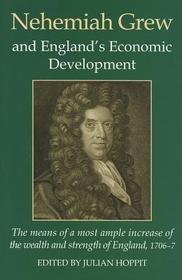
Nehemiah Grew and England's Economic Development
The Means of a Most Ample Increase of the Wealth and Strength of England, 1706-7
Sorozatcím: Records of Social and Economic History; 47;
-
10% KEDVEZMÉNY?
- A kedvezmény csak az 'Értesítés a kedvenc témákról' hírlevelünk címzettjeinek rendeléseire érvényes.
- Kiadói listaár GBP 40.00
-
18 060 Ft (17 200 Ft + 5% áfa)
Az ár azért becsült, mert a rendelés pillanatában nem lehet pontosan tudni, hogy a beérkezéskor milyen lesz a forint árfolyama az adott termék eredeti devizájához képest. Ha a forint romlana, kissé többet, ha javulna, kissé kevesebbet kell majd fizetnie.
- Kedvezmény(ek) 10% (cc. 1 806 Ft off)
- Kedvezményes ár 16 254 Ft (15 480 Ft + 5% áfa)
Iratkozzon fel most és részesüljön kedvezőbb árainkból!
Feliratkozom
18 060 Ft

Beszerezhetőség
Becsült beszerzési idő: A Prosperónál jelenleg nincsen raktáron, de a kiadónál igen. Beszerzés kb. 3-5 hét..
A Prosperónál jelenleg nincsen raktáron.
Why don't you give exact delivery time?
A beszerzés időigényét az eddigi tapasztalatokra alapozva adjuk meg. Azért becsült, mert a terméket külföldről hozzuk be, így a kiadó kiszolgálásának pillanatnyi gyorsaságától is függ. A megadottnál gyorsabb és lassabb szállítás is elképzelhető, de mindent megteszünk, hogy Ön a lehető leghamarabb jusson hozzá a termékhez.
A termék adatai:
- Kiadó OUP Oxford
- Megjelenés dátuma 2012. június 21.
- ISBN 9780197264959
- Kötéstípus Keménykötés
- Terjedelem180 oldal
- Méret 241x164x17 mm
- Súly 440 g
- Nyelv angol 0
Kategóriák
Rövid leírás:
The book is a scholarly edition of a manuscript written in about 1706 which has not previously been published. The main text considers England's economic potential, and puts forward ways in which that potential could be maximized.
TöbbHosszú leírás:
This edition publishes for the first time a little-known work on improving England's economy, written around 1706 and presented to Queen Anne on the eve of the parliamentary Union of England and Scotland. As such it contributed to a growing body of writing about managing the economy in Britain. That the work has often been overlooked is partly because its author, Nehemiah Grew, is best known as a botanist and as a medic. But his distinctive voice and decided views warrant wider appreciation. In part his unusual contribution to economic literature arose from his involvement in the early Royal Society, founded in 1660, informing as it did his view of England's material potential and how it might best be exploited. But he was also suspicious of people's motivations and was certain that the state had to regulate lives to a significant degree if society was to be as productive as possible. If Grew's religious beliefs were important here, it is also clear that he had read amongst contemporary writings on economic matters. Certainly, his work ranges widely, from natural resources to human capital, agriculture to industry, internal trade to overseas commerce. Sir William Petty was an especially important influence upon him, though he eschewed Petty's methodological emphasis upon 'political arithmetic'. Indeed, Grew's assumptions and conclusions prove very questionable when their statistical implications are worked through. Nonetheless, the work reminds us of the importance of blind alleys and false dawns in the history of early 'political economy'.
Több
