

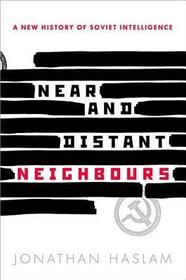
Near and Distant Neighbours
A New History of Soviet Intelligence
-
10% KEDVEZMÉNY?
- A kedvezmény csak az 'Értesítés a kedvenc témákról' hírlevelünk címzettjeinek rendeléseire érvényes.
- Kiadói listaár GBP 23.99
-
10 831 Ft (10 315 Ft + 5% áfa)
Az ár azért becsült, mert a rendelés pillanatában nem lehet pontosan tudni, hogy a beérkezéskor milyen lesz a forint árfolyama az adott termék eredeti devizájához képest. Ha a forint romlana, kissé többet, ha javulna, kissé kevesebbet kell majd fizetnie.
- Kedvezmény(ek) 10% (cc. 1 083 Ft off)
- Kedvezményes ár 9 748 Ft (9 284 Ft + 5% áfa)
Iratkozzon fel most és részesüljön kedvezőbb árainkból!
Feliratkozom
10 831 Ft

Beszerezhetőség
Megrendelésre a kiadó utánnyomja a könyvet. Rendelhető, de a szokásosnál kicsit lassabban érkezik meg.
Why don't you give exact delivery time?
A beszerzés időigényét az eddigi tapasztalatokra alapozva adjuk meg. Azért becsült, mert a terméket külföldről hozzuk be, így a kiadó kiszolgálásának pillanatnyi gyorsaságától is függ. A megadottnál gyorsabb és lassabb szállítás is elképzelhető, de mindent megteszünk, hogy Ön a lehető leghamarabb jusson hozzá a termékhez.
A termék adatai:
- Kiadó OUP Oxford
- Megjelenés dátuma 2015. szeptember 24.
- ISBN 9780198708490
- Kötéstípus Keménykötés
- Terjedelem400 oldal
- Méret 240x169x27 mm
- Súly 718 g
- Nyelv angol
- Illusztrációk 20 black and white illustrations 0
Kategóriák
Rövid leírás:
The true story of Soviet intelligence, from the very beginnings in 1917 right through to the end of the Cold War - now told in full for the first time
TöbbHosszú leírás:
Near and Distant Neighbours is the first ever substantiated and complete history of Soviet intelligence. Based on a mass of newly declassified Russian secret intelligence documentation, it reveals the true story of Soviet intelligence from its very beginnings in 1917 right through to the end of the Cold War. Covering both main branches of Soviet espionage - civilian and military - Jonathan Haslam charts the full range of the Soviet intelligence effort and the story of its development: in cryptography, disinformation, special forces, and counter-intelligence.
In a tragic irony, an organization that so casually disposed of others critically depended upon the human factor. Due to their lack of expertise and technological know-how, from early on the Soviets were forced to rely heavily on secret agents instead of the more sophisticated code-breaking techniques of other intelligence agencies. But in this they were highly successful, recruiting spy rings such as the infamous 'Cambridge Five' in the 1930s. Had it not been for Soviet espionage against Britain's code-breaking effort during the Second World War, Stalin might never have won the victory that later enabled him to dominate half of Europe. Similarly, espionage directed at his allies enabled the Soviets to build an atomic bomb earlier than expected and to take calculated risks in post-war diplomacy, such as his audacious blockade of Berlin which led to the Berlin Airlift.
Khrushchev's denunciation of Stalin in 1956 alienated many of the foreign 'friends' so valued by the Soviet intelligence services. It also made new recruitment of foreign agents much more difficult, as the USSR rapidly lost its glamour and ideological appeal to potential supporters in the West during the 1950s. However, the gap was finally bridged through exploiting greedy and disloyal Western intelligence officers, using blackmail and bribery - and with great success. In fact, it was the ultimate irony that the KGB and GRU had never been more effective than when the Soviet Union began to collapse from within.
A detailed appraisal of how the Soviet Union handled undercover operations from the communist revolution in 1917 until the end of the cold war. The most gripping chapters focus on the chaos that was unleashed by Josef Stalin.
Tartalomjegyzék:
Preface
Starting from Scratch
But Who Was the Enemy?
Signals Intelligence: a Poor But Demanding Stepchild
What German Threat?
Tested in War
Cold War Advantage
Black Out
Holding the Lead in Germany
Loss of Faith
The Computer Gap
Pride Before the Fall
Conclusions: Aftermath

