

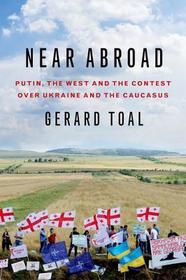
Near Abroad
Putin, the West and the Contest over Ukraine and the Caucasus
-
10% KEDVEZMÉNY?
- A kedvezmény csak az 'Értesítés a kedvenc témákról' hírlevelünk címzettjeinek rendeléseire érvényes.
- Kiadói listaár GBP 31.99
-
14 443 Ft (13 755 Ft + 5% áfa)
Az ár azért becsült, mert a rendelés pillanatában nem lehet pontosan tudni, hogy a beérkezéskor milyen lesz a forint árfolyama az adott termék eredeti devizájához képest. Ha a forint romlana, kissé többet, ha javulna, kissé kevesebbet kell majd fizetnie.
- Kedvezmény(ek) 10% (cc. 1 444 Ft off)
- Kedvezményes ár 12 998 Ft (12 380 Ft + 5% áfa)
Iratkozzon fel most és részesüljön kedvezőbb árainkból!
Feliratkozom
14 443 Ft

Beszerezhetőség
Becsült beszerzési idő: A Prosperónál jelenleg nincsen raktáron, de a kiadónál igen. Beszerzés kb. 3-5 hét..
A Prosperónál jelenleg nincsen raktáron.
Why don't you give exact delivery time?
A beszerzés időigényét az eddigi tapasztalatokra alapozva adjuk meg. Azért becsült, mert a terméket külföldről hozzuk be, így a kiadó kiszolgálásának pillanatnyi gyorsaságától is függ. A megadottnál gyorsabb és lassabb szállítás is elképzelhető, de mindent megteszünk, hogy Ön a lehető leghamarabb jusson hozzá a termékhez.
A termék adatai:
- Kiadó OUP USA
- Megjelenés dátuma 2017. március 30.
- ISBN 9780190253301
- Kötéstípus Keménykötés
- Terjedelem408 oldal
- Méret 239x160x35 mm
- Súly 658 g
- Nyelv angol 0
Kategóriák
Rövid leírás:
In sum, by showing how and why local regional disputes quickly develop into global crises through the paired power of historical memory and time-space compression, Near Abroad reshapes our understanding of the current conflict raging in the center of the Eurasian landmass and international politics as a whole.
TöbbHosszú leírás:
Vladimir Putin's intervention into the Georgia/South Ossetia conflict in summer 2008 was quickly recognized by Western critics as an attempt by Russia to increase its presence and power in the "near abroad", or the independent states of the former Soviet Union that Russia still regards as its wards. Though the global economic recession that began in 2008 moved the incident to the back of the world's mind, Russia surged to the forefront again six years later when they invaded the heavily Russian Crimea in Ukraine and annexed it. In contrast to the earlier Georgia episode, this new conflict has generated a crisis of global proportions, forcing European countries to rethink their relationship with Russia and their reliance on it for energy supplies, as Russia was now squeezing natural gas from what is technically Ukraine.
In Near Abroad, the eminent political geographer Gerard Toal analyzes Russia's recent offensive actions in the near abroad, focusing in particular on the ways in which both the West and Russia have relied on Cold War-era rhetorical and emotional tropes that distort as much as they clarify. In response to Russian aggression, US critics quickly turned to tried-and-true concepts like "spheres of influence" to condemn the Kremlin. Russia in turn has brought back its long tradition of criticizing western liberalism and degeneracy to grandly rationalize its behavior in what are essentially local border skirmishes. It is this tendency to resort to the frames of earlier eras that has led the conflicts to "jump scales," moving from the regional to the global level in short order. The ambiguities and contradictions that result when nations marshal traditional geopolitical arguments-rooted in geography, territory, and old understandings of distance-further contributes to the escalation of these conflicts. Indeed, Russia's belligerence toward Georgia stemmed from concern about its possible entry into NATO, an organization of states thousands of miles away. American hawks also strained credulity by portraying Georgia as a nearby ally in need of assistance. Similarly, the threat of NATO to the Ukraine looms large in the Kremlin's thinking, and many Ukrainians themselves self-identify with the West despite their location in Eastern Europe.
This timely and incisive work is highly recommended for those interested in how a new path leading from the ruins of the crumbling liberal international order established after World War II can be anticipated, plotted and navigated.
Tartalomjegyzék:
TK
Több
