

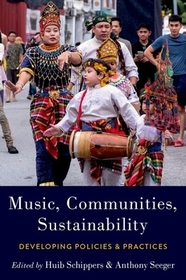
Music, Communities, Sustainability
Developing Policies and Practices
-
10% KEDVEZMÉNY?
- A kedvezmény csak az 'Értesítés a kedvenc témákról' hírlevelünk címzettjeinek rendeléseire érvényes.
- Kiadói listaár GBP 33.49
-
15 120 Ft (14 400 Ft + 5% áfa)
Az ár azért becsült, mert a rendelés pillanatában nem lehet pontosan tudni, hogy a beérkezéskor milyen lesz a forint árfolyama az adott termék eredeti devizájához képest. Ha a forint romlana, kissé többet, ha javulna, kissé kevesebbet kell majd fizetnie.
- Kedvezmény(ek) 10% (cc. 1 512 Ft off)
- Kedvezményes ár 13 608 Ft (12 960 Ft + 5% áfa)
Iratkozzon fel most és részesüljön kedvezőbb árainkból!
Feliratkozom
15 120 Ft

Beszerezhetőség
Megrendelésre a kiadó utánnyomja a könyvet. Rendelhető, de a szokásosnál kicsit lassabban érkezik meg.
Why don't you give exact delivery time?
A beszerzés időigényét az eddigi tapasztalatokra alapozva adjuk meg. Azért becsült, mert a terméket külföldről hozzuk be, így a kiadó kiszolgálásának pillanatnyi gyorsaságától is függ. A megadottnál gyorsabb és lassabb szállítás is elképzelhető, de mindent megteszünk, hogy Ön a lehető leghamarabb jusson hozzá a termékhez.
A termék adatai:
- Kiadó OUP USA
- Megjelenés dátuma 2022. szeptember 29.
- ISBN 9780197609118
- Kötéstípus Puhakötés
- Terjedelem296 oldal
- Méret 152x236x17 mm
- Súly 431 g
- Nyelv angol
- Illusztrációk 6 figures, 2 tables 241
Kategóriák
Rövid leírás:
In Music, Communities, Sustainability, editors Huib Schippers and Anthony Seeger bring together a diverse roster of thinkers and practitioners to offer new perspectives on the effects of the 2003 UNESCO Convention on Safeguarding of the Intangible Cultural Heritage, and on efforts around the world to treat music as one essential Intangible Cultural Heritage of humankind.
TöbbHosszú leírás:
Music, Communities, Sustainability, edited thoughtfully by Huib Schippers and Anthony Seeger, traces the genesis, implementation, and development of the influential 2003 UNESCO Convention on Safeguarding of the Intangible Cultural Heritage and its impact on music practices around the world. With insights from established and emerging scholars who have been there from the early beginnings to those who work with it in communities today, this book tells a riveting story that celebrates the rise in awareness that approaching music as Intangible Cultural Heritage has brought. At the same time, it critiques the discrepancies between ideologies and realities as they emerged across the globe in its first twenty years, and provides perspectives for sound futures for the planet. Gathering such varied perspectives, this essential volume tells a crucial history and expands our understanding of the possibilities and limitations of interventions in music sustainability on a global scale.
This anthology is a 'must read' for those who value local and traditional music cultures in an interconnected world. It presents timely and deeply informed perspectives from scholars in ten countries on the debates and impacts of UNESCO's 2003 Convention. Their work raises crucial questions about who benefits, how traditions are both sustained and changed innovatively (though sometimes controversially), whose traditions thrive and whose are left without support when the interests of communities, nation states, and commercial enterprises vie for control.
Tartalomjegyzék:
Acknowledgements
Foreword--Jeff Todd Titon
1. Introduction: Approaching music as Intangible Cultural Heritage (ICH)--Anthony Seeger and Huib Schippers
PART ONE: THE GENESIS OF THE ICH CONVENTION
2. Recognizing Intangible Cultural Heritage--Richard Kurin
3. Modalities for community participation in implementing the UNESCO ICH Convention--Noriko Aikawa-Fauré
4. Definitions related to the safeguarding of living culture: Words matter--Wim van Zanten (summary; full text available on companion website)
5. Reclaiming community agency in managing Intangible Cultural Heritage: Paperwork, people, and the potential of the public voice--Naila Ceribašić
PART TWO: THE ICH CONVENTION IN ACTION
6. The "ICH Movement" in China: The Status of Traditional Musics after ICH Certification--XIAO Mei & YANG Xiao
7. UNESCO-based and UNESCO-free: Governmental and Non-Governmental Efforts for Safeguarding Intangible Cultural Heritage--Olcay Muslu
8. Community Engagement as a Site of Struggle: UNESCO Conventions, Intangible Cultural Heritage, and State Agendas--Tan Sooi Beng
9. There Is No Price for That: UNESCO as Translator Between Conflicting Value Systems in Guatemala--Logan Elizabeth Clark
10. Sustainability, Agency, and the Ecologies of Music Heritage in Alentejo, Portugal--Salwa El-Shawan Castelo-Branco
PART THREE: FUTURE PERSPECTIVES
11. Reading ICH in Cultural Space: China's National Cultural Ecosystem (Experimental) Conservation Areas--GAO Shu
12. Archives, Technology, Communities, and Sustainability: Overcoming the Tragedy of Humpty Dumpty--Anthony Seeger (summary; full text available on companion website)
13. Mapping Musical Vitality: A Comparative Approach to Identifying Musical Heritage in Need of Safeguarding--Catherine Grant
14. Working Musically Through Crisis: What Will It Take to Push for a Sound(er) Future for Haiti?--Rebecca Dirksen

