

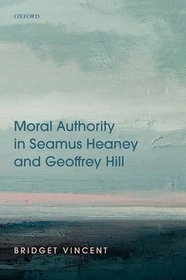
Moral Authority in Seamus Heaney and Geoffrey Hill
-
10% KEDVEZMÉNY?
- A kedvezmény csak az 'Értesítés a kedvenc témákról' hírlevelünk címzettjeinek rendeléseire érvényes.
- Kiadói listaár GBP 80.00
-
38 220 Ft (36 400 Ft + 5% áfa)
Az ár azért becsült, mert a rendelés pillanatában nem lehet pontosan tudni, hogy a beérkezéskor milyen lesz a forint árfolyama az adott termék eredeti devizájához képest. Ha a forint romlana, kissé többet, ha javulna, kissé kevesebbet kell majd fizetnie.
- Kedvezmény(ek) 10% (cc. 3 822 Ft off)
- Kedvezményes ár 34 398 Ft (32 760 Ft + 5% áfa)
Iratkozzon fel most és részesüljön kedvezőbb árainkból!
Feliratkozom
38 220 Ft

Beszerezhetőség
Becsült beszerzési idő: Várható beérkezés: 2026. január vége.
A Prosperónál jelenleg nincsen raktáron.
Why don't you give exact delivery time?
A beszerzés időigényét az eddigi tapasztalatokra alapozva adjuk meg. Azért becsült, mert a terméket külföldről hozzuk be, így a kiadó kiszolgálásának pillanatnyi gyorsaságától is függ. A megadottnál gyorsabb és lassabb szállítás is elképzelhető, de mindent megteszünk, hogy Ön a lehető leghamarabb jusson hozzá a termékhez.
A termék adatai:
- Kiadás sorszáma 1
- Kiadó OUP Oxford
- Megjelenés dátuma 2022. március 1.
- ISBN 9780198870920
- Kötéstípus Keménykötés
- Terjedelem224 oldal
- Méret 240x164x18 mm
- Súly 476 g
- Nyelv angol 241
Kategóriák
Rövid leírás:
Studies the work of Seamus Heaney and Goeffrey Hill to present new perspectives on the way literature communicates moral knowledge.
TöbbHosszú leírás:
How do poems communicate moral ideas? Can they express concepts in ways that are unique and impossible to replicate in other forms of writing? This book explores these questions by turning to two of the late twentieth century's most important poets: Seamus Heaney and Geoffrey Hill. Their work shows that a poem can act as an example of a moral concept, rather than simply a description or discussion of it. Exploring these two poets via their shared preoccupation with poetry's moral exemplarity opens up new perspectives on their work. The concept of exemplarity is shown to play an important role in these poets' most significant preoccupations, from moral complicity to the nature of lyric speech to literary influence to memorialisation, responsibility, and aesthetic autonomy. Through this new analysis of poetry, critical prose, drama, and archival materials, this book offers a major new study of ethics in the later period of these two writers--including recent underexplored posthumous works.
In turn, the book also makes an important intervention in larger debates about literature and morality, and about the field of ethical criticism itself: this is the first book-length study to expand ethical criticism beyond its customary narrative focus. The ethical criticism of fiction is often an exercise in methodological advocacy, urging the use of more literary examples in moral philosophy. As this book shows, including poetry among these examples introduces new, lyric-inflected caveats about the use of literature as a form of moral example: caveats which remain invisible in narrative-centred ethical criticism.
The book rallies a successful call to expand poetry into the framework of philosophical exemplarity that has previously, for the most part, been retained for the narrative form. The book resoundingly sets out the stall for future studies of moral authority and exemplarity in poetry.
Tartalomjegyzék:
Introduction
Poetic Examples
The Exemplary Seamus Heaney
Exemplary Readership in Heaney's Prose
The Exemplary Poetry of Geoffrey Hill
The Exemplary Prose of Geoffrey Hill
Exemplary Qualifications
Bibliography

