

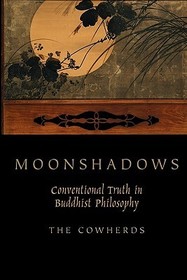
Moonshadows
Conventional Truth in Buddhist Philosophy
-
10% KEDVEZMÉNY?
- A kedvezmény csak az 'Értesítés a kedvenc témákról' hírlevelünk címzettjeinek rendeléseire érvényes.
- Kiadói listaár GBP 58.00
-
26 187 Ft (24 940 Ft + 5% áfa)
Az ár azért becsült, mert a rendelés pillanatában nem lehet pontosan tudni, hogy a beérkezéskor milyen lesz a forint árfolyama az adott termék eredeti devizájához képest. Ha a forint romlana, kissé többet, ha javulna, kissé kevesebbet kell majd fizetnie.
- Kedvezmény(ek) 10% (kb. 2 619 Ft)
- Kedvezményes ár 23 568 Ft (22 446 Ft + 5% áfa)
Iratkozzon fel most és részesüljön kedvezőbb árainkból!
Feliratkozom
26 187 Ft

Beszerezhetőség
Megrendelésre a kiadó utánnyomja a könyvet. Rendelhető, de a szokásosnál kicsit lassabban érkezik meg.
Why don't you give exact delivery time?
A beszerzés időigényét az eddigi tapasztalatokra alapozva adjuk meg. Azért becsült, mert a terméket külföldről hozzuk be, így a kiadó kiszolgálásának pillanatnyi gyorsaságától is függ. A megadottnál gyorsabb és lassabb szállítás is elképzelhető, de mindent megteszünk, hogy Ön a lehető leghamarabb jusson hozzá a termékhez.
A termék adatai:
- Kiadó OUP USA
- Megjelenés dátuma 2011. január 27.
- ISBN 9780199751433
- Kötéstípus Puhakötés
- Terjedelem272 oldal
- Méret 229x152x15 mm
- Súly 390 g
- Nyelv angol 20
Kategóriák
Rövid leírás:
In Moonshadows, the Cowherds, a team of ten scholars of Buddhist Studies, address the nature of conventional truth as it is understood in the Madhyamaka tradition deriving from Nagarjuna and Candrakarti. Moonshadows combines textual scholarship with philosophical analysis to elucidate the metaphysical, epistemological and ethical consequences of this doctrine.
TöbbHosszú leírás:
The doctrine of the two truths - a conventional truth and an ultimate truth - is central to Buddhist metaphysics and epistemology. The two truths (or two realities), the distinction between them, and the relation between them is understood variously in different Buddhist schools; it is of special importance to the Madhyamaka school. One theory is articulated with particular force by Nagarjuna (2nd C CE) who famously claims that the two truths are identical to one another and yet distinct. One of the most influential interpretations of Nagarjuna's difficult doctrine derives from the commentary of Candrakarti (6th C CE). In view of its special soteriological role, much attention has been devoted to explaining the nature of the ultimate truth; less, however, has been paid to understanding the nature of conventional truth, which is often described as "deceptive," "illusion," or "truth for fools." But because of the close relation between the two truths in Madhyamaka, conventional truth also demands analysis. Moonshadows, the product of years of collaboration by ten cowherds engaged in Philosophy and Buddhist Studies, provides this analysis. The book asks, "what is true about conventional truth?" and "what are the implications of an understanding of conventional truth for our lives?" Moonshadows begins with a philosophical exploration of classical Indian and Tibetan texts articulating Candrakati's view, and uses this textual exploration as a basis for a more systematic philosophical consideration of the issues raised by his account.
a high-quality, engaging work, which is accessible to undergraduates and of interest to specialists. The Cowherds are to be commended for having provided a home on the range for anyonereally, anyoneinterested to understand a philosophically significant, Buddhist approach to the nature of truth.
Tartalomjegyzék:
Acknowledgments
Preface
An Introduction to Conventional Truth
Guy Newland and Tom J F Tillemans
Taking Conventional Truth Seriously: Authority Regarding Deceptive Reality
Jay L Garfield
Prasangika Epistemology in Context
Sonam Thakchöe
Weighing the Butter, Levels of Explanation and Falsification: Models of the Conventional in Tsongkhapa's Account of Madhyamaka
Guy Martin Newland
Identifying the Object of Negation and the Status of Conventional Truth: Why the dgag bya Matters So Much to Tibetan Madhyamikas
Jay L Garfield and Sonam Thakchöe
Can a Madhyamaka be a Skeptic? The Case of Patsab Nyimadrak
Georges Dreyfus
Madhyamaka and Classical Greek Skepticism
Georges Dreyfus and Jay L Garfield
The (Two) Truths about Truth
Graham Priest, Mark Siderits and Tom J F Tillemans
How Far can a Madhyamika Buddhist Reform Conventional Truth? Dismal Relativism, Fictionalism, Easy-easy Truth and the Alternatives
Tom J F Tillemans
Is Everything Connected to Everything Else? What the Gopis Know
Mark Siderits
Carnap's Pragmatism and the Two Truths
Bronwyn Finnigan and Koji Tanaka
The Merely Conventional Existence of the World
Jan Westerhoff
Two Truths: Two Models
Graham Priest
Ethics for Madhyamikas
Bronwyn Finnigan and Koji Tanaka
References and Abbreviations
Index

