

-
10% KEDVEZMÉNY?
- A kedvezmény csak az 'Értesítés a kedvenc témákról' hírlevelünk címzettjeinek rendeléseire érvényes.
- Kiadói listaár GBP 9.99
-
4 510 Ft (4 295 Ft + 5% áfa)
Az ár azért becsült, mert a rendelés pillanatában nem lehet pontosan tudni, hogy a beérkezéskor milyen lesz a forint árfolyama az adott termék eredeti devizájához képest. Ha a forint romlana, kissé többet, ha javulna, kissé kevesebbet kell majd fizetnie.
- Kedvezmény(ek) 10% (kb. 451 Ft)
- Kedvezményes ár 4 059 Ft (3 866 Ft + 5% áfa)
Iratkozzon fel most és részesüljön kedvezőbb árainkból!
Feliratkozom
4 510 Ft

Beszerezhetőség
Becsült beszerzési idő: A Prosperónál jelenleg nincsen raktáron, de a kiadónál igen. Beszerzés kb. 3-5 hét..
A Prosperónál jelenleg nincsen raktáron.
Why don't you give exact delivery time?
A beszerzés időigényét az eddigi tapasztalatokra alapozva adjuk meg. Azért becsült, mert a terméket külföldről hozzuk be, így a kiadó kiszolgálásának pillanatnyi gyorsaságától is függ. A megadottnál gyorsabb és lassabb szállítás is elképzelhető, de mindent megteszünk, hogy Ön a lehető leghamarabb jusson hozzá a termékhez.
A termék adatai:
- Kiadó OUP Oxford
- Megjelenés dátuma 2016. október 27.
- ISBN 9780198726517
- Kötéstípus Puhakötés
- Terjedelem160 oldal
- Méret 174x111x9 mm
- Súly 126 g
- Nyelv angol
- Illusztrációk 10 black and white images 0
Kategóriák
Rövid leírás:
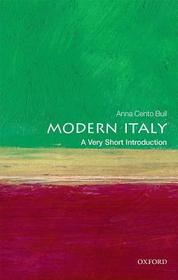
This Very Short Introduction considers the history of Italy from the Risorgimento (the movement leading to Italian Unification in 1861) to the present. It also discusses Italy's political system and style of government; economic modernisation; emigration, internal migration and immigration; and the modern Italian culture and lifestyle.
TöbbHosszú leírás:
The history of modern Italy is characterized by recurrent cultural and political projects of modernity, rejuvenation, and regeneration; projects which often had their roots in a widespread dissatisfaction with social and political reality, and perceived moral corruption. The Risorgimento, the movement leading to Italian Unification in 1861, explicitly linked the quest for national unity to a process of moral regeneration and progress. Later forms of nationalism and the rise of fascism in the first two decades of the twentieth century advocated a spiritual revolution and the moulding of new Italians through war and violence. The tragic outcome of Italian fascism led to the emergence of new visions of progress during the post-war First Republic, in which European integration was embraced with conviction. In the last 25 years a project of of modernization epitomized by Silvio Berlusconi has characterized Italian politics, invoking a mixture of nationalist themes and an uncritical embracing of consumer and media culture.
In this Very Short Introduction Anna Cento Bull addresses the question of what modernity means to Italy, and asks what modern Italy stands for. She considers Italy's political system and style of government, and looks at its economic modernisation and issues with emigration, internal migration and immigration. Bull concludes by looking at the Italian culture and lifestyle, including modern art and architecture, cinema, literature, gastronomy, fashion and sport.
ABOUT THE SERIES: The Very Short Introductions series from Oxford University Press contains hundreds of titles in almost every subject area. These pocket-sized books are the perfect way to get ahead in a new subject quickly. Our expert authors combine facts, analysis, perspective, new ideas, and enthusiasm to make interesting and challenging topics highly readable.
They say 'good things come in small packages' and this compact tome definitely proves the point. Packed into its 140-odd pages is all any italophile needs to know about the evolution of Modern Italy from the Risorgimento in the mid-1800s to the present day ... this snappy small-format guide is crammed with detail but never dry - the tone easy and accessible. An excellent overview, not to be missed.
Tartalomjegyzék:
Introduction
Projects of modernity
Governing Italy
Made in Italy
Emigration, immigration and citizenship
Art, culture, sport and diplomacy: Italy's 'soft' power
Conclusion
References
Further Reading
Index

