

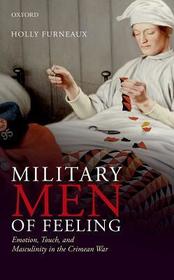
Military Men of Feeling
Emotion, Touch, and Masculinity in the Crimean War
-
10% KEDVEZMÉNY?
- A kedvezmény csak az 'Értesítés a kedvenc témákról' hírlevelünk címzettjeinek rendeléseire érvényes.
- Kiadói listaár GBP 125.00
-
56 437 Ft (53 750 Ft + 5% áfa)
Az ár azért becsült, mert a rendelés pillanatában nem lehet pontosan tudni, hogy a beérkezéskor milyen lesz a forint árfolyama az adott termék eredeti devizájához képest. Ha a forint romlana, kissé többet, ha javulna, kissé kevesebbet kell majd fizetnie.
- Kedvezmény(ek) 10% (cc. 5 644 Ft off)
- Kedvezményes ár 50 794 Ft (48 375 Ft + 5% áfa)
Iratkozzon fel most és részesüljön kedvezőbb árainkból!
Feliratkozom
56 437 Ft

Beszerezhetőség
Megrendelésre a kiadó utánnyomja a könyvet. Rendelhető, de a szokásosnál kicsit lassabban érkezik meg.
Why don't you give exact delivery time?
A beszerzés időigényét az eddigi tapasztalatokra alapozva adjuk meg. Azért becsült, mert a terméket külföldről hozzuk be, így a kiadó kiszolgálásának pillanatnyi gyorsaságától is függ. A megadottnál gyorsabb és lassabb szállítás is elképzelhető, de mindent megteszünk, hogy Ön a lehető leghamarabb jusson hozzá a termékhez.
A termék adatai:
- Kiadó OUP Oxford
- Megjelenés dátuma 2016. március 24.
- ISBN 9780198737834
- Kötéstípus Keménykötés
- Terjedelem258 oldal
- Méret 223x160x19 mm
- Súly 418 g
- Nyelv angol
- Illusztrációk 12 black-and-white halftones 0
Kategóriák
Rövid leírás:
Military Men of Feeling considers the popularity of the figure of the gentle soldier in the Victorian period, inviting us to think afresh about Victorian masculinity and Victorian militarism.
TöbbHosszú leírás:
Military Men of Feeling considers the popularity of the figure of the gentle soldier in the Victorian period. It traces a persistent narrative swerve from tales of war violence to reparative accounts of soldiers as moral exemplars, homemakers, adopters of children on the battlefield and nurses. This material invites us to think afresh about Victorian masculinity and Victorian militarism. It challenges ideas about the separation of military and domestic life, and about the incommunicability of war experience. Focusing on representations of soldiers' experiences of touch and emotion, the book combines the work of well known writers--including Charles Dickens, Charles Kingsley, William Makepeace Thackeray, Charlotte Yonge--with previously unstudied writing and craft produced by British soldiers in the Crimean War, 1854-56.
The Crimean War was pivotal in shaping British attitudes to military masculinity. A range of media enabled unprecedented public engagement with the progress and infamous 'blunders' of the conflict. Soldiers and civilians reflected on appropriate behaviour across ranks, forms of heroism, the physical suffering of the troops, administrative management and the need for army reform. The book considers how the military man of feeling contributes to the rethinking of gender roles, class and military hierarchy in the mid-nineteenth century, and how this figure was used in campaigns for reform. The gentle soldier could also do more bellicose social and political work, disarming anti-war critiques and helping people to feel better about war.
This book looks at the difficult mixed politics of this figure. It considers questions, debated in the nineteenth century and which remain urgent today, about the relationship between feeling and action, and the ethics of an emotional response to war. It makes a case for the importance of emotional and tactile military history, bringing the Victorian military man of feeling into contemporary debates about liberal warriors and soldiers as social workers.
Tartalomjegyzék:
Introduction
'The company of gentlemen': Thackeray's Military Men of Feeling and Eighteenth-Century Traditions
Princes of War and of Peace: Secular and Spiritual Redemption in Dickens and Kingsley
Children of the Regiment: Narratives of Battlefield Adoption
'Our poor Colonel loved him as if he had been his own son': Family Feeling in the Crimea
Sharing the Stuff of War: Soldier Art, Textiles and Tactility
Reparative Soldiering and its Limits: Cultures of Male Care-Giving
Reparative Soldiering and its Limits: Cultures of Male Care-Giving
Bibliography

