

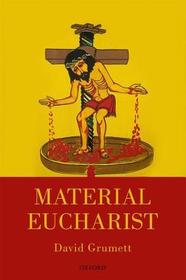
Material Eucharist
-
10% KEDVEZMÉNY?
- A kedvezmény csak az 'Értesítés a kedvenc témákról' hírlevelünk címzettjeinek rendeléseire érvényes.
- Kiadói listaár GBP 137.50
-
62 081 Ft (59 125 Ft + 5% áfa)
Az ár azért becsült, mert a rendelés pillanatában nem lehet pontosan tudni, hogy a beérkezéskor milyen lesz a forint árfolyama az adott termék eredeti devizájához képest. Ha a forint romlana, kissé többet, ha javulna, kissé kevesebbet kell majd fizetnie.
- Kedvezmény(ek) 10% (cc. 6 208 Ft off)
- Kedvezményes ár 55 873 Ft (53 213 Ft + 5% áfa)
Iratkozzon fel most és részesüljön kedvezőbb árainkból!
Feliratkozom
62 081 Ft

Beszerezhetőség
Megrendelésre a kiadó utánnyomja a könyvet. Rendelhető, de a szokásosnál kicsit lassabban érkezik meg.
Why don't you give exact delivery time?
A beszerzés időigényét az eddigi tapasztalatokra alapozva adjuk meg. Azért becsült, mert a terméket külföldről hozzuk be, így a kiadó kiszolgálásának pillanatnyi gyorsaságától is függ. A megadottnál gyorsabb és lassabb szállítás is elképzelhető, de mindent megteszünk, hogy Ön a lehető leghamarabb jusson hozzá a termékhez.
A termék adatai:
- Kiadó OUP Oxford
- Megjelenés dátuma 2016. szeptember 29.
- ISBN 9780198767077
- Kötéstípus Keménykötés
- Terjedelem336 oldal
- Méret 240x168x24 mm
- Súly 628 g
- Nyelv angol 0
Kategóriák
Rövid leírás:
This work surveys and identifies the most important liturgical and theological texts from the biblical, Patristic, medieval, Reformation, and modern periods in order to understand how the Eucharist has shaped, and been shaped by, texts, ritual, and doctrine.
TöbbHosszú leírás:
Material Eucharist interprets the Eucharist through its material elements of bread and wine. Drawing upon a rich variety of biblical, patristic, medieval, and modern texts and traditions, David Grumett brings together theological reflection and liturgical action and shows their mutual dependence. For both theologians and liturgists, a central concern is the matter out of which the created order has been made, from which issues of community and social justice are inseparable. The ingredients of bread and wine anticipate, in their harvesting and manufacture, the formal church liturgy, which is extended back into the world by the transformative priestly action of laypeople. Indeed, the transforming presence of Christ in the Eucharist as flesh and substance is theologically grounded in his transformative presence in the wider created order, as expressed in eucharistic giving and exchange between churches and their wider communities. Rooting the Eucharist in materiality suggests its primary context to be the death and resurrection of Christ in the power of the Spirit, in which its recipients may share. The many aspects of theology and liturgy with which the book deals have large implications for how the Eucharist is understood in a range of academic disciplines, and for how it is celebrated in churches today.
A constructive contribution to a theology of the sacrament.
Tartalomjegyzék:
Abbreviations
Introduction
1.1 Transformations of Nature
1.2 Grain
1.3 Salt
1.4 Olive Oil
1.5 Water
1.6 Leaven
1.7 Baking
1.8 Grape and Vine
1.9 Conclusion
2.1 Silence and Representation
2.2 On Earth as in Heaven
2.3 Life and Sacrifice
2.4 Communing
2.5 Priesthood, Matter, and Transformation
2.6 Conclusion
3.1 The Host as Talisman
3.2 Christ the Preserver
3.3 Christ the Bond of Substance
3.4 The World as Altar
3.5 The Altar, the World, and God s Body
3.6 Conclusion
4.1 Matter and Transformation
4.2 Assimilating Flesh
4.3 The Council of Trent: Tradition and Innovation
4.4 The Eucharist and Aristotle
4.5 Alternatives to Transubstantiation
4.6 Union in the Eucharist and in Christ
4.7 Conclusion
5.1 Viaticum
5.2 Eucharistic Burial
5.3 The Dead at the Altar
5.4 Raised by the Spirit
5.5 The Spirit in Recent Eucharistic Prayers
5.6 Conclusion
6.1 The Host and the Hearth
6.2 The Fermentum
6.3 Piety and Grace
6.4 Participation and Consumption
6.5 Eulogia
6.6 Bread, Community, and Church
6.7 Conclusion
7.1 The Holy Spirit, Baptism, and Eucharist
7.2 Spiritual Ascent
7.3 Ascending and Descending
7.4 Spirit and Matter
7.5 Conclusion
Epilogue
Select Bibliography
Index

