
• Kapcsolat

  • Hírlevél

  • Rólunk

  • Szállítási lehetőségek

  • Prospero könyvpiaci podcast

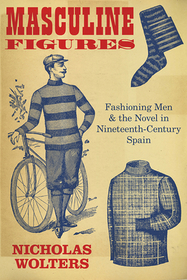
  • Masculine Figures – Fashioning Men and the Novel in Nineteenth–Century Spain: Fashioning Men and the Novel in Nineteenth-Century Spain

    Masculine Figures – Fashioning Men and the Novel in Nineteenth–Century Spain by Wolters, Nicholas;

    Fashioning Men and the Novel in Nineteenth-Century Spain

      • 10% KEDVEZMÉNY?

      • A kedvezmény csak az 'Értesítés a kedvenc témákról' hírlevelünk címzettjeinek rendeléseire érvényes.
      • Kiadói listaár GBP 80.00
      • Az ár azért becsült, mert a rendelés pillanatában nem lehet pontosan tudni, hogy a beérkezéskor milyen lesz a forint árfolyama az adott termék eredeti devizájához képest. Ha a forint romlana, kissé többet, ha javulna, kissé kevesebbet kell majd fizetnie.

        38 220 Ft (36 400 Ft + 5% áfa)
      • Kedvezmény(ek) 10% (cc. 3 822 Ft off)
      • Kedvezményes ár 34 398 Ft (32 760 Ft + 5% áfa)

    38 220 Ft

    db

    Beszerezhetőség

    Még nem jelent meg, de rendelhető. A megjelenéstől számított néhány héten belül megérkezik.

    Why don't you give exact delivery time?

    A beszerzés időigényét az eddigi tapasztalatokra alapozva adjuk meg. Azért becsült, mert a terméket külföldről hozzuk be, így a kiadó kiszolgálásának pillanatnyi gyorsaságától is függ. A megadottnál gyorsabb és lassabb szállítás is elképzelhető, de mindent megteszünk, hogy Ön a lehető leghamarabb jusson hozzá a termékhez.

    A termék adatai:

    • Kiadó University of Chicago Press
    • Megjelenés dátuma 2026. március 25.

    • ISBN 9780826505187
    • Kötéstípus Keménykötés
    • Terjedelem312 oldal
    • Méret 228x152x25 mm
    • Súly 1310 g
    • Nyelv angol
    • Illusztrációk 48 b&w images
    • 700

    Kategóriák

    Rövid leírás:

    Based on years of archival research in Madrid and Barcelona, this interdisciplinary study offers a fresh approach to understanding how men visualized themselves and their place in a nation that struggled to modernize after nearly a century of civil war, colonial entanglement, and imperial loss.

    Több

    Hosszú leírás:

    Based on years of archival research in Madrid and Barcelona, this interdisciplinary study offers a fresh approach to understanding how men visualized themselves and their place in a nation that struggled to modernize after nearly a century of civil war, colonial entanglement, and imperial loss. Masculine Figures is the first study to provide a comprehensive overview of competing models of masculinity in nineteenth-century Spain, and is particularly novel in its treatment of Catalan texts and previously unstudied evidence (e.g., department store catalogs, commercial advertisements, fashion plates, and men&&&8217;s tailoring journals).

    Fictional masculinity performs a symbolic role in representing and negotiating the contradictions male novelists often encountered in their attempts to professionalize not only as writers, but also as businessmen, professors, lawyers, and politicians. Through specific and recurring figures like the student, the priest, the businessman, and the heir, male novelists represent an increasingly middle-class world at odds with the values and virtues it inherited from an imperial Spanish past, and those it imported from more industrialized nations like England and France. The visual culture of the time and place marks the material turn in middle-class masculinity and sets the stage for discussions of race and sexuality.

    Significant chapter sections on the used clothing trade (in the Rastro flea market in Madrid, also called &&&8220;Las Am&&&201;ricas&&&8221; during the nineteenth century) and the &&&34;indiano businessman&&&34; (the colonial returnee) discuss the racial implications of fashion of the period&&&8212;in the first example, through the racialized discourse of contagion that hygienists used to frame the market. In the second example, the book discusses the ways the Catalan indiano &&&8220;accessorizes&&&8221; himself with racialized commodities like pocket watches and tobacco and objectified/infantilized figures like Black house servants and footmen.

    Több
    0