

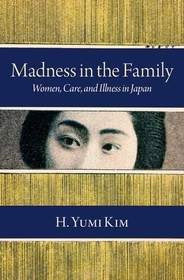
Madness in the Family
Women, Care, and Illness in Japan
-
20% KEDVEZMÉNY?
- A kedvezmény csak az 'Értesítés a kedvenc témákról' hírlevelünk címzettjeinek rendeléseire érvényes.
- Kiadói listaár GBP 38.99
-
17 603 Ft (16 765 Ft + 5% áfa)
Az ár azért becsült, mert a rendelés pillanatában nem lehet pontosan tudni, hogy a beérkezéskor milyen lesz a forint árfolyama az adott termék eredeti devizájához képest. Ha a forint romlana, kissé többet, ha javulna, kissé kevesebbet kell majd fizetnie.
- Kedvezmény(ek) 20% (cc. 3 521 Ft off)
- Kedvezményes ár 14 083 Ft (13 412 Ft + 5% áfa)
- A kedvezmény érvényes eddig: 2026. június 30.
Iratkozzon fel most és részesüljön kedvezőbb árainkból!
Feliratkozom
17 603 Ft

Beszerezhetőség
Becsült beszerzési idő: A Prosperónál jelenleg nincsen raktáron, de a kiadónál igen. Beszerzés kb. 3-5 hét..
A Prosperónál jelenleg nincsen raktáron.
Why don't you give exact delivery time?
A beszerzés időigényét az eddigi tapasztalatokra alapozva adjuk meg. Azért becsült, mert a terméket külföldről hozzuk be, így a kiadó kiszolgálásának pillanatnyi gyorsaságától is függ. A megadottnál gyorsabb és lassabb szállítás is elképzelhető, de mindent megteszünk, hogy Ön a lehető leghamarabb jusson hozzá a termékhez.
A termék adatai:
- Kiadó OUP USA
- Megjelenés dátuma 2022. november 14.
- ISBN 9780197507353
- Kötéstípus Keménykötés
- Terjedelem248 oldal
- Méret 237x162x21 mm
- Súly 476 g
- Nyelv angol
- Illusztrációk 17 black and white halftones 254
Kategóriák
Rövid leírás:
Madness in the Family traces the history of how family became crucial in the care of those considered mad, as well as in creating gendered explanations of madness, in turn-of-the-twentieth-century Japan. As women and families navigated a shifting therapeutic landscape of madness, they produced their own understandings and approaches to madness that, like elsewhere in the world, would take precedence over the claims of psychiatry, the law, and the state in everyday life.
TöbbHosszú leírás:
To fend off American and European imperialism in the nineteenth century, Japan strove to strengthen itself by drawing on the most updated ideas and practices from around the world. By the 1880s, this included the introduction of Western-derived psychiatry and its ideas about mental illness. The first Japanese psychiatrists claimed that mental illnesses required medical treatment in specialized institutions rather than confinement at home, as had been common practice. Yet the state implemented no social welfare policies to make new medical services more accessible and affordable to the public. The family, especially women, thus continued to carry the burden of caring for those considered mad.
Madness in the Family examines how the family in Japan came to be seen as the natural provider of care for those suffering from mental illnesses. It centers on the experiences of women and families, which have long been obscured by the voices of male psychiatrists, state officials, and lawmakers. H. Yumi Kim traces how women and families negotiated a dizzying array of claims about madness and its proper management across various settings. In the countryside, psychiatrists tried to refute the notion that fox spirits could cause madness, and the government regulated the use of cage-like structures inside homes. In cities, a booming medical marketplace spread ideas about feminized illnesses such as hysteria, and female defendants were evaluated for menstruation-induced disorders. As women and families navigated this shifting therapeutic landscape, they produced their own gendered approaches to madness that would take precedence over the claims of psychiatry, the law, and the state in everyday life.
Decoupling the history of mental illness from the discipline and institutions of psychiatry, Madness in the Family reveals the power and fragilities of gender, kinship, and care in the creation of different modes of caring for and understanding mental illness that persist to this day.
Kim's work uncovers the fascinating world of care for the mentally ill in modern Japan, when the advent of psychiatry was transforming the local cosmology of madness. Illuminating how psychiatric uptake was challenged by the fraught terrain of devotion, love, and abuse in the intimate world of family-based care, Kim's analysis has great relevance for understanding what is happening today when care for the mentally distressed is shifting from institutions back to the community.
Tartalomjegyzék:
Acknowledgments
Introduction
Chapter 1 Foxes in the Countryside
Chapter 2 Cages in Rural Homes
Chapter 3 Hysteria in the Marketplace
Chapter 4 Periodic Crimes in the Courtroom
Epilogue
Notes
Bibliography
Index

