

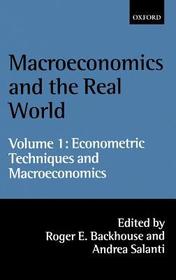
Macroeconomics and the Real World: Volume 1: Econometric Techniques and Macroeconomics
-
10% KEDVEZMÉNY?
- A kedvezmény csak az 'Értesítés a kedvenc témákról' hírlevelünk címzettjeinek rendeléseire érvényes.
- Kiadói listaár GBP 142.50
-
64 338 Ft (61 275 Ft + 5% áfa)
Az ár azért becsült, mert a rendelés pillanatában nem lehet pontosan tudni, hogy a beérkezéskor milyen lesz a forint árfolyama az adott termék eredeti devizájához képest. Ha a forint romlana, kissé többet, ha javulna, kissé kevesebbet kell majd fizetnie.
- Kedvezmény(ek) 10% (cc. 6 434 Ft off)
- Kedvezményes ár 57 905 Ft (55 148 Ft + 5% áfa)
Iratkozzon fel most és részesüljön kedvezőbb árainkból!
Feliratkozom
64 338 Ft

Beszerezhetőség
Megrendelésre a kiadó utánnyomja a könyvet. Rendelhető, de a szokásosnál kicsit lassabban érkezik meg.
Why don't you give exact delivery time?
A beszerzés időigényét az eddigi tapasztalatokra alapozva adjuk meg. Azért becsült, mert a terméket külföldről hozzuk be, így a kiadó kiszolgálásának pillanatnyi gyorsaságától is függ. A megadottnál gyorsabb és lassabb szállítás is elképzelhető, de mindent megteszünk, hogy Ön a lehető leghamarabb jusson hozzá a termékhez.
A termék adatai:
- Kiadás sorszáma és címe :Volume 1: Econometric Techniques and Macroeconomics
- Kiadó OUP Oxford
- Megjelenés dátuma 2000. november 23.
- ISBN 9780198297956
- Kötéstípus Keménykötés
- Terjedelem310 oldal
- Méret 241x162x25 mm
- Súly 601 g
- Nyelv angol
- Illusztrációk line illustrations, tables 0
Kategóriák
Rövid leírás:
In these two volumes, a group of distinguished economists debate the way in which evidence, in particular econometric evidence, can and should be used to relate macroeconomic theories to the real world. Topics covered include the business cycle, monetary policy, economic growth, the impact of new econometric techniques, the IS-KM model, the labour market, new Keynesian macroeconomics, and the use of macroeconomics in official documents.
TöbbHosszú leírás:
Since the middle of the twentieth century, economists have invested great resources into using statistical evidence to relate macroeconomic theories to the real world, and many new econometric techniques have been employed. In these two volumes, a distinguished group of economic theorists, econometricians, and economic methodologists examine how evidence has been used and how it should be used to understand the real world.
Volume 1 focuses on the contribution of econometric techniques to understanding the macroeconomic world. It covers the use of evidence to understand the business cycle, the operation of monetary policy, and economic growth. A further section offers assessments of the overall impact of recent econometric techniques such as cointegration and unit roots.
Volume 2 focuses on the labour market and economic policy, with sections covering the IS-LM model, the labour market, new Keynesian macroeconomics, and the use of macroeconomics in official documents (in both the USA and the EU).
These volumes will be valuable to advanced undergraduates, graduate students, and practitioners for their clear presentation of opposing perspectives on macroeconomics and how evidence should be used. The chapters are complemented by discussion sections revealing the perspectives of other contributors on the methodological issues raised.
Tartalomjegyzék:
Introduction to Volume 1
Business Cycles
Knowing the cycle
Fiscal shocks in an efficiency wage model
The return of business cycles
Monetary policy
Does money determine UK inflation over the long run?
Recent developments in monetary policy analysis: the roles of theory and evidence
Explanatory strategies for monetary policy analysis
Monetary policy: general discussion
The influence of recent developments in econometric techniques
Models and relations in economics and econometrics
Unit roots and all that: the impact of time-series methods on macroeconomics
Models all the way down
New econometric techniques and macroeconomics
Econometric techniques: general discussion
Growth
Econometric analysis and the study of economic growth: a sceptical perspective
Growth models and the explanation of the forces behind the development process
Why so much scepticism about growth theory?

