

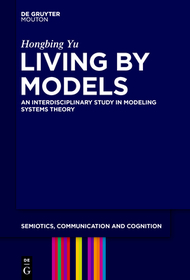
Living by Models
An Interdisciplinary Study in Modeling Systems Theory
Sorozatcím: Semiotics, Communication and Cognition [SCC]; 22;
-
20% KEDVEZMÉNY?
- A kedvezmény csak az 'Értesítés a kedvenc témákról' hírlevelünk címzettjeinek rendeléseire érvényes.
- Kiadói listaár EUR 114.95
-
44 899 Ft (42 761 Ft + 5% áfa)
Az ár azért becsült, mert a rendelés pillanatában nem lehet pontosan tudni, hogy a beérkezéskor milyen lesz a forint árfolyama az adott termék eredeti devizájához képest. Ha a forint romlana, kissé többet, ha javulna, kissé kevesebbet kell majd fizetnie.
- Kedvezmény(ek) 20% (cc. 8 980 Ft off)
- Kedvezményes ár 35 919 Ft (34 209 Ft + 5% áfa)
- A kedvezmény érvényes eddig: 2026. június 30.
Iratkozzon fel most és részesüljön kedvezőbb árainkból!
Feliratkozom
44 899 Ft

Beszerezhetőség
Még nem jelent meg, de rendelhető. A megjelenéstől számított néhány héten belül megérkezik.
Why don't you give exact delivery time?
A beszerzés időigényét az eddigi tapasztalatokra alapozva adjuk meg. Azért becsült, mert a terméket külföldről hozzuk be, így a kiadó kiszolgálásának pillanatnyi gyorsaságától is függ. A megadottnál gyorsabb és lassabb szállítás is elképzelhető, de mindent megteszünk, hogy Ön a lehető leghamarabb jusson hozzá a termékhez.
A termék adatai:
- Kiadás sorszáma 1
- Kiadó De Gruyter Mouton
- Megjelenés dátuma 2026. február 10.
- ISBN 9781501511745
- Kötéstípus Keménykötés
- Terjedelem250 oldal
- Méret 230x155 mm
- Nyelv angol 678
Kategóriák
Hosszú leírás:
This book provides an intensive interdisciplinary study of Modeling Systems Theory (MST), a significant post-modern theoretical framework that transcends the long cold war between the Saussurean and the Peircean traditions of the studies of the sign. In most academic attempts to adopt a semiotic approach to complex diverse human cultural phenomena, academics generally tend to choose discretely from the Peircean and the Saussurean traditions and conduct dispersive analyses from isolated perspectives via such basic concepts as sign, text, code and metaphor. This practice not only leads to the frequent occurrence of repetitions, contradictions and partiality, but also excludes the semiosic Subject. However, as this book attempts to argue, the late world-renowned American scholar Thomas A. Sebeok (1920-2001), with his unique thought on semiotic modeling, created an integrated research framework and provided semiotics with a unified theoretical system that transcends both traditions and particularly accentuates the dynamic pluralism of the Subject. One of the most important contemporary semioticians, linguists and masters of cultural studies, Sebeok made enormous contributions to the progress of world semiotics through his distinguished theoretical achievements and practical activities, which have extended a determinative influence on laying the groundwork and pointing out the directions for the development of semiotics, especially biosemiotics, in the second half of the 20th century. The scope of Sebeok's trans-disciplinary semiotic thought is extraordinarily large, in the center of which lies Modeling Systems Theory. As this book will show, MST has perfectly demonstrated a dialectic globality and an open dialogism and has already become a significant subject matter of contemporary international semiotic studies. Sebeok's reformation of the critical Lotmanian concept of modeling has indeed made a significant contribution to our common cause of semiotic inquiries, especially cognitive semiotics. However, contemporary studies on Sebeok's thought on modeling are largely confined to introductions and applications. Seldom has the possibility arisen that they can also be tested, expanded and refined through interactions and collaborations with other research findings in order to remain a living system and become a more functional one. This conviction has directly inspired the author to incorporate into semiotics the latest confirmed discoveries in neurocognitive sciences, particularly cultural neuroscience, and thus formulate that the process of semiosis has an effective deep-shaping power over the individual human modeler. Put another way, aside from the long established Pericean belief that signs philosophically and epistemologically make us what we are, it should be noted that the behavior of modeling actually influences and even alters the organic make-up and biological structure of the human body, in particular the human brain. In a nutshell, we literally live by models. This book argues that the birth of MST actually underwent two critical transformational phases, from Sebeok's early responses to the Tartu-Moscow School in the 1970s, all the way up to the eventual proposal of the concept of models as the forms of meaning in the year of 2000. In addition, through a diachronic contrast between the two developmental phases of the Sebeokian view of modeling, and in-depth analyses of the taxonomy and the dimensionality of modeling, this book shows that MST has achieved the first genuine systematic merging and creative transcendence of the Saussurean and the Peircean traditions in the history of semiotic inquiries, successfully actualizing an internal-external semiosic integration. MST views meaning as an internal model and the generation of the former as the working of the latter. Based on this ground and some latest relevant findings of neurocognitive sciences and social psychology, this book holds that the generation of meaning is a
Több
