

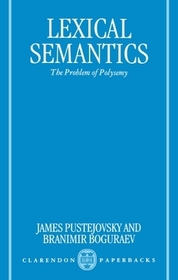
Lexical Semantics
The Problem of Polysemy
-
10% KEDVEZMÉNY?
- A kedvezmény csak az 'Értesítés a kedvenc témákról' hírlevelünk címzettjeinek rendeléseire érvényes.
- Kiadói listaár GBP 45.99
-
20 764 Ft (19 775 Ft + 5% áfa)
Az ár azért becsült, mert a rendelés pillanatában nem lehet pontosan tudni, hogy a beérkezéskor milyen lesz a forint árfolyama az adott termék eredeti devizájához képest. Ha a forint romlana, kissé többet, ha javulna, kissé kevesebbet kell majd fizetnie.
- Kedvezmény(ek) 10% (cc. 2 076 Ft off)
- Kedvezményes ár 18 687 Ft (17 798 Ft + 5% áfa)
Iratkozzon fel most és részesüljön kedvezőbb árainkból!
Feliratkozom
20 764 Ft

Beszerezhetőség
Megrendelésre a kiadó utánnyomja a könyvet. Rendelhető, de a szokásosnál kicsit lassabban érkezik meg.
Why don't you give exact delivery time?
A beszerzés időigényét az eddigi tapasztalatokra alapozva adjuk meg. Azért becsült, mert a terméket külföldről hozzuk be, így a kiadó kiszolgálásának pillanatnyi gyorsaságától is függ. A megadottnál gyorsabb és lassabb szállítás is elképzelhető, de mindent megteszünk, hogy Ön a lehető leghamarabb jusson hozzá a termékhez.
A termék adatai:
- Kiadó OUP Oxford
- Megjelenés dátuma 1996. november 7.
- ISBN 9780198236627
- Kötéstípus Puhakötés
- Terjedelem220 oldal
- Méret 235x157x14 mm
- Súly 335 g
- Nyelv angol
- Illusztrációk line figures 0
Kategóriák
Rövid leírás:
Originally published as two special issues of the Journal of Semantics, this collection focuses on the problem of polysemy, from the point of view of practitioners of computational linguistics.
TöbbHosszú leírás:
Lexical ambiguity is one of the most intractable problems facing language processing studies and, not surprisingly, it is at the core of research in lexical semantics. The papers in this collection constitute not just a set of diverse yet related articles in this core area of research, but rather make up a unique collection of work on the relationship between logical polysemy, sense extension, and discourse structure. Each paper addresses the following questions: what is the representation of a lexical item such that it may assume different senses? What is it about the representation of a lexical item that gives rise to sense extensions and to the phenomenon of logical polysemy? Three major subthemes run through the papers: the role of pragmatics and discourse in lexical disambiguation; the analysis of logical polysemy as a compositional process; and the treament of sense extension and referential transfer phenomena.
"It should therefore hold an important place on the shelves of any researcher in the fields of lexical semantics and word sense disambiguation, and will certainly be valued by many of our graduate students".

