

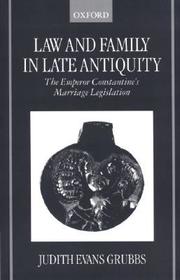
Law and Family in Late Antiquity
The Emperor Constantine's Marriage Legislation
-
10% KEDVEZMÉNY?
- A kedvezmény csak az 'Értesítés a kedvenc témákról' hírlevelünk címzettjeinek rendeléseire érvényes.
- Kiadói listaár GBP 97.00
-
43 795 Ft (41 710 Ft + 5% áfa)
Az ár azért becsült, mert a rendelés pillanatában nem lehet pontosan tudni, hogy a beérkezéskor milyen lesz a forint árfolyama az adott termék eredeti devizájához képest. Ha a forint romlana, kissé többet, ha javulna, kissé kevesebbet kell majd fizetnie.
- Kedvezmény(ek) 10% (cc. 4 380 Ft off)
- Kedvezményes ár 39 416 Ft (37 539 Ft + 5% áfa)
Iratkozzon fel most és részesüljön kedvezőbb árainkból!
Feliratkozom
43 795 Ft

Beszerezhetőség
Megrendelésre a kiadó utánnyomja a könyvet. Rendelhető, de a szokásosnál kicsit lassabban érkezik meg.
Why don't you give exact delivery time?
A beszerzés időigényét az eddigi tapasztalatokra alapozva adjuk meg. Azért becsült, mert a terméket külföldről hozzuk be, így a kiadó kiszolgálásának pillanatnyi gyorsaságától is függ. A megadottnál gyorsabb és lassabb szállítás is elképzelhető, de mindent megteszünk, hogy Ön a lehető leghamarabb jusson hozzá a termékhez.
A termék adatai:
- Kiadó OUP Oxford
- Megjelenés dátuma 2000. január 6.
- ISBN 9780198208228
- Kötéstípus Puhakötés
- Terjedelem400 oldal
- Méret 216x138x22 mm
- Súly 501 g
- Nyelv angol 0
Kategóriák
Rövid leírás:
A new and thought-provoking study of marriage and the law in late antiquity, looking particularly at the new legislation enacted by the emperor Constantine (reigned AD 307-337). Famously the first Christian emperor did his laws reflect Christian ideals, or pagan practice?
TöbbHosszú leírás:
This is a new and thought-provoking study of marriage and the law in late antiquity, dealing particularly with the legislation on marriage enacted by the Roman emperor Constantine (AD 307-337). As the first emperor to accept Christianity, Constantine is often credited with having introduced Christian ideals and practices into Roman law, but in this book the author argues that the extent of Christian influence on Constantine's marriage legislation was limited. Rather, in many cases, it merely granted legal recognition to practices that had long been followed by many people in the Roman Empire. Whilst Constantine did not always endorse such practices, and in some cases even tried to repress them, a careful examination of his laws against the dual background of classical Roman law and early Christian attitudes towards marriage reveals much about contemporary behaviour and belief in late antiquity.
The author places Constantine's legal decisions in their legal, social, and religious contexts, and displays both subtlety and impressive learning in the process ... Evans Grubbs is an alert and judicious guide ... in pursuing her questions about Constantine the author has produced an important analysis of some of the key questions raised by the rise of Christianity and its relationship to Roman society.

