

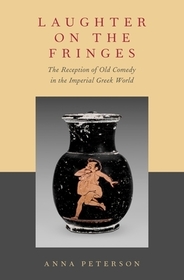
Laughter on the Fringes
The Reception of Old Comedy in the Imperial Greek World
-
10% KEDVEZMÉNY?
- A kedvezmény csak az 'Értesítés a kedvenc témákról' hírlevelünk címzettjeinek rendeléseire érvényes.
- Kiadói listaár GBP 96.00
-
43 344 Ft (41 280 Ft + 5% áfa)
Az ár azért becsült, mert a rendelés pillanatában nem lehet pontosan tudni, hogy a beérkezéskor milyen lesz a forint árfolyama az adott termék eredeti devizájához képest. Ha a forint romlana, kissé többet, ha javulna, kissé kevesebbet kell majd fizetnie.
- Kedvezmény(ek) 10% (kb. 4 334 Ft)
- Kedvezményes ár 39 010 Ft (37 152 Ft + 5% áfa)
Iratkozzon fel most és részesüljön kedvezőbb árainkból!
Feliratkozom
43 344 Ft

Beszerezhetőség
Megrendelésre a kiadó utánnyomja a könyvet. Rendelhető, de a szokásosnál kicsit lassabban érkezik meg.
Why don't you give exact delivery time?
A beszerzés időigényét az eddigi tapasztalatokra alapozva adjuk meg. Azért becsült, mert a terméket külföldről hozzuk be, így a kiadó kiszolgálásának pillanatnyi gyorsaságától is függ. A megadottnál gyorsabb és lassabb szállítás is elképzelhető, de mindent megteszünk, hogy Ön a lehető leghamarabb jusson hozzá a termékhez.
A termék adatai:
- Kiadó OUP USA
- Megjelenés dátuma 2019. március 21.
- ISBN 9780190697099
- Kötéstípus Keménykötés
- Terjedelem240 oldal
- Méret 155x231x25 mm
- Súly 544 g
- Nyelv angol 0
Kategóriák
Rövid leírás:
This book examines the reception of Athenian Old Comedy by Greek writers of the imperial era. It explores how the major authors of this period (Plutarch, Aelius Aristides, Lucian, Alciphron, and Libanius) adopted aspects of the genre to negotiate power struggles, facilitate rivalries, and provide a model for autobiographical writing.
TöbbHosszú leírás:
This book examines the impact that Athenian Old Comedy had on Greek writers of the imperial era. It is generally acknowledged that imperial-era Greeks responded to Athenian Old Comedy in one of two ways: either as a treasure trove of Atticisms or as a genre defined by and repudiated for its aggressive humor. Worthy of further consideration, however, is the degree to which both approaches, and particularly the latter one that relegated Old Comedy to the fringes of the literary canon, led authors to engage with the ironic and self-reflexive humor of Aristophanes, Eupolis and Cratinus. Authors ranging from serious moralizers (Plutarch and Aelius Aristides) to comic writers in their own right (Lucian, Alciphron) to other figures not often associated with Old Comedy (Libanius) adopted aspects of the genre to negotiate power struggles, facilitate literary and sophistic rivalries, and as a model for autobiographical writing. To varying degrees, these writers wove recognizable features of the genre (e.g. the parabasis, its agonistic language, the stage biographies of the individual poets) into their writings. The image of Old Comedy that emerges from this time is that of a genre in transition. It was, on the one hand, with the exception of Aristophanes' extant plays, on the verge of being almost completely lost; on the other hand, its reputation and several of its most characteristic elements were being renegotiated and reinvented.
[Peterson's] learned book will be valuable to all scholars interested in the classical tradition. ... Summing up: Recommended
Tartalomjegyzék:
Acknowledgments
Note to the Reader
Introduction
Chapter One. A Problematic Genre: Plutarch
Chapter Two. Between Plato and the Gods: Aelius Aristides on Old Comedy
Chapter Three. Old Comedy Revived: Lucian's Fisherman and Double Indictment
Chapter Four. Lucian's Prolaliai and the Dynamics of Competition
Chapter Five. Old Comedy Transformed: Libanius and the Fourth Century
Epilogue
Bibliography
Index
Index Locorum

