

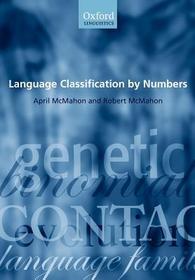
Language Classification by Numbers
-
10% KEDVEZMÉNY?
- A kedvezmény csak az 'Értesítés a kedvenc témákról' hírlevelünk címzettjeinek rendeléseire érvényes.
- Kiadói listaár GBP 69.00
-
32 964 Ft (31 395 Ft + 5% áfa)
Az ár azért becsült, mert a rendelés pillanatában nem lehet pontosan tudni, hogy a beérkezéskor milyen lesz a forint árfolyama az adott termék eredeti devizájához képest. Ha a forint romlana, kissé többet, ha javulna, kissé kevesebbet kell majd fizetnie.
- Kedvezmény(ek) 10% (cc. 3 296 Ft off)
- Kedvezményes ár 29 668 Ft (28 256 Ft + 5% áfa)
Iratkozzon fel most és részesüljön kedvezőbb árainkból!
Feliratkozom
32 964 Ft

Beszerezhetőség
Megrendelésre a kiadó utánnyomja a könyvet. Rendelhető, de a szokásosnál kicsit lassabban érkezik meg.
Why don't you give exact delivery time?
A beszerzés időigényét az eddigi tapasztalatokra alapozva adjuk meg. Azért becsült, mert a terméket külföldről hozzuk be, így a kiadó kiszolgálásának pillanatnyi gyorsaságától is függ. A megadottnál gyorsabb és lassabb szállítás is elképzelhető, de mindent megteszünk, hogy Ön a lehető leghamarabb jusson hozzá a termékhez.
A termék adatai:
- Kiadó OUP Oxford
- Megjelenés dátuma 2005. november 24.
- ISBN 9780199279029
- Kötéstípus Puhakötés
- Terjedelem284 oldal
- Méret 246x172x17 mm
- Súly 468 g
- Nyelv angol
- Illusztrációk Numerous tables and line drawings 0
Kategóriák
Rövid leírás:
This book considers how languages have traditionally been divided into families, and asks how they should be classified in the future. It tests current theories and hypotheses, shows how new ideas can be formulated, and offers a series of demonstrations that the new techniques applied to old data can produce convincing results. It will be of great practical interest to all those concerned with the classification and diffusion of languages in fields such as comparative linguistics, archaeology, genetics, and anthropology.
TöbbHosszú leírás:
This book considers how languages have traditionally been divided into families, and asks how they should classified in the future. It describes and applies computer programs from biology and evolutionary genetics to data about languages and shows how the power of the computer can be harnessed to throw light on long-standing problems in historical linguistics. It tests current theories and hypotheses, shows how new ideas can be formulated, and offers a series of demonstrations that the new techniques applied to old data can produce convincing results that are sometimes startlingly at odds with accepted wisdom. April and Robert McMahon combine the expertise and perspectives of an historical linguist and a geneticist. They analyse the links between linguistic and population genetics, and consider how far language can be used to discover and understand the histories and interrelations of human populations. They explore the origins and formation of the Indo-European languages and examine less well studied languages in South America. Their book will be of great practical importance to students and researchers in historical and comparative linguistics and will interest all those concerned with the classification and diffusion of languages in fields such as archaeology, genetics, and anthropology. Its approachable style will appeal to general readers seeking to know more about the relationship between linguistic and human history.
There are many reasons to recommend Language Classification by Numbers...intelligent discussions...
Tartalomjegyzék:
How do Linguists Classify Languages?
Lexicostatistics
Tree-Based Quantitative Approaches - Computational Cladistics
Tree-Based Quantitative Approaches: Sublists
Correlations Between Genetic and Linguistic Data
Climbing Down from the Trees: Network Models
Dating
Quantitative Methods Beyond the Lexicon

