

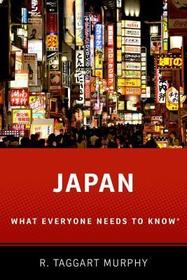
Japan and the Shackles of the Past
What Everyone Needs to Know
Sorozatcím: What Everyone Needs to Know;
-
10% KEDVEZMÉNY?
- A kedvezmény csak az 'Értesítés a kedvenc témákról' hírlevelünk címzettjeinek rendeléseire érvényes.
- Kiadói listaár GBP 25.99
-
11 734 Ft (11 175 Ft + 5% áfa)
Az ár azért becsült, mert a rendelés pillanatában nem lehet pontosan tudni, hogy a beérkezéskor milyen lesz a forint árfolyama az adott termék eredeti devizájához képest. Ha a forint romlana, kissé többet, ha javulna, kissé kevesebbet kell majd fizetnie.
- Kedvezmény(ek) 10% (cc. 1 173 Ft off)
- Kedvezményes ár 10 560 Ft (10 058 Ft + 5% áfa)
Iratkozzon fel most és részesüljön kedvezőbb árainkból!
Feliratkozom
11 734 Ft

Beszerezhetőség
Megrendelésre a kiadó utánnyomja a könyvet. Rendelhető, de a szokásosnál kicsit lassabban érkezik meg.
Why don't you give exact delivery time?
A beszerzés időigényét az eddigi tapasztalatokra alapozva adjuk meg. Azért becsült, mert a terméket külföldről hozzuk be, így a kiadó kiszolgálásának pillanatnyi gyorsaságától is függ. A megadottnál gyorsabb és lassabb szállítás is elképzelhető, de mindent megteszünk, hogy Ön a lehető leghamarabb jusson hozzá a termékhez.
A termék adatai:
- Kiadó OUP USA
- Megjelenés dátuma 2015. január 22.
- ISBN 9780199845989
- Kötéstípus Keménykötés
- Terjedelem472 oldal
- Méret 236x155x43 mm
- Súly 748 g
- Nyelv angol 0
Kategóriák
Rövid leírás:
A concise yet penetrating overview of Japan, from a historical, social, political, economic, and cultural perspective.
TöbbHosszú leírás:
Should we care about Japan anymore? It has a long history and a rich artistic heritage; kids today can't seem to get enough of its popular culture; and it is supposed to be America's number one ally in Asia-Pacific. But Washington treats the place with something between absent-mindedness and contempt, and while some fret that Tokyo could drag the US into an unwanted confrontation with China, it has otherwise essentially disappeared from the American radar screen. A quarter-century ago, Tokyo's stock exchange was bigger than New York's and the Japanese industrial juggernaut seemed destined to sweep all before it. Now, Japan is seen as a has-been with a sluggish economy, an aging population, dysfunctional politics, and a business landscape dominated by yesterday's champions. Does it even matter today except as an object lesson in how not to run a country?
R. Taggart Murphy argues that yes, we should care about Japan and, yes, the country matters-it matters very much. Murphy concedes that with the exception of its pop culture, Japan has indeed been out of sight and out of mind in recent decades. But he argues that this is already changing. Political and economic developments in Japan today risk upheaval in the pivotal arena of Northeast Asia; parallels with Europe on the eve of the First World War are not misplaced. America's half-completed effort to remake Japan in the late 1940s is unraveling in ways that will not be to Washington's liking-ironic, since the American foreign policy and defense establishment is directly culpable for what has happened.
Murphy traces the roots of these events far back into Japanese history and argues that the seeming exception of the vitality of its pop culture to the country's supposed malaise is no exception at all but rather provides critical clues to what is going on now. Along the way, he shares insights into everything from Japan's politics and economics to the texture of daily life, gender relations, the changing business landscape, and both popular and high culture. He places particular emphasis on the story of the fraught, quasi-pathological US-Japan relationship, arguing that it is central to understanding Japan today - and to the prospects for continued American global hegemony.
Murphy is very persuasive in building a case for his solutions for bringing real change to Japanese politics and foreign relations ... The most fundamental of his prescriptions, though, is undeniably necessary: the Japanese government and people must, for their own sake "confront what put their country in the hands of those who destroyed its independence and made it a byword abroad for brutal, inhuman fanaticism. Trying to bury accounts of what actually happened with fables of a pure and virtuous land, as Abe seeks to do, is simply a way of making it more likely that something similar will happen again soon".
Tartalomjegyzék:
Table of Contents
Acknowledgements
Introduction: Does Japan Still Matter?
Part One: Past
Chapter One: Japan Before the Edo Period.
Chapter Two: The Incubation of the Modern Japanese State.
Chapter Three: Restoration to Occupation
Chapter Four: The Miracle
Chapter Five: The Institutions of High-speed Growth
Chapter Six: Consequences (Intended and Otherwise)
Part Two: Present
Chapter Seven: Economy and Finance
Chapter Eight: Business
Chapter Nine: Social and Cultural Change
Chapter Ten: Politics
Chapter Eleven: Japan and the World
Suggestions for Further Reading
Notes

