
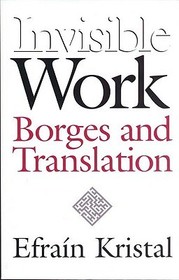
Invisible Work – Borges and Translation
Borges and Translation
-
10% KEDVEZMÉNY?
- A kedvezmény csak az 'Értesítés a kedvenc témákról' hírlevelünk címzettjeinek rendeléseire érvényes.
- Kiadói listaár GBP 64.00
-
30 576 Ft (29 120 Ft + 5% áfa)
Az ár azért becsült, mert a rendelés pillanatában nem lehet pontosan tudni, hogy a beérkezéskor milyen lesz a forint árfolyama az adott termék eredeti devizájához képest. Ha a forint romlana, kissé többet, ha javulna, kissé kevesebbet kell majd fizetnie.
- Kedvezmény(ek) 10% (cc. 3 058 Ft off)
- Kedvezményes ár 27 518 Ft (26 208 Ft + 5% áfa)
Iratkozzon fel most és részesüljön kedvezőbb árainkból!
Feliratkozom
30 576 Ft
Beszerezhetőség
Még nem jelent meg, de rendelhető. A megjelenéstől számított néhány héten belül megérkezik.
Why don't you give exact delivery time?
A beszerzés időigényét az eddigi tapasztalatokra alapozva adjuk meg. Azért becsült, mert a terméket külföldről hozzuk be, így a kiadó kiszolgálásának pillanatnyi gyorsaságától is függ. A megadottnál gyorsabb és lassabb szállítás is elképzelhető, de mindent megteszünk, hogy Ön a lehető leghamarabb jusson hozzá a termékhez.
A termék adatai:
- Kiadás sorszáma 1
- Kiadó University of Chicago Press
- Megjelenés dátuma 2026. március 25.
- Kötetek száma Hardback
- ISBN 9780826514073
- Kötéstípus Keménykötés
- Lásd még 9780826514080
- Terjedelem280 oldal
- Méret 203x127 mm
- Súly 433 g
- Nyelv angol
- Illusztrációk bibliography, index 700
Kategóriák
Rövid leírás:
This work reveals that behind every tale by Borges there pulses a generative translation. Efrain Kristal brings to light the extent to which Borges' methods as translator intervene in the conception and execution of his fictions.
TöbbHosszú leírás:
It is well known that Jorge Luis Borges was a translator, but this has been considered a curious minor aspect of his literary achievement. Few have been aware of the number of texts he translated, the importance he attached to this activity, or the extent to which the translated works inform his own stories and poems. Between the age of ten, when he translated Oscar Wilde, and the end of his life, when he prepared a Spanish version of the Prose Edda, Borges transformed the work of Poe, Kafka, Hesse, Kipling, Melville, Gide, Faulkner, Whitman, Woolf, Chesterton, and many others. In a multitude of essays, lectures, and interviews Borges analyzed the versions of others and developed an engaging view about translation. He held that a translation can improve an original, that contradictory renderings of the same work can be equally valid, and that an original can be unfaithful to translation. Borges's bold habits as translator and his views on translation had a decisive impact on his creative process. Translation is also a recurrent motif in Borges's stories. In ""The Immortal,"" for example, a character who has lived for many centuries regains knowledge of poems he had authored, and almost forgotten, by way of modern translations. Many of Borges's fictions include actual or imagined translations, and some of his most important characters are translators. In ""Pierre Menard, author of the Quixote,"" Borges's character is a respected Symbolist poet, but also a translator, and the narrator insists that Menard's masterpiece - his ""invisible work"" - adds unsuspected layers of meaning to Cervantes's Don Quixote. George Steiner cites this short story as ""the most acute, most concentrated commentary anyone has offered on the business of translation."" In an age where many discussions of translation revolve around the dichotomy faithful/unfaithful, this book will surprise and delight even Borges's closest readers and critics.
Több