

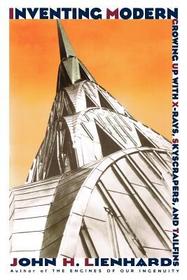
Inventing Modern
Growing up with X-Rays, Skyscrapers, and Tailfins
-
10% KEDVEZMÉNY?
- A kedvezmény csak az 'Értesítés a kedvenc témákról' hírlevelünk címzettjeinek rendeléseire érvényes.
- Kiadói listaár GBP 34.49
-
15 572 Ft (14 830 Ft + 5% áfa)
Az ár azért becsült, mert a rendelés pillanatában nem lehet pontosan tudni, hogy a beérkezéskor milyen lesz a forint árfolyama az adott termék eredeti devizájához képest. Ha a forint romlana, kissé többet, ha javulna, kissé kevesebbet kell majd fizetnie.
- Kedvezmény(ek) 10% (cc. 1 557 Ft off)
- Kedvezményes ár 14 014 Ft (13 347 Ft + 5% áfa)
Iratkozzon fel most és részesüljön kedvezőbb árainkból!
Feliratkozom
15 572 Ft

Beszerezhetőség
Megrendelésre a kiadó utánnyomja a könyvet. Rendelhető, de a szokásosnál kicsit lassabban érkezik meg.
Why don't you give exact delivery time?
A beszerzés időigényét az eddigi tapasztalatokra alapozva adjuk meg. Azért becsült, mert a terméket külföldről hozzuk be, így a kiadó kiszolgálásának pillanatnyi gyorsaságától is függ. A megadottnál gyorsabb és lassabb szállítás is elképzelhető, de mindent megteszünk, hogy Ön a lehető leghamarabb jusson hozzá a termékhez.
A termék adatai:
- Kiadó OUP USA
- Megjelenés dátuma 2005. június 23.
- ISBN 9780195189513
- Kötéstípus Puhakötés
- Terjedelem304 oldal
- Méret 227x153x20 mm
- Súly 422 g
- Nyelv angol
- Illusztrációk numerous halftones 0
Kategóriák
Rövid leírás:
In this book, Lienhard elucidates, from a de facto postmodern persepctive, what unique ideas and developments explain the profound watershed transition, around 1900 or 1906, to a new and different era, the "Modern" era, which persisted into the 1950's. He explores the cultural history of the first half of the 20th century, showing the impact of technological and scientific developments on the culture at large.
TöbbHosszú leírás:
Modern is a word much used, but hard to pin down. In Inventing Modern, John H. Lienhard uses that word to capture the furious rush of newness in the first half of 20th-century America. An unexpected world emerges from under the more familiar Modern. Beyond the airplanes, radios, art deco, skyscrapers, Fritz Lang's Metropolis, Buck Rogers, the culture of the open road--Burma Shave, Kerouac, and White Castles--lie driving forces that set this account of Modern apart.
One force, says Lienhard, was a new concept of boyhood--the risk-taking, hands-on savage inventor. Driven by an admiration of recklessness, America developed its technological empire with stunning speed. Bringing the airplane to fruition in so short a time, for example, were people such as Katherine Stinson, Lincoln Beachey, Amelia Earhart, and Charles Lindbergh. The rediscovery of mystery powerfully drove Modern as well. X-Rays, quantum mechanics, and relativity theory had followed electricity and radium. Here we read how, with reality seemingly altered, hope seemed limitless.
Lienhard blends these forces with his childhood in the brave new world. The result is perceptive, engaging, and filled with surprise. Whether he talks about Alexander Calder (an engineer whose sculptures were exercises in materials science) or that wacky paean to flight, Flying Down to Rio, unexpected detail emerges from every tile of this large mosaic.
Inventing Modern is a personal book that displays, rather than defines, an age that ended before most of us were born. It is an engineer's homage to a time before the bomb and our terrible loss of confidence--a time that might yet rise again out of its own postmodern ashes.
"From Buck Rogers to the Chrysler Airflow, Lienhard considers a particular strain of American Modernism through the personal lens of his own boyhood. While this book reflects a fascination with how things work, it also is a memoir, replete with subjective, idiosyncratic and deeply nostalgic associations."--Los Angeles Times

