

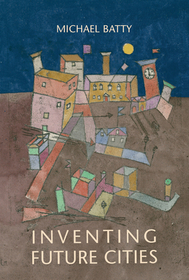
Inventing Future Cities
-
10% KEDVEZMÉNY?
- A kedvezmény csak az 'Értesítés a kedvenc témákról' hírlevelünk címzettjeinek rendeléseire érvényes.
- Kiadói listaár GBP 22.50
-
10 158 Ft (9 675 Ft + 5% áfa)
Az ár azért becsült, mert a rendelés pillanatában nem lehet pontosan tudni, hogy a beérkezéskor milyen lesz a forint árfolyama az adott termék eredeti devizájához képest. Ha a forint romlana, kissé többet, ha javulna, kissé kevesebbet kell majd fizetnie.
- Kedvezmény(ek) 10% (cc. 1 016 Ft off)
- Kedvezményes ár 9 143 Ft (8 708 Ft + 5% áfa)
Iratkozzon fel most és részesüljön kedvezőbb árainkból!
Feliratkozom
10 158 Ft

Beszerezhetőség
Bizonytalan a beszerezhetőség. Érdemes még egyszer keresni szerzővel és címmel. Ha nem talál másik, kapható kiadást, forduljon ügyfélszolgálatunkhoz!
Why don't you give exact delivery time?
A beszerzés időigényét az eddigi tapasztalatokra alapozva adjuk meg. Azért becsült, mert a terméket külföldről hozzuk be, így a kiadó kiszolgálásának pillanatnyi gyorsaságától is függ. A megadottnál gyorsabb és lassabb szállítás is elképzelhető, de mindent megteszünk, hogy Ön a lehető leghamarabb jusson hozzá a termékhez.
A termék adatai:
- Kiadó MIT Press
- Megjelenés dátuma 2018. december 28.
- ISBN 9780262038959
- Kötéstípus Keménykötés
- Terjedelem304 oldal
- Méret 229x152x15 mm
- Súly 573 g
- Nyelv angol
- Illusztrációk 46 B&W ILLUS. 0
Kategóriák
Hosszú leírás:
How we can invent but not predict the future of cities.
We cannot predict future cities, but we can invent them. Cities are largely unpredictable because they are complex systems that are more like organisms than machines. Neither the laws of economics nor the laws of mechanics apply; cities are the product of countless individual and collective decisions that do not conform to any grand plan. They are the product of our inventions; they evolve. In Inventing Future Cities, Michael Batty explores what we need to understand about cities in order to invent their future.
Batty outlines certain themes principles that apply to all cities. He investigates not the invention of artifacts but inventive processes. Today form is becoming ever more divorced from function; information networks now shape the traditional functions of cities as places of exchange and innovation. By the end of this century, most of the world's population will live in cities, large or small, sometimes contiguous, and always connected; in an urbanized world, it will be increasingly difficult to define a city by its physical boundaries.
Batty discusses the coming great transition from a world with few cities to a world of all cities; argues that future cities will be defined as clusters in a hierarchy; describes the future high-frequency, real-time streaming city; considers urban sprawl and urban renewal; and maps the waves of technological change, which grow ever more intense and lead to continuous innovation an unending process of creative destruction out of which future cities will emerge.
Mike Batty's new book is a tour de force meta-narrative of both the trends and components of urbanism at the start of the 21st century and one that should be read by all those with an interest in cities. Situating the debate within a past, present, and future context, he offers some perceptive and provocative contributions on where cities might be heading. This is not some academic pseudo-navel gazing exercise, but rather a considered debate that revolves around planning, design, technology, the impact of new infrastructure and new patterns of living and working, and above all the digital dynamics that are affecting every aspect of our present and future. Urban Analytics and City Science Több

