

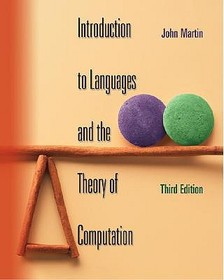
Introduction to Languages and the Theory of Computation
-
10% KEDVEZMÉNY?
- A kedvezmény csak az 'Értesítés a kedvenc témákról' hírlevelünk címzettjeinek rendeléseire érvényes.
- Kiadói listaár GBP 112.99
-
51 014 Ft (48 585 Ft + 5% áfa)
Az ár azért becsült, mert a rendelés pillanatában nem lehet pontosan tudni, hogy a beérkezéskor milyen lesz a forint árfolyama az adott termék eredeti devizájához képest. Ha a forint romlana, kissé többet, ha javulna, kissé kevesebbet kell majd fizetnie.
- Kedvezmény(ek) 10% (cc. 5 101 Ft off)
- Kedvezményes ár 45 913 Ft (43 727 Ft + 5% áfa)
Iratkozzon fel most és részesüljön kedvezőbb árainkból!
Feliratkozom
51 014 Ft

Beszerezhetőség
A kiadónál véglegesen elfogyott, nem rendelhető. Érdemes újra keresni a címmel, hátha van újabb kiadás.
Why don't you give exact delivery time?
A beszerzés időigényét az eddigi tapasztalatokra alapozva adjuk meg. Azért becsült, mert a terméket külföldről hozzuk be, így a kiadó kiszolgálásának pillanatnyi gyorsaságától is függ. A megadottnál gyorsabb és lassabb szállítás is elképzelhető, de mindent megteszünk, hogy Ön a lehető leghamarabb jusson hozzá a termékhez.
A termék adatai:
- Kiadás sorszáma 3
- Kiadó McGraw-Hill
- Megjelenés dátuma 2002. szeptember 1.
- ISBN 9780072322002
- Kötéstípus Keménykötés
- Terjedelem560 oldal
- Méret 228x177x25 mm
- Súly 998 g
- Nyelv angol 0
Kategóriák
Hosszú leírás:
Introduction to Languages and the Theory of Computation is an introduction to the theory of computation that emphasizes formal languages, automata and abstract models of computation, and computability; it also includes an introduction to computational complexity and NP-completeness. Through the study of these topics, students encounter profound computational questions and are introduced to topics that will have an ongoing impact in computer science. Once students have seen some of the many diverse technologies contributing to computer science, they can also begin to appreciate the field as a coherent discipline.
A distinctive feature of this text is its gentle and gradual introduction of the necessary mathematical tools in the context in which they are used. Martin takes advantage of the clarity and precision of mathematical language but also provides discussion and examples that make the language intelligible to those just learning to read and speak it. The material is designed to be accessible to students who do not have a strong background in discrete mathematics, but it is also appropriate for students who have had some exposure to discrete math but whose skills in this area need to be consolidated and sharpened.

