

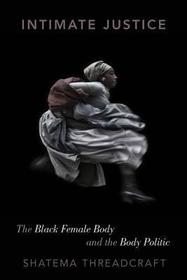
Intimate Justice
The Black Female Body and the Body Politic
-
10% KEDVEZMÉNY?
- A kedvezmény csak az 'Értesítés a kedvenc témákról' hírlevelünk címzettjeinek rendeléseire érvényes.
- Kiadói listaár GBP 52.00
-
23 478 Ft (22 360 Ft + 5% áfa)
Az ár azért becsült, mert a rendelés pillanatában nem lehet pontosan tudni, hogy a beérkezéskor milyen lesz a forint árfolyama az adott termék eredeti devizájához képest. Ha a forint romlana, kissé többet, ha javulna, kissé kevesebbet kell majd fizetnie.
- Kedvezmény(ek) 10% (cc. 2 348 Ft off)
- Kedvezményes ár 21 130 Ft (20 124 Ft + 5% áfa)
Iratkozzon fel most és részesüljön kedvezőbb árainkból!
Feliratkozom
23 478 Ft

Beszerezhetőség
Megrendelésre a kiadó utánnyomja a könyvet. Rendelhető, de a szokásosnál kicsit lassabban érkezik meg.
Why don't you give exact delivery time?
A beszerzés időigényét az eddigi tapasztalatokra alapozva adjuk meg. Azért becsült, mert a terméket külföldről hozzuk be, így a kiadó kiszolgálásának pillanatnyi gyorsaságától is függ. A megadottnál gyorsabb és lassabb szállítás is elképzelhető, de mindent megteszünk, hogy Ön a lehető leghamarabb jusson hozzá a termékhez.
A termék adatai:
- Kiadó OUP USA
- Megjelenés dátuma 2016. november 24.
- ISBN 9780190251635
- Kötéstípus Keménykötés
- Terjedelem224 oldal
- Méret 142x213x27 mm
- Súly 363 g
- Nyelv angol 0
Kategóriák
Rövid leírás:
Black women's sexual and reproductive history in America is one marred by forced sterilizations and coerced reproduction. While reproductive rights activists and organizations, historians and legal scholars have all begun to grapple with this history and its meaning, political theorists have yet to do so.Intimate Justice charts the long and still incomplete path to black female intimate freedom, challenging the way in which we conceive of equality.
TöbbHosszú leírás:
In 1973, the year the women's movement won an important symbolic victory with Roe v. Wade, reports surfaced that twelve-year-old Minnie Lee Relf and her fourteen-year-old sister Mary Alice, the daughters of black Alabama farm hands, had been sterilized without their or their parents' knowledge or consent. Just as women's ability to control reproduction moved to the forefront of the feminist movement, the Relf sisters' plight stood as a reminder of the ways in which the movement's accomplishments had diverged sharply along racial lines. Thousands of forced sterilizations were performed on black women during this period, convincing activists in the Black Power, civil rights and women's movements that they needed to address, pointedly, the racial injustices surrounding equal access to reproductive labor and intimate life in America. As horrific as the Relf tragedy was, it fit easily within a set of critical events within black women's sexual and reproductive history in America, which black feminists argue began with coerced reproduction and enforced child neglect in the period of enslavement.
While reproductive rights activists and organizations, historians and legal scholars have all begun to grapple with this history and its meaning, political theorists have yet to do so. Intimate Justice charts the long and still incomplete path to black female intimate freedom and equality--a path marked by infanticides, sexual terrorism, race riots, coerced sterilizations and racially biased child removal policies. In order to challenge prevailing understandings of freedom and equality, Shatema Threadcraft considers the troubled status of black female intimate life during four moments: antebellum slavery, Reconstruction, the nadir, and the civil rights and women's movement eras. Taking up important and often overlooked aspects of the necessary conditions for justice, Threadcraft's book is a compelling challenge to the meaning of equality in American race and gender relations.
It's been a bad decade for politics, but a great decade for political theory. Three standouts for me were Shatema Threadcraft's Intimate Justice, Adom Getachew's Worldmaking after Empire, and Kathi Weeks's The Problem With Work.
Tartalomjegyzék:
Preface
Chapter 1: Introduction: Black Female Body Politics
Chapter 2: "What Free Could Possibly Mean": The Intimate Sphere in Enslaved Women's Visions of Freedom
Chapter 3: Racial Violence and the Post-Emancipation Struggle for Intimate Equality
Chapter 4: Intimate Injustice, Political Obligation and the Dark Ghetto
Chapter Five: Intimate Justice
Notes
Index

