

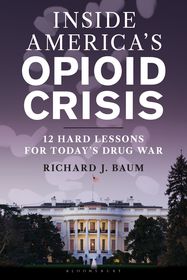
Inside America's Opioid Crisis
12 Hard Lessons for Today’s Drug War
-
20% KEDVEZMÉNY?
- A kedvezmény csak az 'Értesítés a kedvenc témákról' hírlevelünk címzettjeinek rendeléseire érvényes.
- Kiadói listaár GBP 23.99
-
10 831 Ft (10 315 Ft + 5% áfa)
Az ár azért becsült, mert a rendelés pillanatában nem lehet pontosan tudni, hogy a beérkezéskor milyen lesz a forint árfolyama az adott termék eredeti devizájához képest. Ha a forint romlana, kissé többet, ha javulna, kissé kevesebbet kell majd fizetnie.
- Kedvezmény(ek) 20% (cc. 2 166 Ft off)
- Kedvezményes ár 8 665 Ft (8 252 Ft + 5% áfa)
- A kedvezmény érvényes eddig: 2026. június 30.
Iratkozzon fel most és részesüljön kedvezőbb árainkból!
Feliratkozom
10 831 Ft

Beszerezhetőség
Még nem jelent meg, de rendelhető. A megjelenéstől számított néhány héten belül megérkezik.
Why don't you give exact delivery time?
A beszerzés időigényét az eddigi tapasztalatokra alapozva adjuk meg. Azért becsült, mert a terméket külföldről hozzuk be, így a kiadó kiszolgálásának pillanatnyi gyorsaságától is függ. A megadottnál gyorsabb és lassabb szállítás is elképzelhető, de mindent megteszünk, hogy Ön a lehető leghamarabb jusson hozzá a termékhez.
A termék adatai:
- Kiadó Bloomsbury Publishing (UK)
- Megjelenés dátuma 2026. május 28.
- Kötetek száma Paperback
- ISBN 9781538186411
- Kötéstípus Puhakötés
- Terjedelem408 oldal
- Méret 226x152x22 mm
- Súly 540 g
- Nyelv angol 700
Kategóriák
Rövid leírás:
A brutal opioid epidemic continues to bring death and despair to communities across the country despite government efforts to stem the tide. This book, by a former top U.S. anti-drug official, offers a brief history, lessons learned, and concrete recommendations from inside the war on drugs.
TöbbHosszú leírás:
"
Every component of the drug fight needs to change, from the health care system to the justice system, from Homeland security to Congress. American lives depend on it.
The country has been buffeted by four deadly overlapping waves of the opioid crisis, starting with prescription painkillers followed by heroin, fentanyl, and now dangerous drug combinations of opioids with methamphetamine, cocaine, and other substances, often sold as pills via social media. Fatal overdoses, reduced from peak levels, is still disturbingly high. Further, drug addiction, which impacts 28 million Americans, remains unchanged. Why are the country's efforts to reduce overdoses, addiction and drug-related crime not working better? What can be done to get us back on track?
This bold new book answers these questions-not with glib rhetoric or easy solutions-but with straight talk and a clear roadmap to take on the crisis. It is time for Washington to own up to its own errors and change how it takes on the drug problem. Major reforms are urgently needed, innovations in public health, justice and social policies are spelled out throughout this book which address the opioid crisis and prepare us for whatever comes next.
Each chapter focuses on a hard lesson, detailing past failures and then outlining a path forward based on the author's lived experiences working on drug policy for over three decades, through both the crack cocaine and opioid epidemics and five administrations at the White House Office of National Drug Control Policy (ONDCP).
Recommended as the main text for courses that are focused specifically on drugs and society, war on drugs, crime and society, addiction or the opioid crisis. Higher level classes on public health, criminology, sociology, public administration, government it would be a good supplement, especially for those wanting to utilize the example of the opioid crisis as a case study on responses to this social problem of the opioid crisis and response, or the whole ""failed war on drugs.""
Tartalomjegyzék:
Acknowledgments
Introduction
1. The Longest War: America Launches Drug Fight with Supply Control, Propaganda and Prejudice
Chapter Introduction: What can Iron Man teach us about the early war on drugs?
Hard Lesson: We must confront the two original sins of the drug war - racism and the stigmatization of addiction - to effectively combat today's crisis
The Ancient Power of Opioids to Heal and to Harm
The Unregulated American Drug Market Results in Misuse, Addiction
America Helps Launch the Global War on Drugs
Cracking Down on Doctors, Dealers, and Consumers
The Trouble with Drug Treatment - There Isn't Any
The First Federal Drug Agency Focuses on Supply Control and Propaganda
The Ugly Racism of Harry Anslinger
Growing Drug Use in the 1960s Raises Anxiety in a Troubled Time
Richard Nixon and his Psychiatrists Launch the White House Drug Czar's Office
Nixon Era Drug Enforcement
Assessing the Racism in the Early Drug War
The Harsh Legacy of the Stigmatization of Addiction
Recommendations
2. Coked Up: Building Washington's Drug War Infrastructure in the Crack Cocaine Era
Chapter Introduction: This Scourge Will Not End
Hard Lesson: Drug policies and programs, built for the crack cocaine epidemic, must be overhauled for the opioid crisis
American's Taste for Cocaine Fuels Powerful Colombian Cartels
Powder Cocaine Becomes the Elite's Drug of Choice
Crack Cocaine and Its Consequences
Violent Open Air Crack Markets
Drugs, AIDS, and the Reagans
The Cocaine Overdose of Basketball Star Len Bias Sparks Political Earthquake
The 100-1 Crack Cocaine Sentencing Disparity Fiasco
Cocaine Myths and Legends
The Crack Era Ends, But the Policy Infrastructure Built for it Remains
Recommendations
3. Prescription for Disaster: Purdue Pharma's Crime of the Century
Chapter Introduction: Greed is Not Good
Hard Lesson: Big Pharma's reckless marketing of opioids has severely and permanently worsened America's drug problem
The Spark: Release of OxyContin in 1996
The Spread: Purdue's Pharmaceutical Marketing Tornado
The Accelerant: Industry Funded Patient Advocacy Groups Transform Medical System
The Jump: The Transition to Black Market Heroin
Recommendations
4. Fatal Errors: The Consequences of Pushing Prescription Drug Consumers into the Illicit Drug Market
Chapter Introduction: Too Close to Home
Hard Lesson: Restrictions on opioid painkillers were recklessly applied and led to many unnecessary drug overdose deaths
Prescription Drug Monitoring Programs
Abuse Resistant Drug Formulations of Opioid Medications
Strict Limits on Opioid Prescribing
Shutting Down Pill Mills
Actions Have Consequences - Accelerating the Transition to Black-Market Drugs
Recommendations
5. The Real Treatment Gap: Why Most People Who Need Treatment Do Not Seek it and What to Do About it
Chapter Introduction: Ground Truth
Hard Lesson: Most chronic drug consumers will only enter treatment via a 'harm reduction-informed' approach
America's Two Drug Treatment Gaps
Treatment Progress and Challenges
The Costs of Stigma
Meeting People Where They Are, But Not Leaving Them There
Reconciling Traditional Treatment and Harm Reduction
Putting Lived Experience to Work
The Best of Both Worlds - A Treatment System That Works for All
Overdose Prevention Centers
Psychedelics - Minimizing Risks and Maximizing Benefits
The Road Ahead - Wrap Around Treatment and the Promise of Artificial Intelligence
Recommendations
6. Deep Recovery: Creating a Recovery Friendly America
Chapter Introduction: Why Are Former Inmates Trying to Get Back to Their Jail?
Hard Lesson: Treatment and justice system initiatives are not sufficient to solve crisis, we must also create a nationwide recovery support system
Social Determinants of Health and Recovery Capital
A New Home, A New Life
Getting Back to Work
Building Recovery Friendly Workplaces
Taking on Substance Use on College Campuses
Rebuilding Lives After Treatment - The Vital Role of Recovery Community Organizations
Recommendations
7. Precision Impact: Controlling Retail Drug Markets without Mass Incarceration or Racial Bias
Chapter Introduction: When Reality Hits You in the Face
Hard Lesson: Mass incarceration damages communities-to combat drugs police must rebuild frayed relationships and adopt a much more targeted approach
Grappling with Harsh Racial Realities in the War on Drugs
Rethinking Drug Sentencing
The Tragedy of Re-Entry from Prison During the Opioid Epidemic
Addressing the Collateral Consequences Imposed on those with a Substance Use Disorder
Thinking Through How to Deal with Marijuana in Today's America
A Hard Look at Retail Drug Markets
Dismantling Drug Markets without Mass Incarceration
Assessing Results and Prospects for Expansion of Drug Market Interventions
Covert Drug Markets
Deep Partnerships Between Community Groups and Police
Oregon Decriminalization: The Good, Bad, and Ugly
Recommendations
8. True Justice: Reducing Addiction Requires Close Collaboration Between Justice and Health Systems
Chapter Introduction: Catching Fire
Hard Lessons: Police, courts and jails will only reduce overdoses and chronic drug use through coordinated initiatives with health agencies
How to 'Deflect' More People Away from Arrest and Into Treatment
Front Loading Life-Saving Treatment at Drug Treatment Courts
How Drug Enforcement Operations Can Help, Not Harm People Who Use Drugs
Concentrated Leadership and Coordination in the Hardest Hit Regions of the Country
Recommendations
9. Defense in Depth: Smart Border and Supply Control for Today's Synthetic Drug Era
Chapter Introduction: In Deep
Hard Lesson: Supply control is wickedly difficult-a disciplined focus is needed on the most dangerous trafficking organizations
The Border Battle - It's One Thing After Another
Going to the Source - International Supply Reduction and Colombia
Breaking Bad - Taking on the Methamphetamine Supply Chain
The Fentanyl Fight
Hard Lessons from the Supply Side
A Reality-Based Way Forward on the Supply Side
Recommendations
10. Costs & Consequences: Scaling Government's Response to Today's Vast Drug Epidemic
Chapter Introduction: Deserve to Win
Hard Lesson: We have vastly underfunded the drug crisis response and must invest now, or will pay even more later
Bolstering Management and Measurement of Drug Policies
Costly Delays in Utilizing Evidence-Based Policies
Show Me the Money
Overcoming the Curse of Knowledge
Implementation Science and the Real Policy Cycle
Closing the Drug Policy Gaps
Establishment of Return-on-Investment Teams at the Federal and State Level
Drug Policy Centers of Excellence
Building Drug Policy Coalitions and Avoiding Fragmentation
Reinforcing Federal and State Leadership of Anti-Drug Agencies
Recommendations
11. The Fentanyl Generation: Protecting Youth from Today's Dangerous Drug Threats
Chapter Introduction: Straight Talk for Dangerous Times
Hard Lesson: Youth face a terrifying risk of overdose-new prevention and early intervention programs are needed to protect them
Protecting Today's Adolescents from the Brutal Drug Supply
Advances in Prevention Science
The Failure to Reach Most Kids with Effective Drug Prevention Programs
Going Upstream to Help Kids Earlier
Kids Just Wanna Have Fun - Adapting Iceland's Drug Prevention Model for the USA
Iceland's Miracle
Unleash America's Creative Talent for Next Generation Media Campaigns
Recommendations
12. Conclusion
Hard Lesson: There is no easy button - the opioid crisis can only be solved by bringing innovative health and justice interventions to the millions of Americans who need them
Appendix: List of Recommendations and Budget
About the Author
Bibliography
Index

