

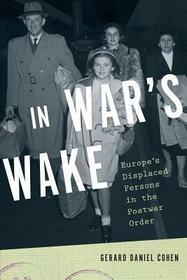
In War's Wake
Europe's Displaced Persons in the Postwar Order
Sorozatcím: Oxford Studies in International History;
-
10% KEDVEZMÉNY?
- A kedvezmény csak az 'Értesítés a kedvenc témákról' hírlevelünk címzettjeinek rendeléseire érvényes.
- Kiadói listaár GBP 36.49
-
16 475 Ft (15 690 Ft + 5% áfa)
Az ár azért becsült, mert a rendelés pillanatában nem lehet pontosan tudni, hogy a beérkezéskor milyen lesz a forint árfolyama az adott termék eredeti devizájához képest. Ha a forint romlana, kissé többet, ha javulna, kissé kevesebbet kell majd fizetnie.
- Kedvezmény(ek) 10% (cc. 1 648 Ft off)
- Kedvezményes ár 14 827 Ft (14 121 Ft + 5% áfa)
Iratkozzon fel most és részesüljön kedvezőbb árainkból!
Feliratkozom
16 475 Ft

Beszerezhetőség
Megrendelésre a kiadó utánnyomja a könyvet. Rendelhető, de a szokásosnál kicsit lassabban érkezik meg.
Why don't you give exact delivery time?
A beszerzés időigényét az eddigi tapasztalatokra alapozva adjuk meg. Azért becsült, mert a terméket külföldről hozzuk be, így a kiadó kiszolgálásának pillanatnyi gyorsaságától is függ. A megadottnál gyorsabb és lassabb szállítás is elképzelhető, de mindent megteszünk, hogy Ön a lehető leghamarabb jusson hozzá a termékhez.
A termék adatai:
- Kiadó OUP USA
- Megjelenés dátuma 2017. szeptember 14.
- ISBN 9780190840808
- Kötéstípus Puhakötés
- Terjedelem250 oldal
- Méret 234x155x17 mm
- Súly 381 g
- Nyelv angol
- Illusztrációk 1 halftone 0
Kategóriák
Rövid leírás:
After WWII, Europe was awash in refugees. Never in modern times had so many been so destitute and displaced. No longer subjects of a single nation-state, this motley group of enemies and victims consisted of Jewish survivors of the Holocaust, ex-Soviet POWs, ex-forced laborers in the Third Reich, legions of people who fled the advancing Red Army, and many thousands uprooted by the sheer violence of the war. This book argues that postwar international relief operations went beyond their stated goal of civilian "rehabilitation" and contributed to the rise of a new internationalism, setting the terms on which future displaced persons would be treated by nations and NGOs.
TöbbHosszú leírás:
The end of the Second World War in Europe gave way to a gigantic refugee crisis. Thoroughly prepared by Allied military planners, the swift repatriation of millions of former forced laborers, concentration camp inmates and prisoners of war nearly brought this dramatic episode top a close. Yet in September 1945, the number of displaced persons placed under the guardianship of Allied armies and relief agencies in occupied Germany amounted to 1.5 million. A costly burden for the occupying powers, the Jewish, Polish, Ukrainian, Yugoslav and Baltic DPs unwilling to return to their countries of origin presented a complex international problem. Massed in refugee camps stretched from Northern Germany to Sicily, the DPs had become long-term asylum seekers.
Based on the records of the International Refugee Organization, this book describes how the European DP crisis impinged on the shape of the postwar order. The DP question directly affected the outbreak of the Cold War; the transformation of the "West" into a new geopolitical entity; the conduct of political purges and retribution; the ideology and methods of modern humanitarian interventions; the appearance of international agencies and non-governmental organizations; the emergence of an international human rights system; the organization of migration movements and the redistribution of "surplus populations"; the advent of Jewish nationhood; and postwar categorizations of political and humanitarian refugees.
The prime purpose of this excellent book is not to provide a more inclusive and integrative social history but to do something far more ambitious: namely, to write an international history that places the DP issue in the context of the emerging Cold War, and as a factor in international justice and political retribution, the emergence of the human rights movement, the rise of United Nations humanitarianism, the governance of international migration, and the advent of Jewish statehood .[It] makes clear is how important that period was in shaping contemporary views of refugees and their plight.
Tartalomjegyzék:
Acknowledgments
Introduction: The Last Million
Ch 1. The Battle of the Refugees: DPs and the Making of the Cold War West
Ch 2. "Who is a Refugee?": From 'Victors' Justice' to Anticommunism
Ch 3. Care and Maintenance: The New Face of International Humanitarianism
Ch 4. Displaced Persons in the "Human Rights Revolution"
Ch 5. Surplus Manpower, Surplus Population
Ch 6. Extraterritorial Jews: Refugee Humanitarianism and the Advent of Jewish Statehood
Epilogue: The Golden Age of European Refugees, 1945-1960
Notes
Sources and Further Reading
Index

