

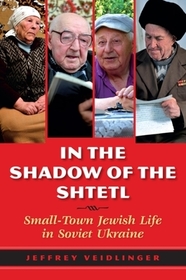
In the Shadow of the Shtetl
Small-Town Jewish Life in Soviet Ukraine
-
10% KEDVEZMÉNY?
- A kedvezmény csak az 'Értesítés a kedvenc témákról' hírlevelünk címzettjeinek rendeléseire érvényes.
- Kiadói listaár GBP 26.99
-
12 894 Ft (12 280 Ft + 5% áfa)
Az ár azért becsült, mert a rendelés pillanatában nem lehet pontosan tudni, hogy a beérkezéskor milyen lesz a forint árfolyama az adott termék eredeti devizájához képest. Ha a forint romlana, kissé többet, ha javulna, kissé kevesebbet kell majd fizetnie.
- Kedvezmény(ek) 10% (cc. 1 289 Ft off)
- Kedvezményes ár 11 605 Ft (11 052 Ft + 5% áfa)
Iratkozzon fel most és részesüljön kedvezőbb árainkból!
Feliratkozom
12 894 Ft

Beszerezhetőség
Bizonytalan a beszerezhetőség. Érdemes még egyszer keresni szerzővel és címmel. Ha nem talál másik, kapható kiadást, forduljon ügyfélszolgálatunkhoz!
Why don't you give exact delivery time?
A beszerzés időigényét az eddigi tapasztalatokra alapozva adjuk meg. Azért becsült, mert a terméket külföldről hozzuk be, így a kiadó kiszolgálásának pillanatnyi gyorsaságától is függ. A megadottnál gyorsabb és lassabb szállítás is elképzelhető, de mindent megteszünk, hogy Ön a lehető leghamarabb jusson hozzá a termékhez.
A termék adatai:
- Kiadó Indiana University Press
- Megjelenés dátuma 2013. november 1.
- Kötetek száma Print PDF
- ISBN 9780253011510
- Kötéstípus Keménykötés
- Terjedelem424 oldal
- Méret 229x152 mm
- Súly 748 g
- Nyelv angol
- Illusztrációk 21 color illus., 15 b&w illus., 4 maps 0
Kategóriák
Hosszú leírás:
The story of how the Holocaust decimated Jewish life in the shtetls of Eastern Europe is well known. Still, thousands of Jews in these small towns survived the war and returned afterward to rebuild their communities. The recollections of some 400 returnees in Ukraine provide the basis for Jeffrey Veidlinger’s reappraisal of the traditional narrative of 20th-century Jewish history. These elderly Yiddish speakers relate their memories of Jewish life in the prewar shtetl, their stories of survival during the Holocaust, and their experiences living as Jews under Communism. Despite Stalinist repressions, the Holocaust, and official antisemitism, their individual remembrances of family life, religious observance, education, and work testify to the survival of Jewish life in the shadow of the shtetl to this day.
Hitherto the story of the Holocaust in the Eastern European shtetl has been told by those who left—on behalf of those who did not survive. What do we learn from these stories told from the shtetl itself? In the Shadow of the Shtetl restores horror to the setting in which it occurred: at home, among familiar people and places. . . . In their accounts the everyday and the extraordinary, the innocuous and the gruesome are continually intertwined. The same people participated in both. The relationship between the normal and the abnormal, the intimate and the alien takes on a different shape in these stories—perhaps a shape that can help us better understand places like Rwanda or Cambodia—or Bosnia. Több

