

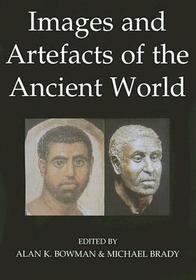
Images and Artefacts of the Ancient World
Sorozatcím: British Academy Original Paperbacks;
-
10% KEDVEZMÉNY?
- A kedvezmény csak az 'Értesítés a kedvenc témákról' hírlevelünk címzettjeinek rendeléseire érvényes.
- Kiadói listaár GBP 40.00
-
18 060 Ft (17 200 Ft + 5% áfa)
Az ár azért becsült, mert a rendelés pillanatában nem lehet pontosan tudni, hogy a beérkezéskor milyen lesz a forint árfolyama az adott termék eredeti devizájához képest. Ha a forint romlana, kissé többet, ha javulna, kissé kevesebbet kell majd fizetnie.
- Kedvezmény(ek) 10% (cc. 1 806 Ft off)
- Kedvezményes ár 16 254 Ft (15 480 Ft + 5% áfa)
Iratkozzon fel most és részesüljön kedvezőbb árainkból!
Feliratkozom
18 060 Ft

Beszerezhetőség
Becsült beszerzési idő: A Prosperónál jelenleg nincsen raktáron, de a kiadónál igen. Beszerzés kb. 3-5 hét..
A Prosperónál jelenleg nincsen raktáron.
Why don't you give exact delivery time?
A beszerzés időigényét az eddigi tapasztalatokra alapozva adjuk meg. Azért becsült, mert a terméket külföldről hozzuk be, így a kiadó kiszolgálásának pillanatnyi gyorsaságától is függ. A megadottnál gyorsabb és lassabb szállítás is elképzelhető, de mindent megteszünk, hogy Ön a lehető leghamarabb jusson hozzá a termékhez.
A termék adatai:
- Kiadó OUP Oxford
- Megjelenés dátuma 2005. május 26.
- ISBN 9780197262962
- Kötéstípus Puhakötés
- Terjedelem200 oldal
- Méret 296x210x9 mm
- Súly 548 g
- Nyelv angol
- Illusztrációk numerous half-tones, colour photographs and figures 0
Kategóriák
Rövid leírás:
In this genuinely productive interdisciplinary dialogue, engineering scientists, archaeologists and historians discuss how recent exciting developments in imaging, image analysis, and image display/diffusion can be applied to three-dimensional objects of material culture from the classical world, ranging from inscribed writing tablets to buildings and urban sites. The fifteen papers explore the ways in which the scientific contributors and the historians are thinking about subjectivity of interpretation, visual cognition, and the need to improve the presentation of evidence so as to feed directly back into their own scientific thinking and to encourage genuine innovation in developing methods of image-enhancement and the interpretation of objects.
TöbbHosszú leírás:
These fifteen papers explore the ways in which recent developments in imaging, image analysis, and image display and diffusion can be applied to objects of material culture in order to enhance historians' understanding of the period from which the objects came (in this case, the remote past).
In interpreting artefacts, the historian acts out a perceptual-cognitive task of transforming often noisy and impoverished signals into semantically rich symbols that have to be set within a cultural and historical context. Engineering scientists, equipped with a range of sophisticated techniques, equipment and highly specialised knowledge, are not always as aware as they might be of the range and the exact nature of problems faced by historians in interpreting objects of material culture. By providing the opportunity for scholars from these communities to explain to each other what they are doing and how, the papers explore the ways in which the scientific contributors and the historians are thinking about subjectivity of interpretation, visual cognition, and the need to improve methods of presenting evidence so as to feed directly back into their own scientific thinking and to encourage genuine innovation in their approach to developing methods of image-enhancement and interpretation of objects.
A significant further dimension is the improvement of techniques of providing high quality images of important and valuable collections of original artefacts to scholars who cannot always study the originals directly. Another important development discussed here is the fact that such imaging techniques now offer the researcher valuable insurance against the processes of deterioration to which such artefacts are inevitably subject.
Seven of the papers are scientific and technical, while the other eight have an archaeological or historical focus.
...a bold, original and well-illustrated collection of fifteen papers addressing state-of-the-art computer-based imaging of ancient visual culture, and it opens up a fruitful collaborative dialogue between the Humanities and the Sciences ... this volume will surely - as the Editors hoped - 'set a standard and a guideline for interdisciplinary research'
Tartalomjegyzék:
Introduction
Wooden stilus tablets from Roman Britain
Shadow Stereo, image filtering, and constraint propagation
Digitising cuneiform tablets
Interpretation of ancient runic inscriptions by laser scanning
Virtual reality, relative accuracy: modelling architecture and sculpture with VRML
Automatic creation of virtual artefacts from video sequences
At the foot of Pompey's statue: reconceiving Rome's theatrum lapideum
Modelling Sagalassos: creation of a 3D archaeological virtual site
Three-simensional laser imaging and processing in an archaeological context;
Movements of the mental eye in pictorial space
The potential for image analysis in numismatics
Italian terra sigillata with appliqu-- decoration: digitising, visualising & web-publishing
Shape from profiles
The skull as the armature of the face: reconstructing ancient faces
Reconstruction of a 3D mummy portrait from Roman Egypt

