

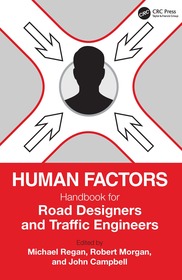
Human Factors Handbook for Road Designers and Traffic Engineers
-
20% KEDVEZMÉNY?
- A kedvezmény csak az 'Értesítés a kedvenc témákról' hírlevelünk címzettjeinek rendeléseire érvényes.
- Kiadói listaár GBP 190.00
-
85 785 Ft (81 700 Ft + 5% áfa)
Az ár azért becsült, mert a rendelés pillanatában nem lehet pontosan tudni, hogy a beérkezéskor milyen lesz a forint árfolyama az adott termék eredeti devizájához képest. Ha a forint romlana, kissé többet, ha javulna, kissé kevesebbet kell majd fizetnie.
- Kedvezmény(ek) 20% (cc. 17 157 Ft off)
- Kedvezményes ár 68 628 Ft (65 360 Ft + 5% áfa)
- A kedvezmény érvényes eddig: 2026. június 30.
Iratkozzon fel most és részesüljön kedvezőbb árainkból!
Feliratkozom
77 207 Ft

Beszerezhetőség
Még nem jelent meg, de rendelhető. A megjelenéstől számított néhány héten belül megérkezik.
Why don't you give exact delivery time?
A beszerzés időigényét az eddigi tapasztalatokra alapozva adjuk meg. Azért becsült, mert a terméket külföldről hozzuk be, így a kiadó kiszolgálásának pillanatnyi gyorsaságától is függ. A megadottnál gyorsabb és lassabb szállítás is elképzelhető, de mindent megteszünk, hogy Ön a lehető leghamarabb jusson hozzá a termékhez.
A termék adatai:
- Kiadás sorszáma 1
- Kiadó CRC Press
- Megjelenés dátuma 2026. augusztus 21.
- ISBN 9781032431963
- Kötéstípus Keménykötés
- Terjedelem744 oldal
- Méret 254x178 mm
- Súly 453 g
- Nyelv angol
- Illusztrációk 259 Illustrations, black & white; 38 Illustrations, color; 200 Halftones, black & white; 38 Halftones, color; 59 Line drawings, black & white; 50 Tables, black & white 700
Kategóriák
Rövid leírás:
Human error contributes to most road crashes, so good human-centred design and engineering can help drivers, pedestrians or riders make better, safer and more effective decisions. This handbook and textbook on road and traffic design is packed with checklists, case studies, photos, examples and practical exercises.
TöbbHosszú leírás:
Can roads truly be made safer? Yes, they can, and this handbook shows road designers and traffic engineers how, through a better understanding of road users – the “human factor”.
Over a million people are killed every year on the world’s roads. Road user error is often concluded to be one of the main factors contributing to road crashes, and many in the road safety world believe that road user error is inevitable. But it need not be inevitable in a transport system that is designed around the needs and capabilities of its users. This is where road designers and traffic engineers have a vital role to play. Over many years, they have developed their skills to optimise traffic movement and maximise safety. But they don’t always get it right. One likely reason is that they may lack a basic understanding of the abilities, limitations and needs of the very people they are designing for – road users.
The scientific discipline of “Human Factors” exists to support road designers and traffic engineers, so that they can put road users at the centre of their design thinking. It provides them with data, principles and knowledge that can be applied to designs to optimise human performance, minimise error and make the road transport system safer and more user-friendly. Human factors is not just of interest to professionals involved in behavioural programmes for road safety, it is also vital for the development of the professional skills that road designers and traffic engineers need, to do their job effectively.
This handbook – the first of its kind – seeks to show how an understanding of human factors can be applied in practical ways to the day-to-day tasks of designing and managing the road system to make it a safer and more user-friendly place to travel. The handbook is structured in a way that takes the reader through the fundamentals of road safety and human-centred design and then looks at road user capabilities, limitations and design needs before the majority of the chapters look at the practical application of this knowledge to the various aspects of road design and traffic management that professionals are involved in.
This handbook is also designed as a textbook, putting the human factor at the heart of basic education and training in road and traffic design for undergraduate and postgraduate students.
Here is the how and why of human factors for road designers and traffic engineers in one convenient volume based on the authors’ extensive knowledge, experience and expertise. Packed with case studies, human factors checklist questions, photos, do’s and don’ts, examples and practical exercises, it is a must-have for students and professionals alike.
TöbbTartalomjegyzék:
CONTENTS
Foreword …………………………………………………………………………………...
Acknowledgements ………………………………………………………………………...
Editors ……………………………………………………………………………………...
Contributors ………………………………………………………………………………...
List of Practical Examples ………………………………………………………………....
PART 1 INTRODUCTION
Chapter 1 Introduction: Human Factors in Road Design and Traffic Engineering …...
Michael A. Regan, Rob Morgan and John L. Campbell
PART 2 THE ROAD SAFETY CONTEXT
Chapter 2 Vision Zero in Road Safety ………………………………………………..
Claes Tingvall and Anders Lie
Chapter 3 An Analysis of the Safe System ……………………………………………
Rob Morgan
Chapter 4 Systems Thinking in Road Safety …………………………………………
Paul M. Salmon & Gemma J. M. Read
Chapter 5 Traffic Crash Types and Causes …………………………………………...
Rob Morgan and Peter Cairney
PART 3 HUMAN CENTRED DESIGN: Principles and Process
Chapter 6 Human Factors Integration for Human-Centred Design …………………..
Louise Raggett, Karl J. Rich and John A. Birch
Chapter 7 Human-Centred Design – Principles and Heuristics ……………………….
Peter J. Benda and Nicholas J. Duck
PART 4 UNDERSTANDING ROAD USERS: Their Capabilities, Limitations and Design Needs
Chapter 8 Who Are the Road Users? …………………………………..
Rob Morgan
Chapter 9 Road User Behaviour and Performance …………………………………...
Michael A. Regan and John L. Campbell
Chapter 10 Human Information Processing Part 1: Sensation, Perception
and Attention ……………………………………………………………….
Michael A. Regan and John L. Campbell
Chapter 11 Human Information Processing Part 2: Memory, Decision Making and Response ……………………………………………………………………
Michael A. Regan and John L. Campbell
Chapter 12 Human Error in Road Transport ……………………………………………
Michael A. Regan, Rob Morgan and John L. Campbell
Chapter 13 Pedestrians’ Design Needs …………………………………………………
Rob Morgan
Chapter 14 Other Road Users’ Design Needs ………………………………………….
Rob Morgan
Chapter 15 Factors That Influence Human Performance ………………………………
Ann Williamson
Chapter 16 Cultural Considerations in Road Design and Traffic Engineering …………
Rob Morgan
PART 5 APPLYING HUMAN FACTORS TO ROAD DESIGN AND TRAFFIC ENGINEERING
Chapter 17 The Benefits of Simplicity for Road Users ………………………………...
Rob Morgan and John Gaffney
Chapter 18 Road Network Planning and Town Planning ………………………………
Ray Brindle and Rob Morgan
Chapter 19 Roads That Explain Themselves …………………………………………...
Jan Theeuwes
Chapter 20 Movement and Place ………………………………………………………
Rob Morgan
Chapter 21 Intersection and Road Design ……………………………………………...
Rod Troutbeck
Chapter 22 Road Tunnel Design and Human Factors ………………………………….
Karl J. Rich, John A. Birch and Michael A. Regan
Chapter 23 Road Tunnel Design – Aesthetic Design Features and Perceptual Countermeasures ……………………………………………………………
Julius R. Secadiningrat and Michael A. Regan
Chapter 24 Railway Level Crossings …………………………………………………...
Gemma J.M. Read and Anjum Naweed
Chapter 25 Parking Design and Operation …………………………………………….
Joel Li, Rob Morgan, Michael Moses and Michael A. Regan
Chapter 26 Intersection Control Techniques ……………………………………………
Rob Morgan
Chapter 27 Traffic Control Devices ……………………………………………………
Rob Morgan
Chapter 28 Traffic Signals and Street Lighting ………………………………………...
Emmanuel Natalizio and Rob Morgan
Chapter 29 Speed Management ………………………………………………………...
John Gaffney and Rob Morgan
Chapter 30 Roadside Advertising ………………………………………………………
Paul Roberts and David McTiernan
Chapter 31 Managing the Road Network ……………………………………………...
John Gaffney and Rob Morgan
Chapter 32 Speed-Related Behavioural Adaptation to Roadway Countermeasures …..
Alison Smiley, Christina M. Rudin-Brown, Rune Elvik and
Bhagwant Persaud
Chapter 33 Behavioural Adaptation to Roadway Designs – Other Aspects ……………
Rob Morgan
Chapter 34 Human Factors in Crash and Road Design Investigations …………………
Rob Morgan, Janelle Aitken and Peter Cairney
PART 6 HUMAN FACTORS RESEARCH METHODS, GUIDELINES AND STANDARDS
Chapter 35 Data Collection and Evaluation Methods ………………………………….
Julius R. Secadiningrat and Michael A. Regan
Chapter 36 Overview of Relevant Human Factors Guidelines and Standards …………
John L. Campbell, Liberty Hoekstra-Atwood, Audra K. Fraser and Chris Monk
PART 7 INTELLIGENT TRANSPORT SYSTEMS: Automated and Connected Transport Systems
Chapter 37 Intelligent Transport Systems: An Introduction ……………………………….
Maurice Burley
Chapter 38 Automated, Connected and Intelligent Transport Systems:
Human Factors …………………………………………………………….
Donald L. Fisher
APPENDICES
Appendix A Human Factors Checklist ………………………………………………….
Michael A. Regan, Rob Morgan and John L. Campbell
Appendix B Additional Practical Examples …………………………………………….
Appendix C Glossary ……………………………………………………………………
Appendix D Metric Conversions ………………………………………………………..
Appendix E Further Reading ……………………………………………………………
Chris Monk, Rob Morgan, John L. Campbell and Michael A. Regan
Author Biographies
Index
Több
