

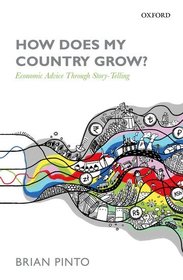
How Does My Country Grow?
Economic Advice Through Story-Telling
-
10% KEDVEZMÉNY?
- A kedvezmény csak az 'Értesítés a kedvenc témákról' hírlevelünk címzettjeinek rendeléseire érvényes.
- Kiadói listaár GBP 58.00
-
26 187 Ft (24 940 Ft + 5% áfa)
Az ár azért becsült, mert a rendelés pillanatában nem lehet pontosan tudni, hogy a beérkezéskor milyen lesz a forint árfolyama az adott termék eredeti devizájához képest. Ha a forint romlana, kissé többet, ha javulna, kissé kevesebbet kell majd fizetnie.
- Kedvezmény(ek) 10% (kb. 2 619 Ft)
- Kedvezményes ár 23 568 Ft (22 446 Ft + 5% áfa)
Iratkozzon fel most és részesüljön kedvezőbb árainkból!
Feliratkozom
26 187 Ft

Beszerezhetőség
Megrendelésre a kiadó utánnyomja a könyvet. Rendelhető, de a szokásosnál kicsit lassabban érkezik meg.
Why don't you give exact delivery time?
A beszerzés időigényét az eddigi tapasztalatokra alapozva adjuk meg. Azért becsült, mert a terméket külföldről hozzuk be, így a kiadó kiszolgálásának pillanatnyi gyorsaságától is függ. A megadottnál gyorsabb és lassabb szállítás is elképzelhető, de mindent megteszünk, hogy Ön a lehető leghamarabb jusson hozzá a termékhez.
A termék adatai:
- Kiadó OUP Oxford
- Megjelenés dátuma 2014. szeptember 18.
- ISBN 9780198714675
- Kötéstípus Keménykötés
- Terjedelem270 oldal
- Méret 235x162x22 mm
- Súly 540 g
- Nyelv angol
- Illusztrációk 10 Figures, 14 Tables, 27 Boxes 0
Kategóriák
Rövid leírás:
This book shows how to think about economic growth and sovereign debt in live country situations. The country stories are practical applications of real-time analysis involving significant economic events of the past two decades (e.g. Poland's early transition, India's unexpected growth takeoff in 2003, and the Russian crisis of 1998).
TöbbHosszú leírás:
Written by a former World Bank economist, How Does My Country Grow? distils growth policy lessons from the author's first-hand experience in Poland, Kenya, India, and Russia, and his contributions to the economic policy debates that followed the emerging market crises of 1997 to 2001, extending up to the global financial crisis of 2008-09.
Based on living and working in the field, the author argues that country economic analysis is in effect a separate, integrative branch of economics that draws upon but is distinct from academic economics. The country stories recounted, reinforced by the emerging market experience since the 1980s, point to a canonical growth policy package built around three interconnected elements: the intertemporal budget constraint of the government; the micropolicy trio of hard budgets, competition and competitive real exchange rates; and managing volatility from external, but especially domestic, sources. This package is underpinned by good governance, which finds its most immediate expression in the management of the public finances. While the discussion is tilted towards developing countries, the insights have considerable relevance for advanced economies, many of which today are in the throes of their own growth-cum-sovereign debt crises.
In spite of its playful title and easy-on-readers subtitle, economist Pintos brief book is a sophisticated, engaging odyssey on economic growth and development. Laden with equations, figures, tables, boxes, annexes (appendixes), notes, and 20 pages of references and index, the book is an authoritative complement to more abstract, theoretical treatments of economic growth.
Tartalomjegyzék:
Country Economics is Different
Part One: What Do We Tell Policymakers About Growth?
Growth Theory from the Prism of Policy
In Search of a Growth Policy Package
Part Two: Country Stories
Why Poland Beat the Odds
Kenya's Achilles' Heel
India's Unanticipated Growth Take-off
Russia Rewrites the Book
Part Three: Policy Debates and Lessons
Emerging market Crises of the Last Decade: A Watershed
Self-Insurance and Self-Financed Growth
Lessons for Low-Income Countries
Annexes
Key Features of Neoclassical Growth
Assessing Government Debt Sustainability
The Russian and Argentine Debt Swaps
Three Generations of Crisis Models
The Sovereign Debt Restructuring Mechanism (SDRM)
IMF's Flexible Credit Line

