

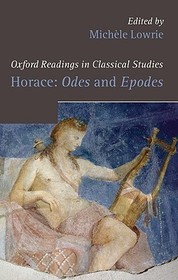
Horace: Odes and Epodes
Sorozatcím: Oxford Readings in Classical Studies;
-
10% KEDVEZMÉNY?
- A kedvezmény csak az 'Értesítés a kedvenc témákról' hírlevelünk címzettjeinek rendeléseire érvényes.
- Kiadói listaár GBP 120.00
-
54 180 Ft (51 600 Ft + 5% áfa)
Az ár azért becsült, mert a rendelés pillanatában nem lehet pontosan tudni, hogy a beérkezéskor milyen lesz a forint árfolyama az adott termék eredeti devizájához képest. Ha a forint romlana, kissé többet, ha javulna, kissé kevesebbet kell majd fizetnie.
- Kedvezmény(ek) 10% (cc. 5 418 Ft off)
- Kedvezményes ár 48 762 Ft (46 440 Ft + 5% áfa)
Iratkozzon fel most és részesüljön kedvezőbb árainkból!
Feliratkozom
54 180 Ft

Beszerezhetőség
Megrendelésre a kiadó utánnyomja a könyvet. Rendelhető, de a szokásosnál kicsit lassabban érkezik meg.
Why don't you give exact delivery time?
A beszerzés időigényét az eddigi tapasztalatokra alapozva adjuk meg. Azért becsült, mert a terméket külföldről hozzuk be, így a kiadó kiszolgálásának pillanatnyi gyorsaságától is függ. A megadottnál gyorsabb és lassabb szállítás is elképzelhető, de mindent megteszünk, hogy Ön a lehető leghamarabb jusson hozzá a termékhez.
A termék adatai:
- Kiadó OUP Oxford
- Megjelenés dátuma 2009. október 1.
- ISBN 9780199207695
- Kötéstípus Keménykötés
- Terjedelem480 oldal
- Méret 223x144x32 mm
- Súly 705 g
- Nyelv angol 0
Kategóriák
Rövid leírás:
A collection of recent articles representing some of the best recent writing on Horace's Odes and Epodes. Several classic studies in French, German, and Italian appear in English for the first time, while the Introduction surveys the state of current scholarship and offers guidance on the interpretation of Horatian lyric today.
TöbbHosszú leírás:
This collection of recent articles provides convenient access to some of the best recent writing on Horace's Odes and Epodes. Formalist, structuralist, and historicizing approaches alike offer insight into this complex poet, who reinvented lyric at the transition from the Republic to the Augustan principate. Several classic studies in French, German, and Italian are here translated into English for the first time. A thread linking many of the pieces is the recurring debate over the performance of Horace's Odes. Fiction? Literal reality? A figurative appropriation of Greek tradition within the bookish culture of late Hellenism? Arguments both for and against gain a hearing. Michele Lowrie's introduction surveys the state of current scholarship and offers guidance on the seminal issues confronting the interpretation of Horatian lyric today. Suggestions for further reading and a consolidated bibliography open avenues for more extensive research.
TöbbTartalomjegyzék:
Introduction
The Horatian Ode
The Function of Wine in Horace's Odes
'Slender Genre' and 'Slender Table' in Horace
How to End an Ode?
Occasion and Levels of Address in Horatian Lyric
The Maecenas Odes
Horace's Century Poem - A Processional Song?
Power and Impotence in Horace's Epodes
Canidia, Canicula, and the Decorum of Horace's Epodes
The Languages of Horace Odes 1.24
Horace and the Greek Lyric Poets
Final Difficulties in the Career of an Iambic Poet: Epode 17
Horace and the Aesthetics of Politics
Horace, Odes 4.5: Pro Reditu Imperatoris Caesari Divi Filii Augusti
A Parade of Lyric Predecessors: Horace C. 1.12-18
Horace, a Greek Lyrist without Music
The Word Order of the Odes
Horace Talks Rough and Dirty: No Comment (Epodes 8 & 12)
Rituals in Ink: Horace on the Greek Lyric Tradition

