

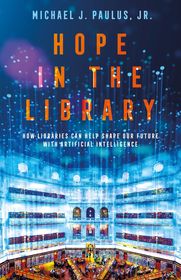
Hope in the Library
How Libraries Can Help Shape Our Future with Artificial Intelligence
-
20% KEDVEZMÉNY?
- A kedvezmény csak az 'Értesítés a kedvenc témákról' hírlevelünk címzettjeinek rendeléseire érvényes.
- Kiadói listaár GBP 17.99
-
8 122 Ft (7 735 Ft + 5% áfa)
Az ár azért becsült, mert a rendelés pillanatában nem lehet pontosan tudni, hogy a beérkezéskor milyen lesz a forint árfolyama az adott termék eredeti devizájához képest. Ha a forint romlana, kissé többet, ha javulna, kissé kevesebbet kell majd fizetnie.
- Kedvezmény(ek) 20% (cc. 1 624 Ft off)
- Kedvezményes ár 6 497 Ft (6 188 Ft + 5% áfa)
- A kedvezmény érvényes eddig: 2026. június 30.
Kedvezményes ár heti hírlevelünkre feliratkozott ügyfeleinknek.
Iratkozzon fel most és részesüljön kedvezőbb árainkból!
Feliratkozom
Iratkozzon fel most és részesüljön kedvezőbb árainkból!
Feliratkozom
8 122 Ft

Beszerezhetőség
Becsült beszerzési idő: A Prosperónál jelenleg nincsen raktáron, de a kiadónál igen. Beszerzés kb. 3-5 hét..
A Prosperónál jelenleg nincsen raktáron.
Why don't you give exact delivery time?
A beszerzés időigényét az eddigi tapasztalatokra alapozva adjuk meg. Azért becsült, mert a terméket külföldről hozzuk be, így a kiadó kiszolgálásának pillanatnyi gyorsaságától is függ. A megadottnál gyorsabb és lassabb szállítás is elképzelhető, de mindent megteszünk, hogy Ön a lehető leghamarabb jusson hozzá a termékhez.
A termék adatai:
- Kiadó Bloomsbury Publishing (UK)
- Megjelenés dátuma 2026. február 19.
- Kötetek száma Paperback
- ISBN 9798765136188
- Kötéstípus Puhakötés
- Terjedelem184 oldal
- Méret 214x138x12 mm
- Súly 280 g
- Nyelv angol 672
Kategóriák
Könyvtár és információtudomány általában
Könyvtárak és információs központok
A természettudományok általános kérdései, tudománytörténet, tudományfilozófia
Operációs rendszerek és grafikus felhasználói felületek
Mesterséges intelligencia
Irodalomelmélet
Az internetről általában
Média és kommunikációtudomány általában
Könyvtár és információtudomány általában (karitatív célú kampány)
Könyvtárak és információs központok (karitatív célú kampány)
A természettudományok általános kérdései, tudománytörténet, tudományfilozófia (karitatív célú kampány)
Operációs rendszerek és grafikus felhasználói felületek (karitatív célú kampány)
Mesterséges intelligencia (karitatív célú kampány)
Irodalomelmélet (karitatív célú kampány)
Az internetről általában (karitatív célú kampány)
Média és kommunikációtudomány általában (karitatív célú kampány)

