

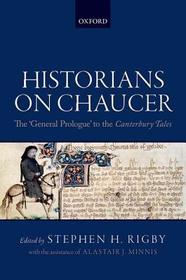
Historians on Chaucer
The 'General Prologue' to the Canterbury Tales
-
10% KEDVEZMÉNY?
- A kedvezmény csak az 'Értesítés a kedvenc témákról' hírlevelünk címzettjeinek rendeléseire érvényes.
- Kiadói listaár GBP 147.50
-
66 596 Ft (63 425 Ft + 5% áfa)
Az ár azért becsült, mert a rendelés pillanatában nem lehet pontosan tudni, hogy a beérkezéskor milyen lesz a forint árfolyama az adott termék eredeti devizájához képest. Ha a forint romlana, kissé többet, ha javulna, kissé kevesebbet kell majd fizetnie.
- Kedvezmény(ek) 10% (cc. 6 660 Ft off)
- Kedvezményes ár 59 937 Ft (57 083 Ft + 5% áfa)
Iratkozzon fel most és részesüljön kedvezőbb árainkból!
Feliratkozom
66 596 Ft

Beszerezhetőség
Megrendelésre a kiadó utánnyomja a könyvet. Rendelhető, de a szokásosnál kicsit lassabban érkezik meg.
Why don't you give exact delivery time?
A beszerzés időigényét az eddigi tapasztalatokra alapozva adjuk meg. Azért becsült, mert a terméket külföldről hozzuk be, így a kiadó kiszolgálásának pillanatnyi gyorsaságától is függ. A megadottnál gyorsabb és lassabb szállítás is elképzelhető, de mindent megteszünk, hogy Ön a lehető leghamarabb jusson hozzá a termékhez.
A termék adatai:
- Kiadó OUP Oxford
- Megjelenés dátuma 2014. december 4.
- ISBN 9780199689545
- Kötéstípus Keménykötés
- Terjedelem524 oldal
- Méret 240x163x35 mm
- Súly 940 g
- Nyelv angol 0
Kategóriák
Rövid leírás:
Historians on Chaucer brings together 25 experts in the history of fourteenth-century England to discuss one of the most famous works of Middle English literature--Geoffrey Chaucer's 'General Prologue' to the Canterbury Tales--in relation to the economic change, social issues, and religious controversies of the period.
TöbbHosszú leírás:
As literary scholars have long insisted, an interdisciplinary approach is vital if modern readers are to make sense of works of medieval literature. In particular, rather than reading the works of medieval authors as addressing us across the centuries about some timeless or ahistorical 'human condition', critics from a wide range of theoretical approaches have in recent years shown how the work of poets such as Chaucer constituted engagements with the power relations and social inequalities of their time. Yet, perhaps surprisingly, medieval historians have played little part in this 'historical turn' in the study of medieval literature. The aim of this volume is to allow historians who are experts in the fields of economic, social, political, religious, and intellectual history the chance to interpret one of the most famous works of Middle English literature, Geoffrey Chaucer's 'General Prologue' to the Canterbury Tales, in its contemporary context. Rather than resorting to traditional historical attempts to see Chaucer's descriptions of the Canterbury pilgrims as immediate reflections of historical reality or as portraits of real-life people whom Chaucer knew, the contributors to this volume have sought to show what interpretive frameworks were available to Chaucer in order to make sense of reality and how he adapted his literary and ideological inheritance so as to engage with the controversies and conflicts of his own day. Beginning with a survey of recent debates about the social meaning of Chaucer's work, the volume then discusses each of the Canterbury pilgrims in turn. Historians on Chaucer should be of interest to all scholars and students of medieval culture whether they are specialists in literature or history,
This is a practical compilation and a sound introduction to late medieval England that will be enjoyed by scholar and non-scholar alike, and a valuable addition to a medieval syllabus, whether in history or English literature.
Tartalomjegyzék:
Preface
Reading Chaucer: Literature, History and Ideology
Chaucer the Poet, Chaucer the Pilgrim
The Knight
The Squire
The Yeoman
The Prioress and the Second Nun
The Nun's Priest
The Monk
The Friar
The Merchant
The Clerk
The Sergeant of Law
The Franklin
The Five Guildsmen
The Cook
The Shipman
The Doctor of Physic
The Wife of Bath
The Parson
The Ploughman
The Miller
The Manciple
The Reeve
The Summoner
The Pardoner
The Host
Conclusion: Historicism and its Limits

