

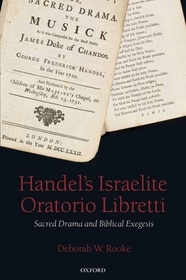
Handel's Israelite Oratorio Libretti
Sacred Drama and Biblical Exegesis
-
10% KEDVEZMÉNY?
- A kedvezmény csak az 'Értesítés a kedvenc témákról' hírlevelünk címzettjeinek rendeléseire érvényes.
- Kiadói listaár GBP 107.50
-
51 358 Ft (48 912 Ft + 5% áfa)
Az ár azért becsült, mert a rendelés pillanatában nem lehet pontosan tudni, hogy a beérkezéskor milyen lesz a forint árfolyama az adott termék eredeti devizájához képest. Ha a forint romlana, kissé többet, ha javulna, kissé kevesebbet kell majd fizetnie.
- Kedvezmény(ek) 10% (cc. 5 136 Ft off)
- Kedvezményes ár 46 222 Ft (44 021 Ft + 5% áfa)
Iratkozzon fel most és részesüljön kedvezőbb árainkból!
Feliratkozom
51 358 Ft

Beszerezhetőség
Megrendelésre a kiadó utánnyomja a könyvet. Rendelhető, de a szokásosnál kicsit lassabban érkezik meg.
Why don't you give exact delivery time?
A beszerzés időigényét az eddigi tapasztalatokra alapozva adjuk meg. Azért becsült, mert a terméket külföldről hozzuk be, így a kiadó kiszolgálásának pillanatnyi gyorsaságától is függ. A megadottnál gyorsabb és lassabb szállítás is elképzelhető, de mindent megteszünk, hogy Ön a lehető leghamarabb jusson hozzá a termékhez.
A termék adatai:
- Kiadó OUP Oxford
- Megjelenés dátuma 2012. február 23.
- ISBN 9780199279289
- Kötéstípus Keménykötés
- Terjedelem280 oldal
- Méret 240x162x21 mm
- Súly 586 g
- Nyelv angol 0
Kategóriák
Rövid leírás:
Combining the insights of present-day biblical studies with those of Handelian studies, this book examines the libretti of ten of Handel's Israelite oratorios and evaluates the relationship between each libretto and the biblical story on which it is based.
TöbbHosszú leírás:
Handel's Israelite oratorios are today little known among non-specialists, but in their own day they were unique, pioneering and extremely popular. Dating from the period 1732-1752, they combine the musical conventions of Italian opera with dramatic plots in English that are adaptations of Old Testament narratives. They constitute a form of biblical interpretation, but to date, there has been no thoroughgoing study of the theological ideas or the attitudes towards the biblical text that might be conveyed in the oratorios' libretti. This book aims to fill that gap from an interdisciplinary perspective.
Combining the insights of present-day biblical studies with those of Handelian studies, Deborah W. Rooke examines the libretti of ten oratorios - Esther, Deborah, Athalia, Saul, Samson, Joseph and his Brethren, Judas Macchabaeus, Solomon, Susanna and Jephtha - and evaluates the relationship between each libretto and the biblical story on which it is based. Rooke comments on each biblical text from a modern scholarly perspective, and then compares the modern interpretation with the version of the biblical narrative that appears in the relevant libretto. Where the libretto is based on a prior dramatic or literary adaptation of the biblical narrative, she also discusses the prior adaptation and how it relates to both the biblical text and the corresponding oratorio libretto. In this way the distinctive nuances of the oratorio libretti are highlighted, and each libretto is then analysed and interpreted in the light of eighteenth-century religion, scholarship, culture and politics. The result is a fascinating exploration not only of the oratorio libretti but also of how culture and context determines the nature of biblical interpretation.
Every time [Rooke] described Handels works with reference to modern biblical scholarship, the pages turned themselves ... a good read
Tartalomjegyzék:
Introit
To Laugh or not to Laugh: the Question of Esther
A Gender Agenda: Deborah in Holy Writ and Handel
Jezebel, Joash and Jesus Christ: Aspects of Athalia
Saul: Tragedy, Treachery, and Theology
From Wild Man to War Hero: The Story of Samson
Joseph: saint or sinner? Italian Opera, Handelian Oratorio, and Eighteenth-century Commentaries
Judas Macchabaeus: Justifying the 1745 Anti-Jacobite Campaign
Solomon and his Women: A Handelian Triptych
Susanna: A Marriage Made in Heaven
Sex and Death, or the Death of Sex: The Fate of Jephthah's Daughter
Postlude
Bibliography

