

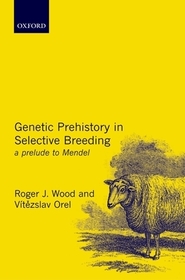
Genetic Prehistory in Selective Breeding
A Prelude to Mendel
-
10% KEDVEZMÉNY?
- A kedvezmény csak az 'Értesítés a kedvenc témákról' hírlevelünk címzettjeinek rendeléseire érvényes.
- Kiadói listaár GBP 170.00
-
76 755 Ft (73 100 Ft + 5% áfa)
Az ár azért becsült, mert a rendelés pillanatában nem lehet pontosan tudni, hogy a beérkezéskor milyen lesz a forint árfolyama az adott termék eredeti devizájához képest. Ha a forint romlana, kissé többet, ha javulna, kissé kevesebbet kell majd fizetnie.
- Kedvezmény(ek) 10% (cc. 7 676 Ft off)
- Kedvezményes ár 69 080 Ft (65 790 Ft + 5% áfa)
Iratkozzon fel most és részesüljön kedvezőbb árainkból!
Feliratkozom
76 755 Ft

Beszerezhetőség
Megrendelésre a kiadó utánnyomja a könyvet. Rendelhető, de a szokásosnál kicsit lassabban érkezik meg.
Why don't you give exact delivery time?
A beszerzés időigényét az eddigi tapasztalatokra alapozva adjuk meg. Azért becsült, mert a terméket külföldről hozzuk be, így a kiadó kiszolgálásának pillanatnyi gyorsaságától is függ. A megadottnál gyorsabb és lassabb szállítás is elképzelhető, de mindent megteszünk, hogy Ön a lehető leghamarabb jusson hozzá a termékhez.
A termék adatai:
- Kiadó OUP Oxford
- Megjelenés dátuma 2001. július 26.
- ISBN 9780198505846
- Kötéstípus Keménykötés
- Terjedelem342 oldal
- Méret 242x161x23 mm
- Súly 715 g
- Nyelv angol
- Illusztrációk 11 halftones, 1 table, 4 maps and 11 line drawings 0
Kategóriák
Rövid leírás:
This is a history of how sheep breeding contributed to knowledge of heredity, and how the theory was vigorously pursued during the early Nineteenth Century in Brno, where Mendel defined the basis of genetics in 1866. This original and perceptive work is rich in previously unpublished detail.
TöbbHosszú leírás:
Before Mendel, who came closest to the truth about heredity? This book examines the activities of sheep breeders able to transform the appearance and qualities of their stock by combining different traits of body or wool into new patterns. Exploiting what were then untried procedures - individual trait selection, very close inbreeding and progeny testing - they demonstrated inheritance from both sexes and showed how it could be stabilised. Major advances in breeding are associated with the English farmer Robert Bakewell (1725-1795). By the following century, when the same procedures had been established at breeding centres in central Europe, theory as well as practice became the subject of wider attention. In the Brno Sheep Breeders' Society, discussions of patterns of heredity finally gave way to the physiological question, 'What is inherited and how?' The question was posed by Cyrill Napp, abbot of the monastery to which Mendel was admitted six years later.
This is a very valuable book analysing the period of animal breeding, especially sheep, before the discovering of heredity laws by Gregor Mendel.
Tartalomjegyzék:
List of illustrations
Acknowledgements
The elusive law
The fleeces of Spain
Sheep breeding sets new standards
Bakewell's new system
Bakewell becomes a celebrity
Merinos in Sweden, France and Great Britain
Merinos in German-speaking countries and Australia
Ferdinand Geisslern, the Moravian Bakewell
From breeding principles to genetic laws
The sheep breeders' legacy to Mendel
Overview
References
Index

