

-
10% KEDVEZMÉNY?
- A kedvezmény csak az 'Értesítés a kedvenc témákról' hírlevelünk címzettjeinek rendeléseire érvényes.
- Kiadói listaár GBP 16.99
-
7 670 Ft (7 305 Ft + 5% áfa)
Az ár azért becsült, mert a rendelés pillanatában nem lehet pontosan tudni, hogy a beérkezéskor milyen lesz a forint árfolyama az adott termék eredeti devizájához képest. Ha a forint romlana, kissé többet, ha javulna, kissé kevesebbet kell majd fizetnie.
- Kedvezmény(ek) 10% (cc. 767 Ft off)
- Kedvezményes ár 6 903 Ft (6 575 Ft + 5% áfa)
Iratkozzon fel most és részesüljön kedvezőbb árainkból!
Feliratkozom
7 670 Ft

Beszerezhetőség
Becsült beszerzési idő: A Prosperónál jelenleg nincsen raktáron, de a kiadónál igen. Beszerzés kb. 3-5 hét..
A Prosperónál jelenleg nincsen raktáron.
Why don't you give exact delivery time?
A beszerzés időigényét az eddigi tapasztalatokra alapozva adjuk meg. Azért becsült, mert a terméket külföldről hozzuk be, így a kiadó kiszolgálásának pillanatnyi gyorsaságától is függ. A megadottnál gyorsabb és lassabb szállítás is elképzelhető, de mindent megteszünk, hogy Ön a lehető leghamarabb jusson hozzá a termékhez.
A termék adatai:
- Kiadó OUP USA
- Megjelenés dátuma 2026. február 13.
- ISBN 9780197746486
- Kötéstípus Puhakötés
- Terjedelem280 oldal
- Méret 235x155x16 mm
- Súly 422 g
- Nyelv angol 679
Kategóriák
Rövid leírás:
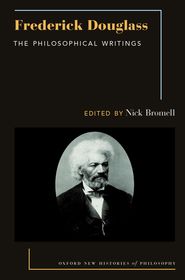
Although Frederick Douglass's work as a Black activist has been vigorously explored, he has yet to be sufficiently appreciated as a profound philosopher, one who developed compelling theories of racism (and sexism), human nature, human powers, human dignity, and democracy. Bringing together passages from Douglass's autobiographies, speeches, lectures, and editorials, this is the first edition of Douglass's writings compiled with the purpose of making his philosophical achievement visible and compelling to readers today.
TöbbHosszú leírás:
Frederick Douglass' fame as an activist and abolitionist often eclipses his less appreciated work as a political philosopher. Indeed, few people know that he declared in an 1867 speech: "From this little bit of experience, slave experience, I have elaborated quite a lengthy chapter of political philosophy, applicable to the American people." However, Douglass did not develop this philosophy systematically. Instead, he expressed it in myriad moments and fragments throughout his writings, and for this reason it is often overlooked, even by scholars of philosophy.
The philosophy Douglass drew from his experience of enslavement and anti-Black racism is as relevant today as it was in his lifetime. More than any other abolitionist and Black activist of his day, Douglass saw that the slavery system was both the cause and the consequence of virulent anti-Black racism. Seeking to understand and repudiate not just racism, but also sexism and nativism, he developed a powerful theory of human nature, human powers, and human dignity that he subsequently wove into a profound theory of democracy and democratic citizenship. This collection, carefully curated by editor Nick Bromell, makes Douglass's philosophical ideas available and compelling to a new generation of readers.
Tartalomjegyzék:
Series Editors' Foreword
Abbreviations
Introduction
PART I: KEY WORDS IN DOUGLASS'S POLITICAL PHILOSOPHY
1. Humanity
2. Power
3. Dignity
4. Freedom
5. Standpoint
6. Prejudice against Color
7. Struggle
8. Soul
PART II: AUTOBIOGRAPHY AND FICTION
My Bondage and My Freedom
The Heroic Slave
PART III: EDITORIALS, LECTURES, SPEECHES
1. "Our Paper and Its Prospects" and "To Our Oppressed Countrymen"
2. "The Rights of Women"
3. "The Revolution of 1848"
4. "The Destiny of Colored Americans"
5. "Prejudice Against Color"
6. "Is Civil Government Right?"
7. "What to the Slave is the Fourth of July?"
8. "A Nation in the Midst of a Nation"
9. "The Claims of the Negro Ethnologically Considered"
10. "Is it Right and Wise to Kill a Kidnapper?"
11. "The Dred Scott Decision"
12. "Pictures and Progress"
13. "What the Black Man Wants"
14. "Sources of Danger to the Republic"
15. "Our Composite Nationality"
16. "Let the Negro Alone"
17. "Woman Suffrage Movement" and "Woman and the Ballot"
18. "Oration Delivered on the Occasion of the Unveiling of the Freedmen's Monument in
Memory of Abraham Lincoln"
19. "Speech at the Mass Meeting at Lincoln Hall, Washington, D.C."
20. "'It Moves,' or the Philosophy of Reform"
21. "The Nation's Problem"
22. "Self-Made Men"
23. "Lessons of the Hour"
Selected Bibliography
Index

