

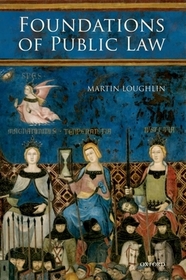
Foundations of Public Law
-
10% KEDVEZMÉNY?
- A kedvezmény csak az 'Értesítés a kedvenc témákról' hírlevelünk címzettjeinek rendeléseire érvényes.
- Kiadói listaár GBP 60.00
-
27 090 Ft (25 800 Ft + 5% áfa)
Az ár azért becsült, mert a rendelés pillanatában nem lehet pontosan tudni, hogy a beérkezéskor milyen lesz a forint árfolyama az adott termék eredeti devizájához képest. Ha a forint romlana, kissé többet, ha javulna, kissé kevesebbet kell majd fizetnie.
- Kedvezmény(ek) 10% (cc. 2 709 Ft off)
- Kedvezményes ár 24 381 Ft (23 220 Ft + 5% áfa)
Iratkozzon fel most és részesüljön kedvezőbb árainkból!
Feliratkozom
27 090 Ft

Beszerezhetőség
Megrendelésre a kiadó utánnyomja a könyvet. Rendelhető, de a szokásosnál kicsit lassabban érkezik meg.
Why don't you give exact delivery time?
A beszerzés időigényét az eddigi tapasztalatokra alapozva adjuk meg. Azért becsült, mert a terméket külföldről hozzuk be, így a kiadó kiszolgálásának pillanatnyi gyorsaságától is függ. A megadottnál gyorsabb és lassabb szállítás is elképzelhető, de mindent megteszünk, hogy Ön a lehető leghamarabb jusson hozzá a termékhez.
A termék adatai:
- Kiadó OUP Oxford
- Megjelenés dátuma 2012. szeptember 27.
- ISBN 9780199669462
- Kötéstípus Puhakötés
- Terjedelem528 oldal
- Méret 233x175x28 mm
- Súly 794 g
- Nyelv angol 0
Kategóriák
Rövid leírás:
This book develops Martin Loughlin's distinctive and provocative theory of public law, first outlined in The Idea of Public Law. Tracing the historical evolution of the concept of public law, the book rethinks the foundational concepts of state, constitution, and government, arguing that public power is created, not controlled, by law.
TöbbHosszú leírás:
Foundations of Public Law offers an account of the formation of the discipline of public law with a view to identifying its essential character, explaining its particular modes of operation, and specifying its unique task. Building on the framework first outlined in The Idea of Public Law (OUP, 2003), the book conceives public law broadly as a type of law that comes into existence as a consequence of the secularization, rationalization, and positivization of the medieval idea of fundamental law. Formed as a result of the changes that give birth to the modern state, public law establishes the authority and legitimacy of modern governmental ordering.
Public law today is a universal phenomenon, but its origins are European. Part I of the book examines the conditions of its formation, showing how much the concept borrowed from the refined debates of medieval jurists. Part II then examines the nature of public law. Drawing on a line of juristic inquiry that developed from the late sixteenth to the early nineteenth centuries - extending from Bodin, Althusius, Lipsius, Grotius, Hobbes, Spinoza, Locke, and Pufendorf to the later works of Montesquieu, Rousseau, Kant, Fichte, Smith, and Hegel - it presents an account of public law as a special type of political reason.
The remaining three Parts unpack the core elements of this concept: state, constitution, and government. By taking this broad approach to the subject, Loughlin shows how, rather than being viewed as a limitation on power, law is better conceived as a means by which public power is generated. And by explaining the way that these core elements of state, constitution, and government were shaped respectively by the technological, bourgeois, and disciplinary revolutions of the sixteenth century through to the nineteenth century, he reveals a concept of public law of considerable ambiguity, complexity, and resilience.
Martin Loughlin puts forward a convincing case for having a broader humanist understanding of public law
Tartalomjegyzék:
Introduction: Rediscovering Public Law
Part I: Origins
Medieval Origins
The Birth of Public Law
Part II: Formation
The Architecture of Public Law
The Science of Political Right: I
The Science of Political Right: II
Political Jurisprudence
Part III: State
The Concept of the State
The Constitution of the State
State Formation
Part IV: Constitution
The Constitutional Contract
Rechtsstaat, Rule of Law, L'Etat de droit
Constitutional Rights
Part V: Government
The Prerogatives of Government
Potentia
The New Architecture of Public Law

